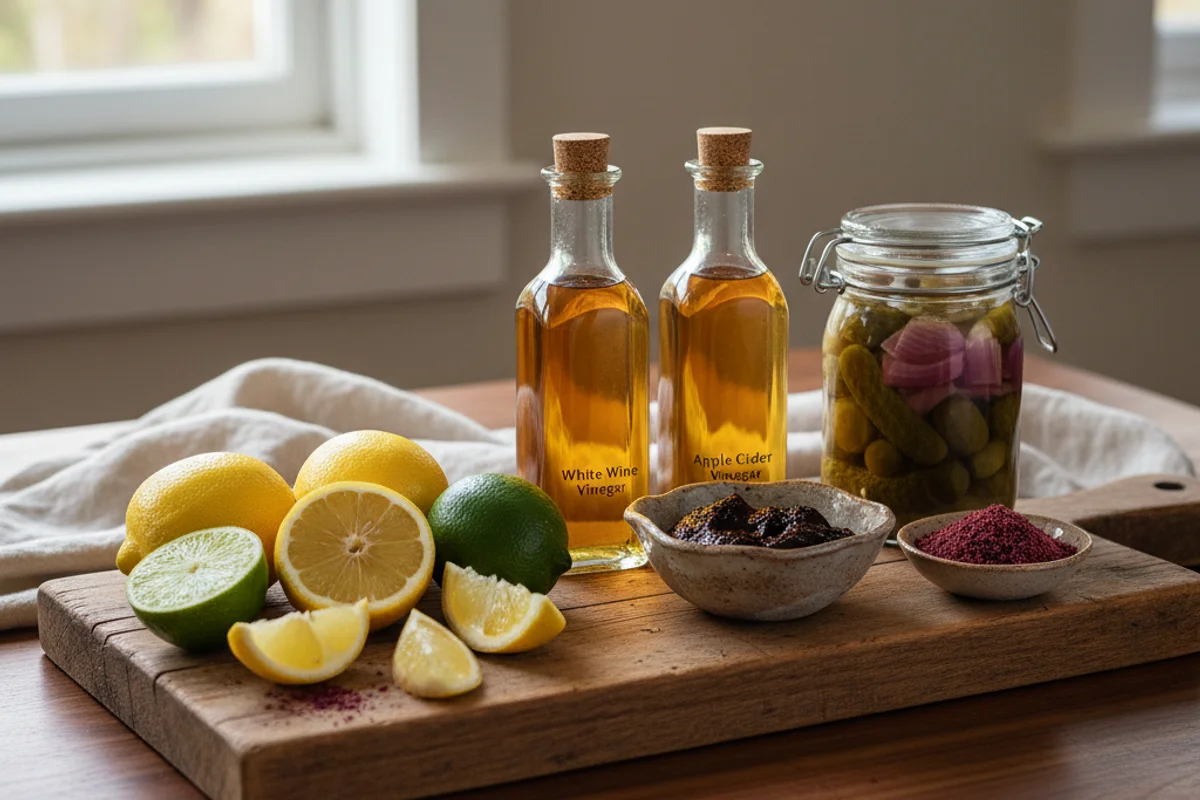
The Tastes of Acids
Acid is the backbone of wine. It keeps your wine bright, balances sweetness, and protects it from spoilage. But not all acids taste the same — and that difference matters more than most beginner winemakers realize. There are six acids that show up most often in wine, and each one lands on your palate differently. Learning to recognize them is like learning the difference between salt, sugar, and bitter — once you know it, you can’t un-know it. This article walks you through what each acid actually tastes like and why that knowledge makes you a better winemaker.
Why Acids Don’t All Taste “Sour”
Most people assume acid just means sour. And yes, sourness is part of it. But sourness is only one dimension of what acids do in your mouth.
Think about lemon juice versus vinegar. Both are acidic. Both will make you pucker. But they feel completely different — one is bright and clean, the other is sharp and biting. That difference comes from the specific acid involved, not just the pH (a measure of how acidic something is on a scale from 0 to 14).
Wine contains a mix of acids, and each one contributes its own character. Tartaric acid feels hard and grippy. Malic acid hits strong and forward. Citric acid tastes fresh. Lactic acid is soft. Acetic acid is harsh and smells like vinegar. Succinic acid has an almost salty edge.
Understanding these differences helps you diagnose a wine that feels “off” — and make smarter decisions when you’re adjusting acidity during fermentation or aging.
The Classic Training Exercise
The French wine scientist Émile Peynaud designed a tasting exercise that is still one of the best tools available for training your palate on acids. The idea is simple: prepare six separate solutions, each containing one acid at a fixed concentration, all adjusted to the same pH. Then taste them side by side.
Why fix the pH? Because pH affects how sour something tastes. If the pH is different between samples, you’re not tasting the acid’s personality — you’re just tasting different intensities of sour. Setting them equal removes that variable and lets the character of each acid come through on its own.
The concentrations Peynaud used were:
- Tartaric acid — 1 g/L
- Malic acid — 1 g/L
- Citric acid — 1 g/L
- Lactic acid — 1 g/L
- Acetic acid — 1 g/L
- Succinic acid — 0.5 g/L (it’s more intense, so less is used)
These solutions will taste more extreme than any real wine. That’s the point. The exaggeration makes each acid’s fingerprint easier to detect. Once you know what to look for at high intensity, you’ll start picking it out at low intensity in actual wine.
This works best as a group activity — a winemaking club, class, or even a small group of curious friends. Tasting together means you can compare notes and confirm what you’re sensing.
What Each Acid Actually Tastes Like
Here’s the breakdown of each acid’s character:
Tartaric acid is the dominant acid in grapes. It tastes hard — almost austere. It’s tart without being fruity, and it lingers. Too much gives wine a sharp, angular feel. It’s also chemically stable, which is one reason winemakers rely on it for acid adjustments.
Malic acid is the acid in green apples. It’s the most pronounced of the group — loud and aggressive on the palate. Young wines high in malic acid can feel harsh. Winemakers often convert it to lactic acid through malolactic fermentation (MLF), a bacterial process that softens the wine significantly.
Citric acid is what makes citrus fruit taste bright and clean. In wine, it adds freshness. It’s less common in grapes than tartaric or malic, but it’s widely available as a powder at homebrew stores and is easy to use for adjustments.
Lactic acid is the mildest of the group. It’s the acid found in yogurt and cultured dairy. In wine, it feels soft and round. When a wine goes through MLF, harsh malic acid converts to gentle lactic acid — that’s why MLF is often described as “softening” the wine.
Acetic acid is the acid in vinegar. At low levels it’s harmless background noise. At elevated levels, it becomes volatile acidity (VA) — a wine fault that smells sharp and tastes bitter. VA is usually caused by acetobacter bacteria or poor fermentation hygiene.
Succinic acid is the odd one out. It’s produced by yeast during fermentation and has a flavor profile that’s less sour and more salty-bitter. It’s subtle in most wines but contributes to overall complexity.
How This Changes the Way You Work
Once you know what each acid tastes like, a wine that “just seems off” becomes easier to diagnose.
Does the wine taste hard and grippy even though the pH is fine? You might be dealing with high tartaric. Does it taste aggressive and green? Malic is likely the culprit, and MLF might be the solution. Does it smell sharp or taste bitter in a way that’s not tannic? Check your volatile acidity.
On the adjustment side, knowing the character of each acid helps you choose the right tool. If you want to sharpen a flabby wine, citric acid adds freshness without the hardness of tartaric. If you want to soften a wine without adding anything, MLF converts the malic for you.
This is the practical payoff of what seems like a chemistry lesson. Tasting these acids once — really tasting them — builds a sensory library you’ll pull from every time you evaluate a wine.
Why This Works
Here’s the mental model: think of your wine’s acid profile like a chord in music. Each individual acid is a note. Some notes are bright, some are harsh, some are soft. The wine doesn’t taste like any single acid — it tastes like the chord they make together.
Most winemakers only adjust total acidity (TA) or pH as numbers on a test strip. That’s like tuning an instrument by volume alone. Knowing the individual acids means you’re tuning by pitch — you’re adjusting the actual character of the sound, not just how loud it is.
Peynaud’s tasting exercise gives you the ears for the job. Do it once with a group and you’ll never think about acidity the same way again.