AGARITA WINE (1)
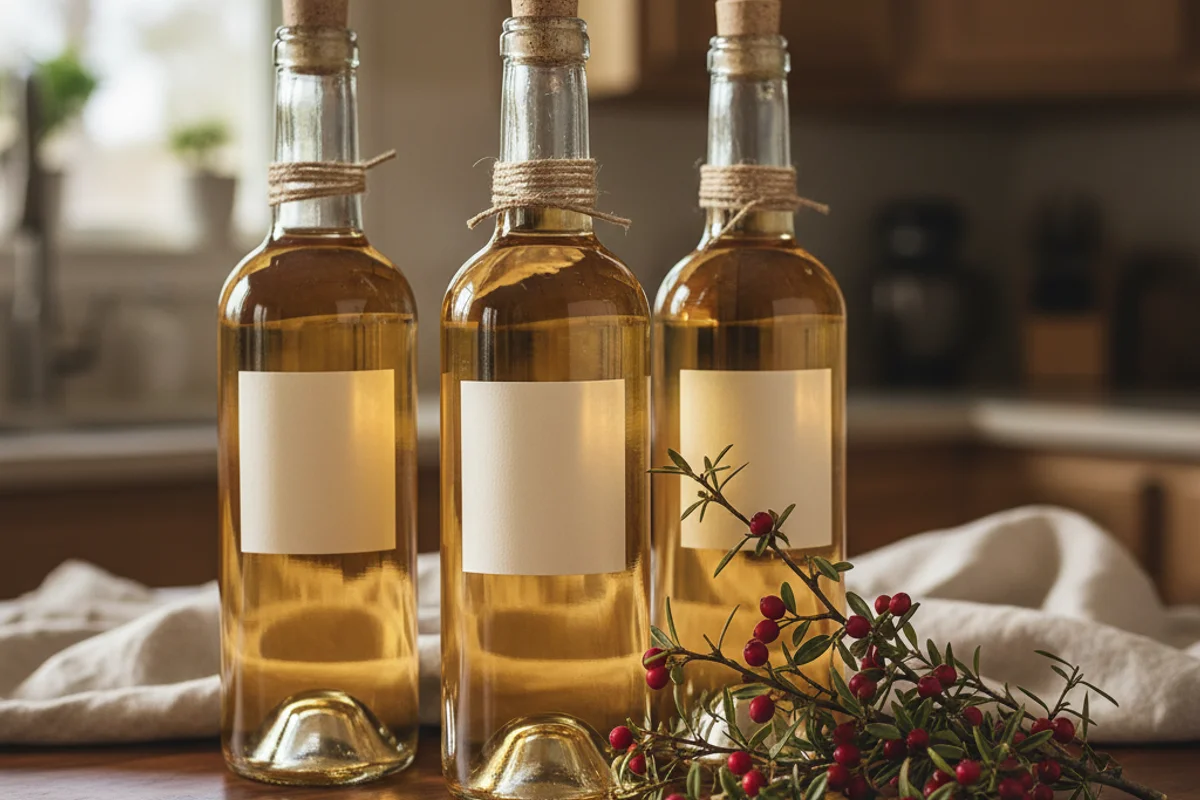
If you’ve ever hiked through the Texas Hill Country in late spring, you know the agarita bush — thorny, wild, and loaded with tiny red berries that taste like a tart cherry crossed with a cranberry. Those berries make a wine with serious backbone: deep ruby color, bright acidity, and enough fruit character to stand on its own at the table. It’s a genuinely regional wine, the kind of thing you can’t buy at any store, which makes pulling a finished bottle off your shelf feel like a real accomplishment.
The beginner trap: New winemakers often skip the Campden tablet rest or rush past the pectic enzyme wait — cutting those 12-hour windows short leaves you with a hazy wine that refuses to clear no matter how long you wait.
Ingredients
- 4 lbs agarita berries, washed and destemmed (fresh or frozen)
- 3½ lbs granulated sugar, divided
- 7 pints water
- 1 tsp citric acid (or 2 tsp fresh lemon juice as a substitute)
- 1 tsp yeast nutrient
- 1 Campden tablet, crushed
- ½ tsp pectic enzyme
- 1 packet Burgundy wine yeast (Côte des Blancs or RC 212 also work well)
Method
- Crush or mash the berries thoroughly; alternatively, blend them with one cup of the water until pureed.
- Combine the crushed berries, remaining water, half the sugar, citric acid, yeast nutrient, and the crushed Campden tablet in your primary fermenter. Stir until the sugar fully dissolves.
- Cover the fermenter with a clean cloth and let it sit for 12 hours.
- Stir in the pectic enzyme, recover with the cloth, and wait another 12 hours.
- Pitch the yeast, re-cover, and stir the must once daily for 7 days.
- Pour the must through a nylon straining bag into a clean vessel, squeezing the bag gently to extract juice without forcing bitter sediment through.
- Stir the remaining sugar into the juice until fully dissolved, then transfer everything to your secondary fermenter.
- Top up to volume and fit with an airlock. Ferment for 30 days.
- Rack the wine, top up, and repeat racking every 3 weeks until the wine runs clear.
- Stabilize with potassium sorbate and potassium metabisulfite, wait 10 days, rack one final time if needed, then bottle.
- Resist the urge to open a bottle for at least 6 months — this wine rewards patience.
Why this works
Agarita berries are naturally high in pectin, the same stuff that makes jam gel. Pectin in wine means permanent haze — a finished wine that looks cloudy no matter how long it sits. Pectic enzyme (pectinase) breaks those long pectin chains apart before fermentation really gets going, so they can’t form the stubborn clouds they otherwise would. The two-stage Campden rest before the enzyme addition matters too: sulfur dioxide from the tablet suppresses wild yeast and bacteria, giving you a clean slate. Adding pectic enzyme during active sulfite levels would slow the enzyme down, so waiting those 12 hours lets the SO₂ dissipate just enough for the enzyme to do its job efficiently.
Notes
Frozen agarita berries work just as well as fresh — freeze-thaw cycles actually help break down cell walls, improving juice yield. If you can’t source agarita berries locally, look for them online through Texas specialty foragers; there is no common grocery-store substitute that replicates the flavor, though a blend of tart cherries and cranberries (2:1 ratio by weight) can produce a wine in a similar style.