AGARITA WINE (2)
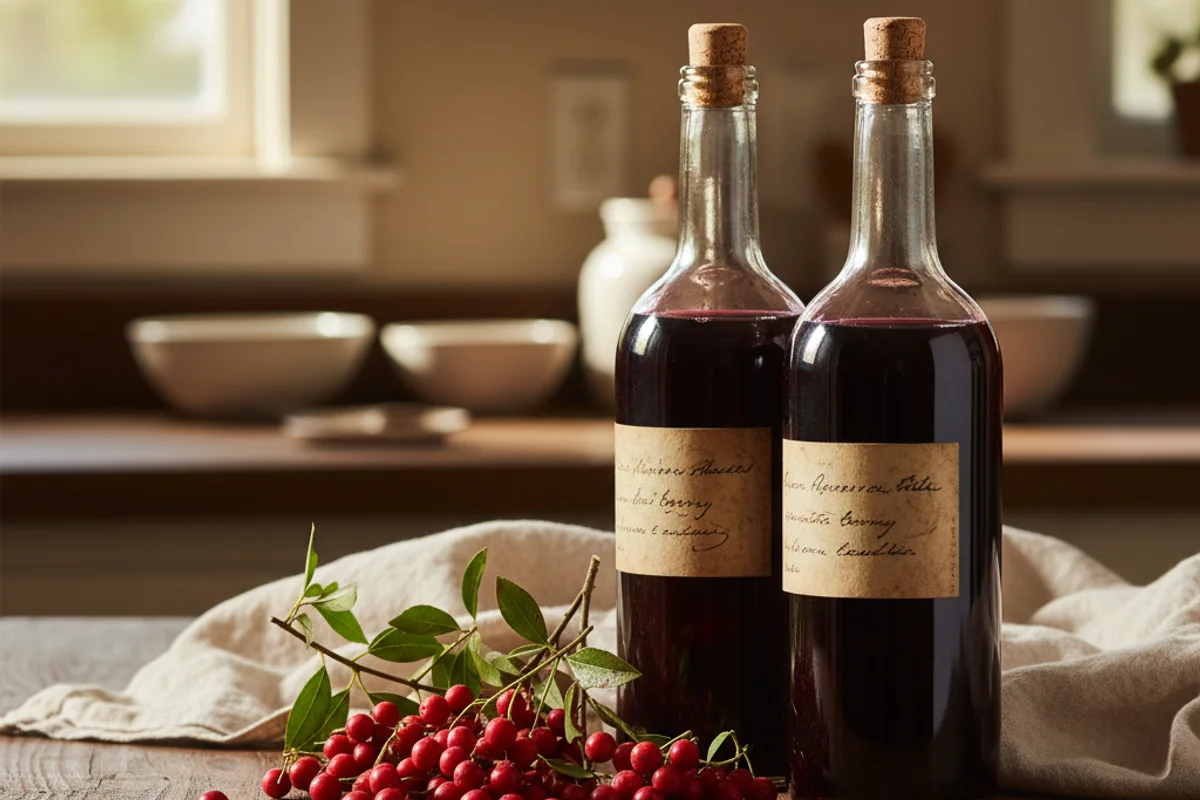
Deep in the Texas Hill Country, agarita shrubs push out clusters of tiny red berries that taste like a cranberry went on a road trip with a tart cherry. They’re too sour to eat by the handful, but that sharp acidity is exactly what makes them interesting in a wine glass. Given time — and you will need time — they mellow into something bright, complex, and genuinely unique. This is not a supermarket fruit wine. It’s a taste of scrubland in a bottle.
The beginner trap: Skipping or shortening the multiple racking stages means your wine stays cloudy and picks up off-flavors from sitting on dead yeast too long.
Ingredients
- 4 lbs agarita berries, fresh or frozen, washed and destemmed
- 2½ lbs granulated sugar, divided
- 7¼ pints (roughly 3.6 quarts) water
- ¾ tsp citric acid
- 1 tsp yeast nutrient
- 1 Campden tablet, crushed
- ½ tsp pectic enzyme
- 1 packet Burgundy wine yeast (or any dry red wine yeast)
Method
- Crush or mash the berries thoroughly; a blender with one cup of water works well if you want a smoother puree.
- Combine the crushed berries, water, half the sugar, citric acid, yeast nutrient, and crushed Campden tablet in your primary fermenter. Stir until the sugar fully dissolves.
- Cover the fermenter with a clean cloth and let it sit for 12 hours.
- Stir in the pectic enzyme, re-cover, and wait another 12 hours.
- Pitch the yeast, re-cover, and stir the must once daily for 7 days.
- Pour the must through a nylon straining bag into a clean vessel, squeezing the bag gently to extract the juice without forcing bitter solids through.
- Stir in the remaining sugar until fully dissolved, then transfer the juice to your secondary fermenter (glass carboy or similar).
- Top up to the shoulder of the vessel and fit with an airlock.
- Ferment for 30 days, then rack to a clean vessel and top up.
- Rack again every 3 weeks until the wine is clear and shows no signs of active fermentation.
- Stabilize with potassium sorbate and potassium metabisulfite, wait 10 days, then sweeten to taste if desired.
- Bottle and wait at least 6 months before opening your first one.
Why this works
Splitting the sugar addition is a simple trick with a real payoff. Adding only half the sugar up front keeps the initial sugar concentration from stressing the yeast — high sugar levels at the start can actually slow fermentation or produce harsh flavors. Once the yeast is established and chugging along, the second sugar addition gives it more fuel without overwhelming it. The pectic enzyme addition matters too: agarita berries are loaded with pectin, the same stuff that makes jelly gel. Without pectic enzyme breaking that pectin down early, you’ll end up with a hazy wine no amount of racking will fully fix.
Notes
Agarita berries are native to Texas and the Southwest — if you can’t forage or source them locally, frozen agarita berries from specialty Texas retailers are your best bet. There is no true grocery-store substitute, though a blend of frozen cranberries and tart cherries (roughly 3 lbs cranberry to 1 lb cherry) can produce a wine in a similar flavor neighborhood.