Berlandieri Grape Wine
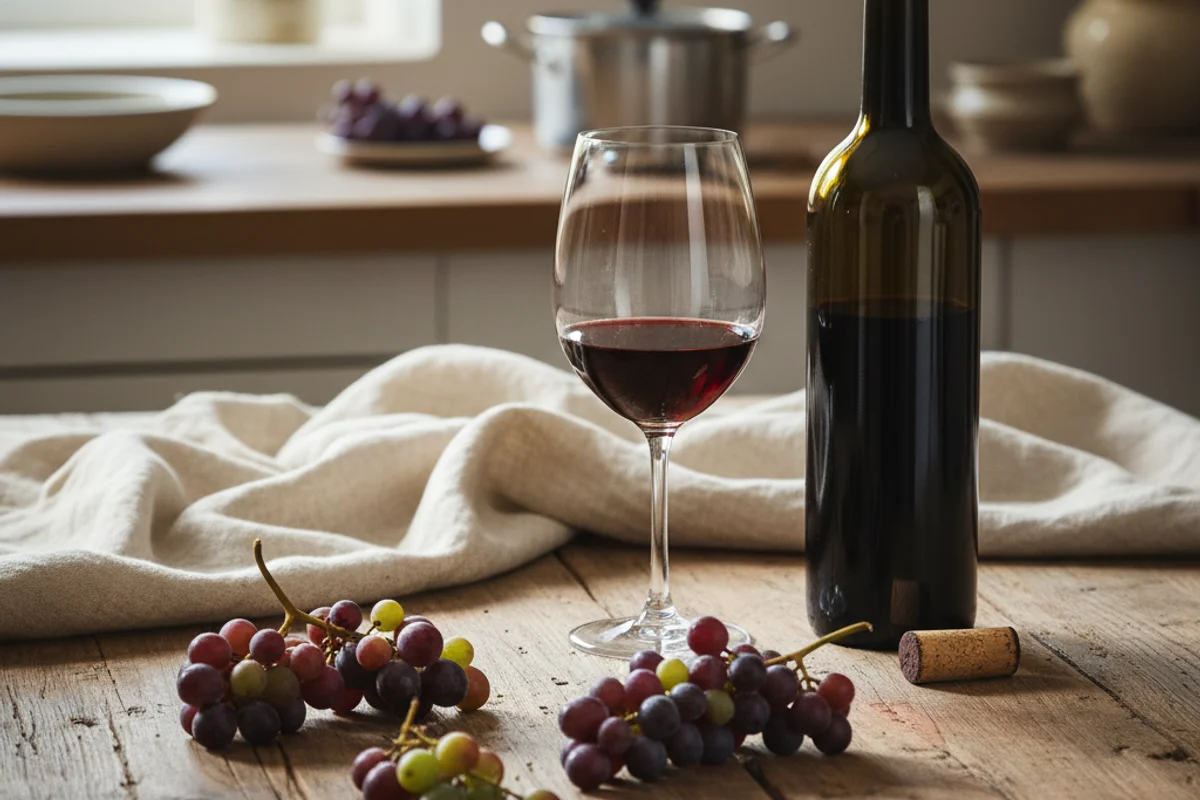
Picture this: you’re hiking through the Texas Hill Country in October, and you spot tight little clusters of tiny dark grapes clinging to a vine. You pop one in your mouth — tart at first, then a rush of sweet, wild fruit hits the back of your palate. That’s Vitis berlandieri, the Fall Grape, and it makes a surprisingly well-balanced wine. Small berries mean big flavor concentration, but they also mean patience. The destemming alone will test your resolve. The reward is a light, fruit-forward red that’s genuinely worth the effort.
The beginner trap: Skipping the pectic enzyme step — these tiny, thin-skinned berries won’t give up their juice easily, and skipping it leaves you with a cloudy, underfilled ferment.
Ingredients
- 13–15 lbs ripe Vitis berlandieri grapes (wild-foraged; no grocery substitute — see Notes)
- ⅓–½ lb granulated white sugar
- 1 Campden tablet, finely crushed
- ¾ tsp pectic enzyme
- 1 tsp yeast nutrient
- 1 packet Lalvin 71B-1122 yeast (or Red Star Côte des Blancs as a substitute)
Method
- Remove all grapes from their stems by hand, discarding any that are shriveled or moldy. Place the destemmed grapes into a nylon straining bag, tie it closed, and set it in your primary fermenter.
- Squeeze the bag firmly until you collect enough juice to fill a hydrometer test tube. Float your hydrometer and note the reading.
- Calculate how much sugar you need to bring the specific gravity up to 1.088. Add the sugar directly to the juice and stir until fully dissolved.
- Crush the Campden tablet to a fine powder, stir it into the must, and cover the fermenter with a clean cloth. Let it rest for 10 hours.
- Add the pectic enzyme, stir well, recover the fermenter, and wait another 10 hours.
- Activate your yeast according to the packet instructions, then add it to the must. Recover the fermenter.
- Squeeze the bag twice a day for 5–7 days, until vigorous bubbling slows down noticeably.
- Lift out the straining bag, let it drain, then press it firmly to extract every last bit of juice. Discard the solids.
- Transfer the juice to a clean secondary fermenter (a glass carboy works well), top up to the shoulder with water if needed, and fit an airlock.
- After 30 days, rack the wine into a clean vessel, top up, and refit the airlock.
- Rack again after another 30 days, then stabilize the wine with a crushed Campden tablet and ½ tsp potassium sorbate if you plan to sweeten it.
- If sweetening, adjust to taste, wait 30 days, then bottle. If leaving dry, wait 10–14 days after the final rack and bottle. Age at least 3–6 months before opening.
Why this works
Starting gravity of 1.088 targets a finished alcohol level around 11–12% ABV — enough to preserve the wine without overwhelming the delicate fruit character these small grapes carry. Lalvin 71B is a smart yeast choice here because it metabolizes some malic acid during fermentation, softening the natural tartness of wild grapes without a full malolactic conversion. Pectic enzyme breaks down pectin in the cell walls, which is especially important with thin-skinned small berries that won’t crush efficiently. The two-stage Campden-then-enzyme timing matters: sulfite kills off wild yeast and bacteria first; waiting 10 hours before adding pectic enzyme ensures the enzyme isn’t neutralized by residual sulfur dioxide.
Notes
Vitis berlandieri is a wild-foraged grape native to Central Texas and northern Mexico — you won’t find it at a grocery store. If you can’t forage it, this recipe works well with other wild native grapes like V. rupestris or even cultivated Concord grapes, though sugar additions will vary based on your hydrometer reading. If you’ve foraged a large batch, freeze the grapes in zip-lock bags first — freezing and thawing actually helps break down the skins and improves juice extraction, reducing how hard you need to squeeze the bag.