Muscadine Grapes
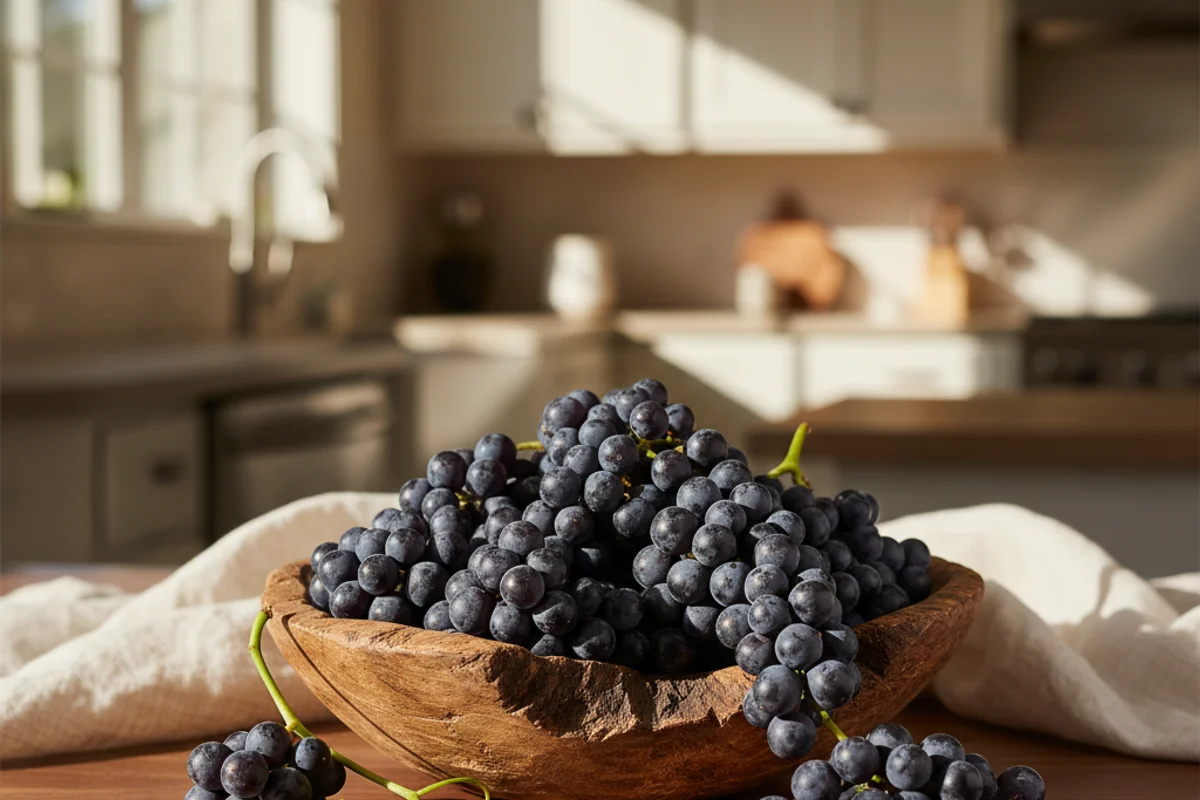
If you’ve ever hiked through the American Southeast in late summer, you’ve probably walked right under a muscadine vine without knowing it. These thick-skinned, bronze-to-purple grapes grow wild from East Texas to the Carolina coast, and they pack a flavor that’s bold, musky, and unmistakably Southern. The finished wine is dense and rustic when young — almost too intense — but give it two to four years in the bottle and something remarkable happens. The rough edges round out, and that wild fruit character becomes genuinely complex.
The beginner trap: Skipping an acid test before pitching yeast — muscadines are highly acidic, and failing to bring that number down before fermentation starts will give you a wine that tastes sharp and harsh no matter how long you age it.
Ingredients
- 6 lbs ripe muscadine grapes, fresh or frozen
- 2¼ lbs granulated sugar
- 3 qts water
- 1 tsp pectic enzyme
- 1 tsp yeast nutrient (available at homebrew shops; can substitute a pinch of bread yeast nutrient in a pinch, though dedicated wine nutrient is better)
- 1 Campden tablet, crushed
- 1 packet Montrachet wine yeast (or any dry red wine yeast)
- Potassium bicarbonate or calcium carbonate for acid reduction (see Notes)
Method
- Bring the water to a boil and dissolve the sugar in it completely, then set the syrup aside to cool.
- Put on rubber gloves — muscadine juice is acidic enough to irritate bare skin. Wash, destem, and crush the grapes thoroughly.
- Place the crushed grapes inside a nylon straining bag, tie it closed, and set it in your primary fermentation bucket.
- Pour the cooled sugar syrup over the bag of grapes. Add the crushed Campden tablet and yeast nutrient, then cover the bucket tightly.
- After 12 hours, add the pectic enzyme. Cover again and wait another 12 hours.
- Test the specific gravity (SG) and titratable acidity (TA). SG should be at or above 1.090; TA should be no higher than 7 parts per thousand (ppt) as tartaric. Adjust as needed before moving forward (see Notes for acid reduction options).
- Sprinkle in the wine yeast, recover the bucket, and squeeze the grain bag gently while stirring the must twice a day.
- Ferment at room temperature for 5–7 days, or until SG falls to around 1.030. Press the bag firmly to extract as much liquid as possible, then discard the pulp.
- Transfer the wine to a 1-gallon glass jug or carboy. Fit an airlock and leave it undisturbed for 3 weeks.
- Rack the wine off its sediment into a clean vessel, top up to minimize headspace, and refit the airlock.
- Rack again after 2 months, and once more after another 2 months. If the wine has cleared completely, it’s ready to bottle.
- To sweeten before bottling, stabilize with potassium sorbate, wait 10–12 hours, then stir in a simple syrup (2 parts sugar dissolved in 1 part water) to taste — start with about ⅔ cup per gallon.
- Bottle and store. It’s drinkable after one year, but noticeably better at two to four years.
Why this works
Muscadines (Vitis rotundifolia) carry a much higher natural acid load than most wine grapes. That acid, if left unchecked, overwhelms the yeast and produces a wine that stays harsh even after fermentation is complete. Campden tablet sulfite kills off wild microbes so your chosen yeast can dominate. Pectic enzyme breaks down the thick cell walls in muscadine skins, releasing color and flavor compounds that would otherwise stay trapped — and preventing a cloudy, pectin-haze finish. The two-stage wait (12 hours after Campden, 12 more after pectic enzyme) matters because sulfite and pectic enzyme actually work against each other if added at the same time. Give the sulfite a head start, then bring in the enzyme once it has done its job.
Notes
Frozen muscadines work well here — freezing ruptures the cell walls and actually makes crushing easier. Look for them at Southern grocery stores or online. If your TA is between 8–10 ppt, stir in 3.4 grams of potassium bicarbonate (sold at homebrew shops) per gallon to drop it by 1 ppt; chill the must for a few days to help the sediment settle, then rack off it. For acidity above 10 ppt, use 2.5 grams of calcium carbonate per gallon instead, treating only half the batch at a time to control foaming.