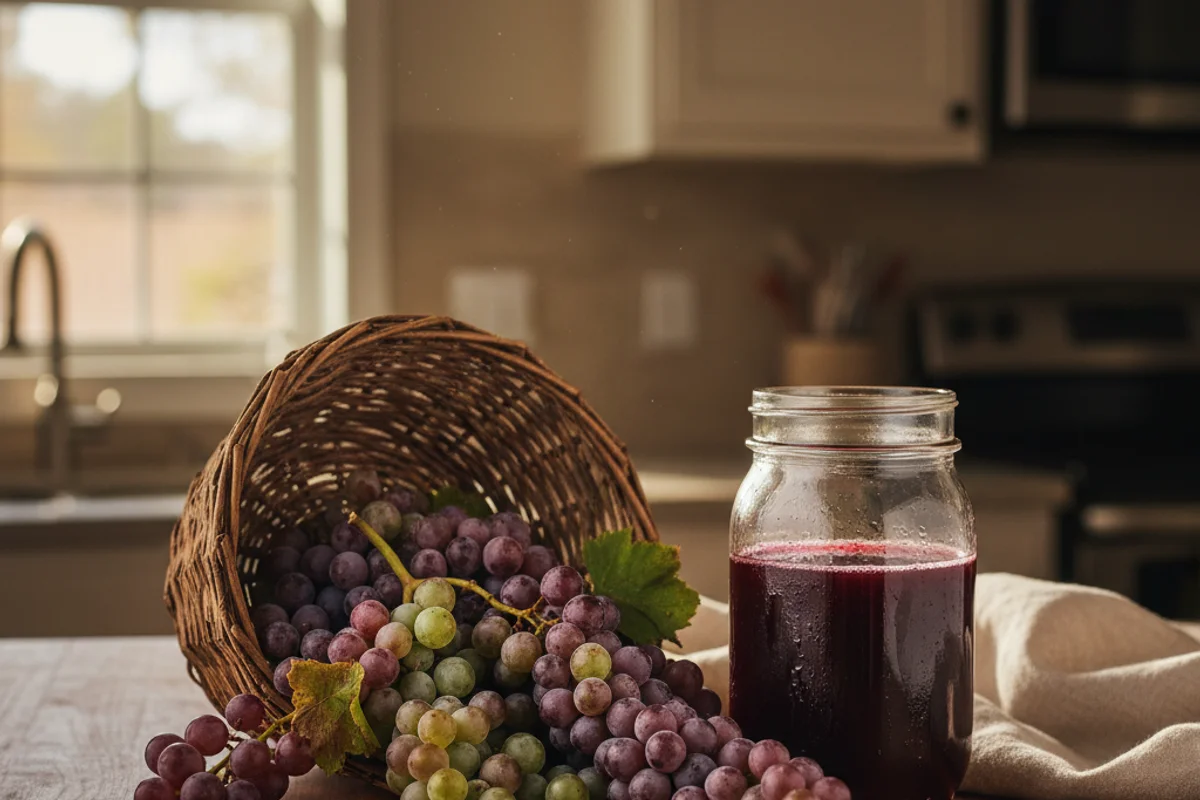
Mustang Grape Juice
Wild Mustang grapes are the overachievers of the Texas hill country — small, dark, and loaded with so much acid they’ll make your lips pucker before the juice even hits your tongue. That intensity is exactly what makes them interesting, and exactly what makes them tricky. Cut the juice with water at the right ratio and you get a bold, deep red wine with real character. Go too heavy on the juice and you’re drinking something closer to vinegar with ambitions. This recipe uses a 1:3 juice-to-water ratio for a balanced result.
The beginner trap: Skipping the hydrometer check after mixing — Mustang juice varies wildly in sugar content, and you can’t guess your way to a reliable fermentation.
Ingredients
- 1 quart (4 cups) Mustang grape juice, fresh or frozen
- 3 quarts (12 cups) water
- 1¾ lbs (about 3½ cups) granulated white sugar
- 1 tsp yeast nutrient (available online or at homebrew shops)
- 1 packet Champagne or Montrachet wine yeast
Method
- Dissolve the sugar completely in the water, then stir in the grape juice and yeast nutrient in your primary fermentation bucket.
- Check the specific gravity with a hydrometer — you’re aiming for at least 1.090. If it reads lower, stir in a little more sugar until it hits that mark.
- Sprinkle the yeast packet over the surface of the liquid; do not stir it in yet. Cover the bucket loosely with a clean cloth.
- Once you see clear signs of active fermentation — bubbling, foam, or a yeasty smell — stir the yeast into the must.
- Let the must ferment until the specific gravity drops to 1.020 or below, which usually takes 6 to 7 days.
- Siphon the wine off the sediment into a clean 1-gallon glass jug (secondary fermenter) and fit it with an airlock.
- Rack the wine every 30 days, topping the jug back up to the shoulder each time, until the wine runs clear.
- Once clear, wait another 30 days, then rack one final time and bottle. If you want a sweeter wine, add a stabilizer before this last rack, wait 10 days, then sweeten to taste before bottling.
Why this works
Mustang grapes sit at an extreme end of the acidity scale — their pH can be so low that it slows yeast activity and makes the finished wine harsh. Diluting the juice at a 1:3 ratio does two things at once: it pulls the acid concentration down to a range where yeast can thrive and where your palate won’t revolt, and it gives you enough volume to hit a proper starting gravity with a reasonable amount of added sugar. Yeast nutrient steps in because highly acidic, diluted musts can be nutrient-poor environments — giving the yeast a boost here means a cleaner, more complete fermentation.
Notes
Frozen juice works perfectly here; freezing actually helps break down grape pulp and can make pressing easier if you’re starting from whole fruit. For a bolder, more grape-forward wine, bump the ratio to 1:2 (2½ pints juice to 5 pints water) — keep all other quantities the same. This wine is drinkable young, but it rewards patience; aim to let it age at least a year for the best results.