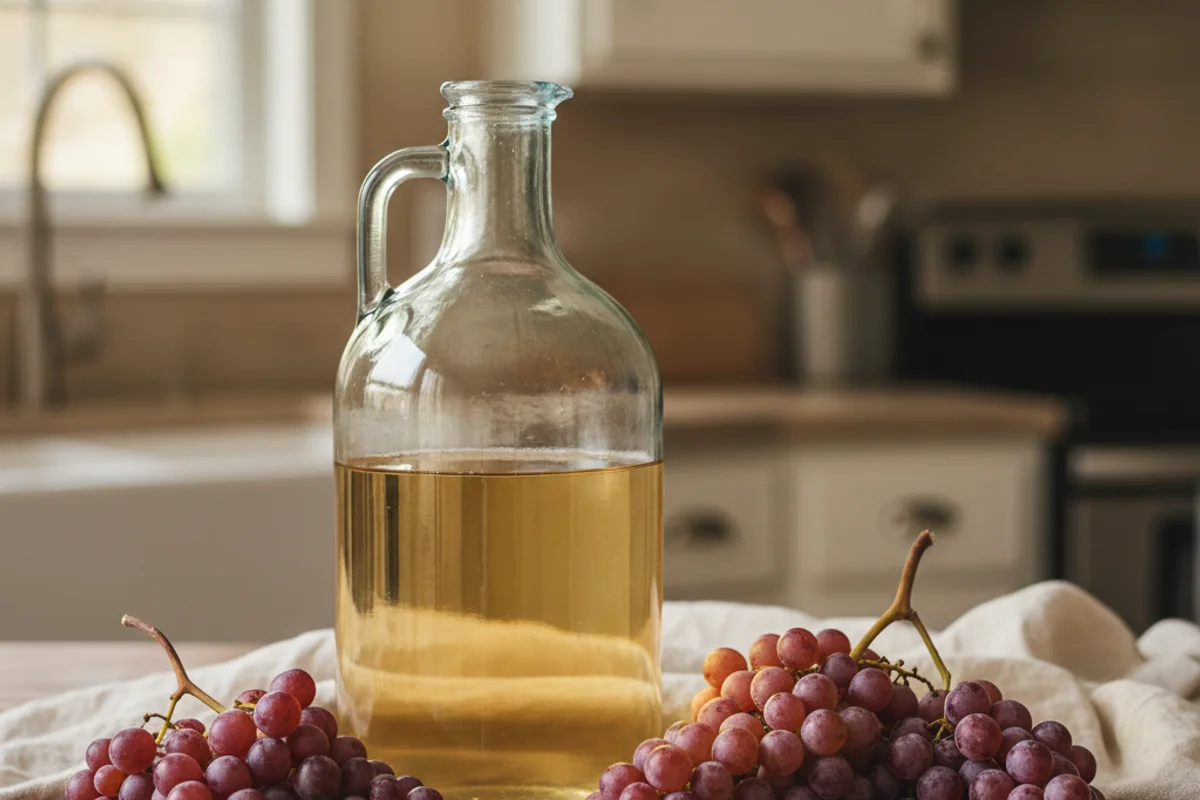
MUSTANG GRAPE WINE (Semi-Dry, White) [2] Makes 1 Gallon
Black Mustang grapes are the wild child of the Texas Hill Country — intensely pigmented, fiercely aromatic, and loaded with enough acid to make your cheeks pucker on contact. Strip away the skins before fermentation and you get something surprising: a pale, floral white wine with good structure and a dry-leaning finish. Think of it as the winemaker’s version of making white wine from red grapes — the color lives in the skin, and once that’s out of the picture, you’re working with clean, bright juice that rewards patience. Give this bottle a full year before you judge it.
The beginner trap: Mustang grapes are notoriously high in acid, and skipping the acidity check before moving to secondary fermentation will leave you with a wine that tastes sharp and unpleasant no matter how long you age it.
Ingredients
- 6 lbs. black Mustang grapes (fresh or frozen)
- 1¾ lbs. granulated white sugar
- 6 pints (12 cups) water
- 1 Campden tablet, crushed
- 1 packet wine yeast (Lalvin EC-1118 or any all-purpose wine yeast)
- 1 tsp. yeast nutrient
Method
- While grapes are still on the stems, peel away the skins by hand — wearing rubber gloves protects your skin from the staining juice and caustic acidity.
- Pull the now-skinless grapes off the stems and rinse them well under cold water.
- Place the grapes into a nylon straining bag, tie the top closed, and crush the fruit over a sanitized crock or food-grade plastic bucket — keep those gloves on.
- Add the sugar, water, crushed Campden tablet, and yeast nutrient to the bucket; stir thoroughly, then cover the vessel loosely and leave it for 24 hours.
- After 24 hours, add the wine yeast; push the bag down under the liquid twice a day for the next 5–7 days.
- Once the vigorous bubbling slows, lift the bag and squeeze it firmly to extract as much liquid as possible, then discard the pulp.
- Test the acidity with an acid testing kit; if it reads above 7 parts per thousand (ppt) tartaric, reduce it using potassium bicarbonate or cold stabilization before moving on.
- Transfer the wine to a 1-gallon glass jug (secondary fermenter), top up with water to just below the neck, and fit an airlock; let it sit undisturbed for three weeks.
- Rack the wine into a clean jug, top up again to minimize headspace, and let it rest for three more months.
- If the wine is clear, bottle it; if it’s still hazy after two weeks, add a fining agent (such as Super-Kleer or plain unflavored gelatin) and bottle ten days later.
- Wait at least one year before tasting — this wine peaks somewhere around the two-to-three-year mark.
Why this works
Mustang grapes get their eye-watering acidity from unusually high levels of tartaric and malic acid. Removing the skins before fermentation does two things at once: it eliminates nearly all the red pigment (anthocyanins live in the skin cells, not the juice), and it cuts down on harsh tannins that would make the wine astringent. The 24-hour Campden tablet rest before pitching yeast kills off wild yeast and bacteria that would otherwise compete with your chosen strain and produce off-flavors. Keeping fermentation in a sealed secondary vessel with an airlock protects the wine from oxygen, which would otherwise turn those delicate aromatics flat and stale.
Notes
Frozen Mustang grapes work well here and are sometimes easier to source outside Texas — freezing also helps break down cell walls, so you’ll get slightly better juice yield when you crush them. If you can’t find an acid testing kit locally, they’re available at any homebrew shop or online for a few dollars; this is one recipe where skipping that step is genuinely risky. Potassium bicarbonate is the easiest acid-reduction tool for beginners — stir in small amounts, let it rest, and retest until you hit that 7 ppt target.