MUSTANG GRAPE WINE (Semi-Dry, White) [2]
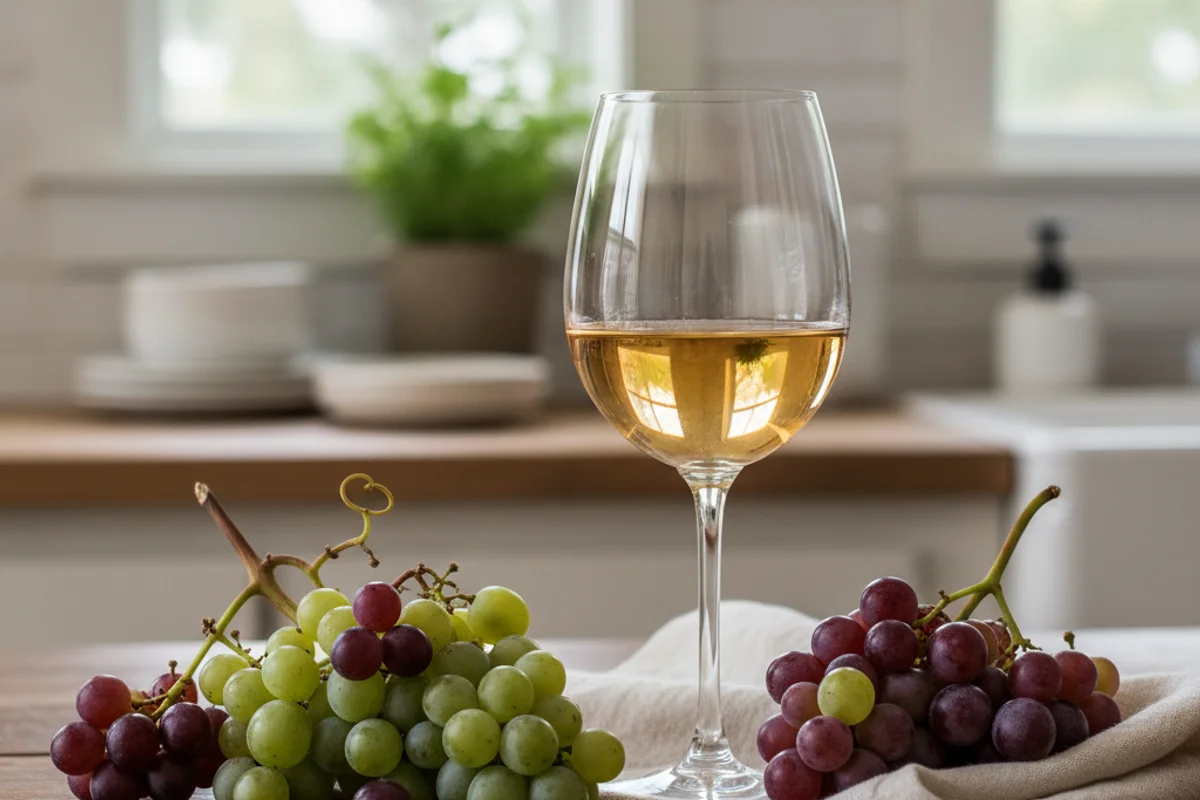
Black Mustang grapes are a wild Texas native with a reputation — they’re intensely flavored, aggressively acidic, and not shy about either quality. Strip away the skins before fermentation and you get a white wine with surprising delicacy: floral, lightly fruity, and just off-dry. Age it a year or two and that bracing acidity settles into something genuinely elegant. This is a grape that rewards patience and punishes shortcuts.
The beginner trap: Skipping the acidity test and adjustment — Mustang grapes are extremely high-acid, and without bringing that number down to around 7 parts per thousand (tartaric), your finished wine will taste sharp and unpleasant no matter how long you age it.
Ingredients
- 6 lbs. black Mustang grapes, fresh or frozen
- 1¾ lbs. granulated white sugar
- 6 pints (12 cups) water, filtered or tap
- 1 Campden tablet, crushed (or ¼ tsp potassium metabisulfite powder)
- 1 packet wine yeast (Lalvin EC-1118 or any general-purpose wine yeast)
- 1 tsp yeast nutrient
Method
- While the grapes are still on the stems, peel off and discard the skins — gloves are a good idea here. Then remove the now-skinless grapes from the stems.
- Rinse the peeled grapes thoroughly, then load them into a nylon straining bag (a mesh paint strainer bag from a hardware store works fine). Tie the bag closed.
- Wearing rubber gloves, crush the grapes inside the bag over a large food-safe bucket or crock to catch all the juice.
- Add the sugar, water, and crushed Campden tablet to the juice and pulp. Stir well until the sugar dissolves, then cover the vessel loosely and let it rest for 24 hours.
- After 24 hours, sprinkle in the wine yeast and yeast nutrient. Stir gently to combine.
- Twice a day for the next 5 to 7 days, push the fruit bag down into the liquid and stir. Active bubbling will tell you fermentation is running strong.
- Once vigorous bubbling slows down, lift the bag and squeeze it firmly to extract as much liquid as possible, then discard the pulp.
- Test the acidity of the wine using an acid test kit (available at any homebrew shop). If the reading is above 7 parts per thousand tartaric, reduce the acidity using cold stabilization or dilution before moving forward.
- Transfer the wine to a clean secondary fermentation vessel (a 1-gallon glass jug works well), top up with a small amount of water to minimize headspace, and fit an airlock. Let it sit undisturbed for three weeks.
- Rack the wine off its sediment into a clean vessel, top up again, and refit the airlock. Repeat this racking step three months later.
- Once the wine runs clear, bottle it. If it hasn’t cleared after two weeks, add a fining agent (such as Super-Kleer or bentonite, both available at homebrew shops) and wait ten more days before bottling.
- You can taste it young, but give it at least one to three years if you can — the transformation is worth the wait.
Why this works
Mustang grapes carry extremely high tartaric acid levels — far higher than typical wine grapes. Removing the skins before fermentation strips out much of the harsh tannin and dark pigment, giving the wine a lighter, more delicate character. The Campden tablet added at the start kills off wild yeast and bacteria that could push the wine in unexpected directions, leaving the field clear for your chosen wine yeast to do its job cleanly. The two-stage racking process removes dead yeast cells (called lees) that can cause off-flavors if left in contact with the wine too long. Time in the bottle allows the remaining acids to mellow and integrate, turning a sharp young wine into something genuinely smooth.
Notes
Frozen Mustang grapes work well here — freezing actually breaks down cell walls and can improve juice extraction. If you can’t find Mustang grapes locally, look for them at farmers markets across the South and Southwest in late summer, or check online fruit suppliers. Acid test kits are inexpensive and widely available at homebrew retailers like MoreBeer or your local homebrew shop — don’t skip this step with this particular grape.