Native North American Grapes — Vitis Rupestris
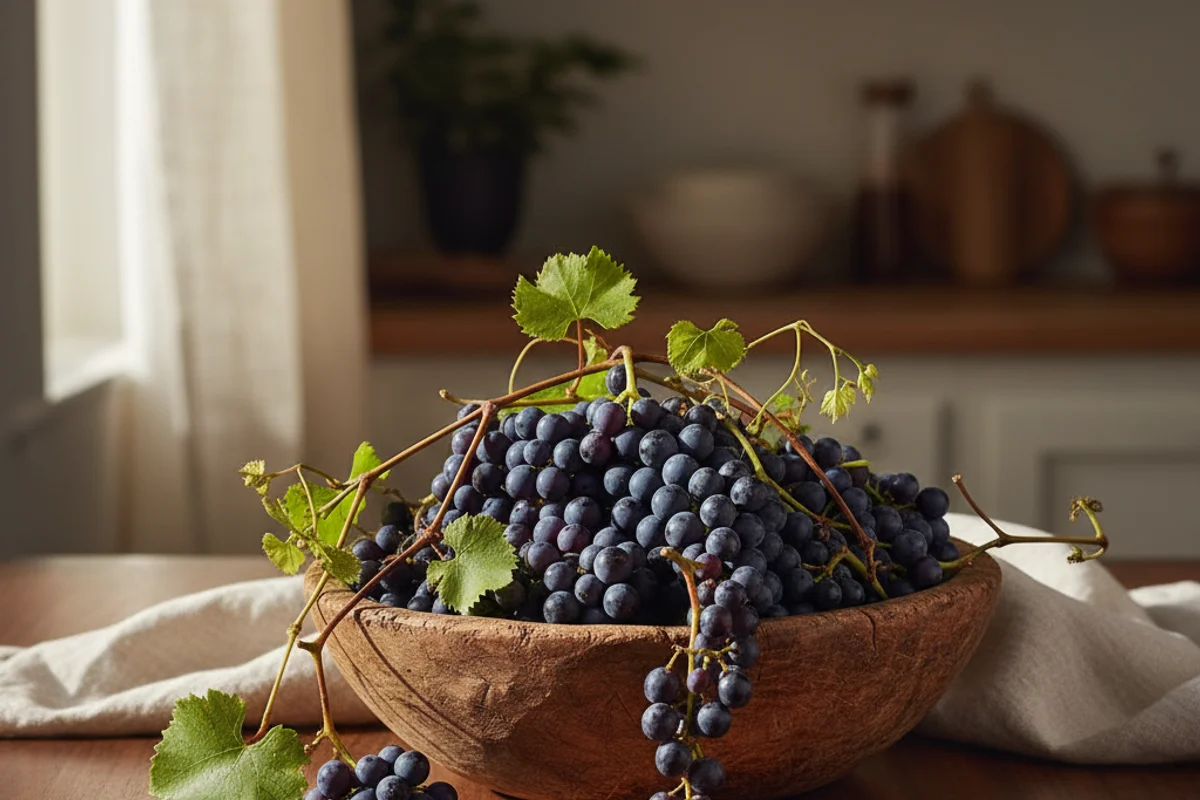
Picture a grape that French vintners once called the best American claret they’d ever tasted — and it grows wild along rocky creek beds from Texas to Kentucky. Vitis rupestris, the Sand Grape or Rock Grape, produces tight little clusters of dark, almost currant-sized berries that ripen by midsummer. No foxy funk, no off-putting aftertaste. Just a bright, clean fruit flavor with enough character to make serious wine. The catch? You probably won’t find it at a farmers market. This is a forager’s grape, and working with it means understanding what it is before you ever crush a berry.
The beginner trap: New winemakers assume these tiny berries behave like cultivated wine grapes — they don’t; the clusters are small, yields are low, and sugar levels vary wildly from plant to plant, so always measure with a hydrometer before you commit to a recipe.
Ingredients
- 4 lbs fresh Vitis rupestris berries, stems removed (fresh or frozen; freeze overnight to break down skins if fresh)
- 1¾ lbs granulated white sugar (adjust after hydrometer reading; target 1.085–1.090 SG)
- 1 tsp acid blend (citric/tartaric/malic mix, available at homebrew shops; or 3 tbsp fresh lemon juice as a substitute)
- ½ tsp pectic enzyme powder (helps break down pulp and clear the wine)
- ¼ tsp potassium metabisulfite (Campden tablet — 1 crushed tablet works fine)
- ½ tsp yeast nutrient
- 1 packet wine yeast, Lalvin 71B or Red Star Côte des Blancs (both widely available online or at homebrew shops)
- Water to make up 1 gallon total volume
Method
- Rinse the berries well and crush them by hand or with a potato masher in a sanitized fermentation bucket. If you froze them first, let them thaw completely before crushing — the cell walls will already be broken down.
- Dissolve the Campden tablet (or potassium metabisulfite) in a small amount of water and stir it into the crushed fruit. Cover loosely and wait 24 hours — this knocks out wild yeast and bacteria.
- After 24 hours, stir in the pectic enzyme, acid blend, and yeast nutrient. Cover again and wait another 12 hours.
- Take a hydrometer reading of the juice. Dissolve your sugar in a cup of warm water, add it to the must, and stir well. Check SG again and adjust until you hit 1.085–1.090.
- Sprinkle the yeast over the surface of the must. Do not stir yet — let it rehydrate for 15 minutes, then stir it in gently.
- Ferment at room temperature (65–75°F), stirring once daily and pressing the fruit cap back down. Do this for 5–7 days until SG drops to around 1.020.
- Strain the must through a fine mesh bag or cheesecloth into a sanitized 1-gallon glass jug (called a carboy). Press the pulp firmly to get all the juice out.
- Fit an airlock and let the wine finish fermenting — usually another 1–2 weeks — until bubbling nearly stops and SG reaches 0.998 or lower.
- Rack (siphon) the wine off the sediment into a clean jug. Add one more crushed Campden tablet dissolved in a little water, refit the airlock, and age for at least 2–3 months before bottling.
Why this works
Vitis rupestris berries are loaded with pigment and have thin skins, which means color and flavor compounds extract quickly during fermentation. The pectic enzyme breaks down pectin in the pulp — without it, you’d end up with a hazy wine that refuses to clear no matter how long you wait. The Campden tablet at the start buys you a clean fermentation by suppressing the random wild yeast living on the grape skins. Those wild strains are unpredictable and can produce off-flavors; your chosen wine yeast is a known quantity. Lalvin 71B is a smart pick here because it metabolizes some malic acid on its own, softening the bright, sometimes sharp acidity these native grapes can carry.
Notes
Frozen Vitis rupestris berries from a previous harvest work just as well as fresh — freeze them in zip-lock bags and thaw fully before crushing. If you cannot forage this species, Concord grape juice (100% pure, no preservatives) can substitute at roughly 48 oz per gallon, though the flavor profile will be foxier. Always taste your fruit before adding acid blend — some wild plants produce sweeter, less acidic fruit and may need little or no added acid.