winemaking: Texas mulberry wine
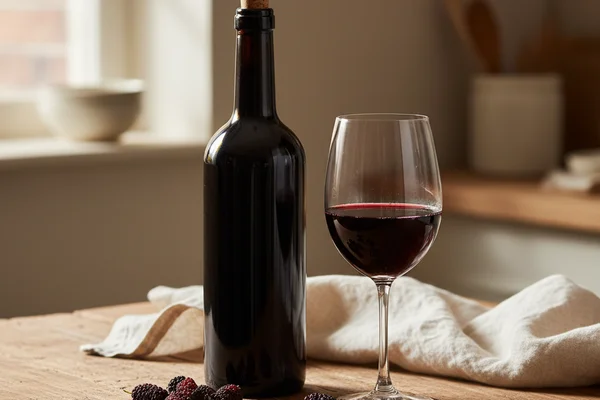
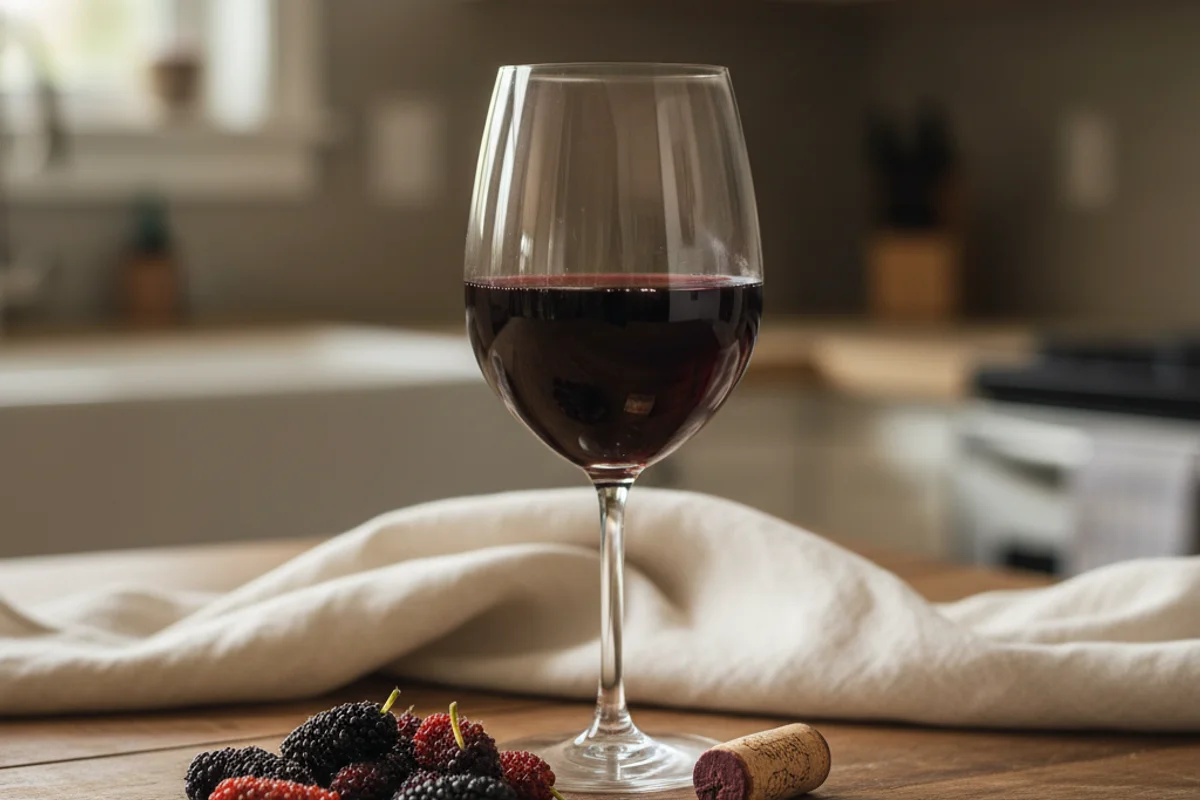
Texas mulberries (Morus rubra) are native to the Lone Star State, and they produce small, intensely dark fruit that stains everything they touch — your hands, your driveway, your shirt. That pigment is a feature, not a bug. In the fermenter, it becomes a deep garnet wine with bold, jammy flavor and enough tannin to reward patience. This is a slow-build wine. Crack a bottle too early and it tastes rough. Give it two years and it tastes like a plan that worked.
The beginner trap: Skipping the light protection — clear glass and a bright room will strip the color out of this wine faster than you’d expect, leaving you with something dull and faded.
Ingredients
- 6 lb. fresh Texas mulberries (fresh or frozen; other mulberry varieties work too)
- 2½ lb. granulated white sugar, divided
- 1 lb. raisins, finely chopped
- ¾ tsp. acid blend (find it at homebrew shops; citric acid from the grocery store is a rough substitute)
- ½ tsp. pectic enzyme
- 1 Campden tablet, crushed
- 6 pints (3 quarts) water
- 1 packet Bordeaux wine yeast (Red Star Côte des Blancs or any dry red wine yeast works)
- 1 tsp. yeast nutrient
Method
- Remove stems from the mulberries, rinse them well, and place them in your primary fermentation vessel.
- Add the finely chopped raisins to the vessel with the fruit.
- Bring the water to a boil and pour it over the fruit. Let everything cool to 75–80°F.
- Stir in the crushed Campden tablet, pectic enzyme, half the sugar, and the yeast nutrient. Mix well, cover loosely, and let it sit for 24 hours.
- Sprinkle in the yeast, stir well, re-cover, and ferment on the pulp for four days. Stir the must twice daily to keep the fruit cap wet and the fermentation active.
- Strain the must through a fine mesh straining bag or nylon sieve, pressing gently to get the juice out without forcing bitter solids through.
- Stir in the remaining sugar until fully dissolved.
- Transfer to a dark secondary fermentation vessel — or wrap a clear vessel completely in brown paper — fill to within an inch or two of the airlock, and fit the airlock.
- Rack into a clean vessel after two months, then again two months after that.
- Bottle in dark glass. Store in a dark place and wait at least six months before tasting. Two years is better.
Why this works
Splitting the sugar addition is deliberate. Adding all of it upfront raises the osmotic pressure on the yeast right from the start, which can stress or stall fermentation before it gets going. By adding half at the start and half after straining, you give the yeast a manageable starting gravity and then bump it up once fermentation is already rolling. The raisins pull double duty: they add unfermentable compounds that give the finished wine more body, and their natural grape tannins help structure and preserve the wine during aging. Pectic enzyme breaks down pectin in the fruit cell walls, which improves juice yield and prevents a hazy finished wine.
Notes
Frozen mulberries work great here — freezing ruptures the cell walls and actually improves juice extraction. If you can’t find acid blend at a homebrew store, substitute ½ tsp. citric acid (found in the canning aisle). The color in this wine is UV-sensitive, so dark storage isn’t optional — it’s the difference between a beautiful garnet and a sad brown.