ALLEGHENY SHADBUSH WINE
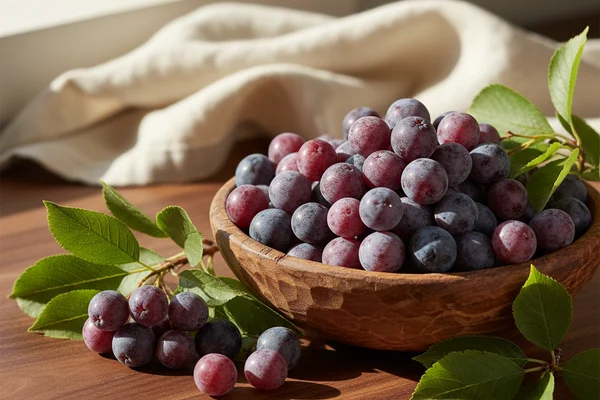
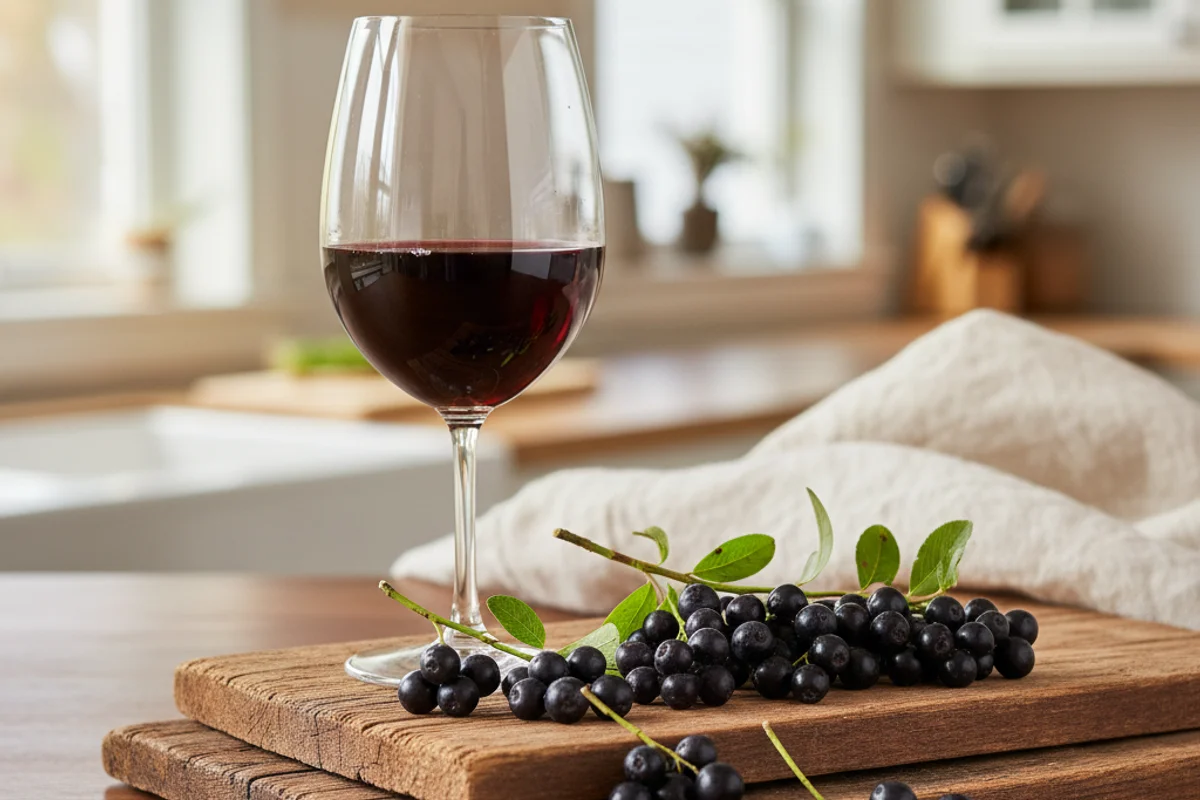
Shadbush berries look like blueberries that went to finishing school — deep purplish-black, sweet, and faintly almond-flavored, thanks to trace compounds in their seeds. Amelanchier laevis ripens in early summer along eastern woodland edges, and if you’re lucky enough to find a tree before the birds do, you have the makings of a rich, full-bodied country wine. The golden raisins here aren’t filler — they add body, fermentable sugars, and a subtle dried-fruit backbone that rounds out what can otherwise be a lean juice.
The beginner trap: Skipping the simmering step and going straight to fermentation leaves a lot of color, flavor, and extractable sugar locked inside the skins — don’t shortcut the stovetop.
Ingredients
- 4 lbs Allegheny shadbush berries (fresh or frozen), washed and destemmed
- 1 lb golden raisins, chopped or minced
- 2 lbs granulated white sugar
- ½ tsp tartaric acid (or acid blend, available at homebrew shops)
- 1 tsp pectic enzyme
- 5–6 pints water
- 1 packet wine yeast (Lalvin 71B or EC-1118 work well)
- 1 tsp yeast nutrient
- 2 Campden tablets, crushed
Method
- Crush the destemmed berries and place them in a large saucepan with enough water to cover. Bring to a low boil, then reduce heat and simmer covered for 10 minutes.
- Fold the top layer of berries under so the bottom fruit rises, replace the lid, and simmer another 10 minutes.
- Pour the cooked berry mash into a nylon straining bag set over your primary fermenter. Let it drip and cool completely — don’t squeeze yet.
- Dissolve the sugar in 3 cups of boiling water and let the syrup cool to room temperature.
- Place the chopped raisins in a second nylon straining bag and tie it closed.
- Add the dripped berry juice, both straining bags, tartaric acid, pectic enzyme, yeast nutrient, and all but ⅔ cup of the sugar syrup to the primary fermenter. Stir well.
- Cover the fermenter and wait at least 10 hours before adding yeast — this gives the pectic enzyme time to work.
- Activate your wine yeast according to the packet, then add it to the must. Cover loosely and move to a warm spot (70–75°F).
- Squeeze and stir both bags twice daily. After 5 days of active fermentation, gently press the berry bag to extract remaining juice, then discard the pulp and seeds.
- Re-cover and ferment for 5 more days, then gently press the raisin bag and discard its pulp.
- Siphon the liquid off the sediment into a secondary fermenter (glass carboy works great here). Add the reserved ⅔ cup sugar syrup, top up with water, and fit an airlock. Move to a cooler spot (60–65°F).
- Rack at 30-day intervals for three total rackings. Add one crushed Campden tablet at the first racking and again at the last. Only rack an extra time if you see significant new sediment.
- After the final racking, stabilize with potassium sorbate, wait 2–3 weeks, then rack into bottles.
- Store in a dark place. This wine is drinkable at 9 months but genuinely improves with another year in the bottle.
Why this works
Shadbush berries contain pectin — the same stuff that makes jelly set — and raw pectin in a wine turns it hazy and dull. Pectic enzyme breaks those pectin chains apart, which clears the wine and frees up flavor compounds that would otherwise stay bound to the pectin matrix. The 10-hour wait before adding yeast is critical: yeast activity raises alcohol levels quickly, and alcohol deactivates pectic enzyme. You want the enzyme working in a low-alcohol environment first. The two-stage bag pressing — berry bag at day 5, raisin bag at day 10 — staggers sugar and flavor release so fermentation stays vigorous without stressing the yeast.
Notes
Frozen shadbush berries work just as well as fresh — freezing ruptures cell walls and actually improves juice extraction during the simmer step. If you can’t find tartaric acid, use acid blend from any homebrew shop; in a pinch, 2 tablespoons of lemon juice per gallon is a rough substitute. Shadbush berries are sometimes sold as “Saskatoon berries” at farmers markets or online — same species family, same results here.