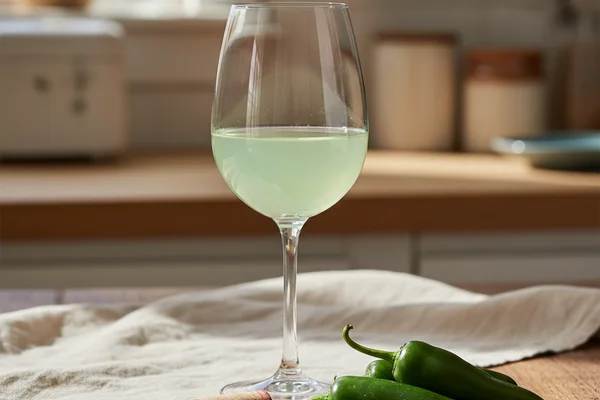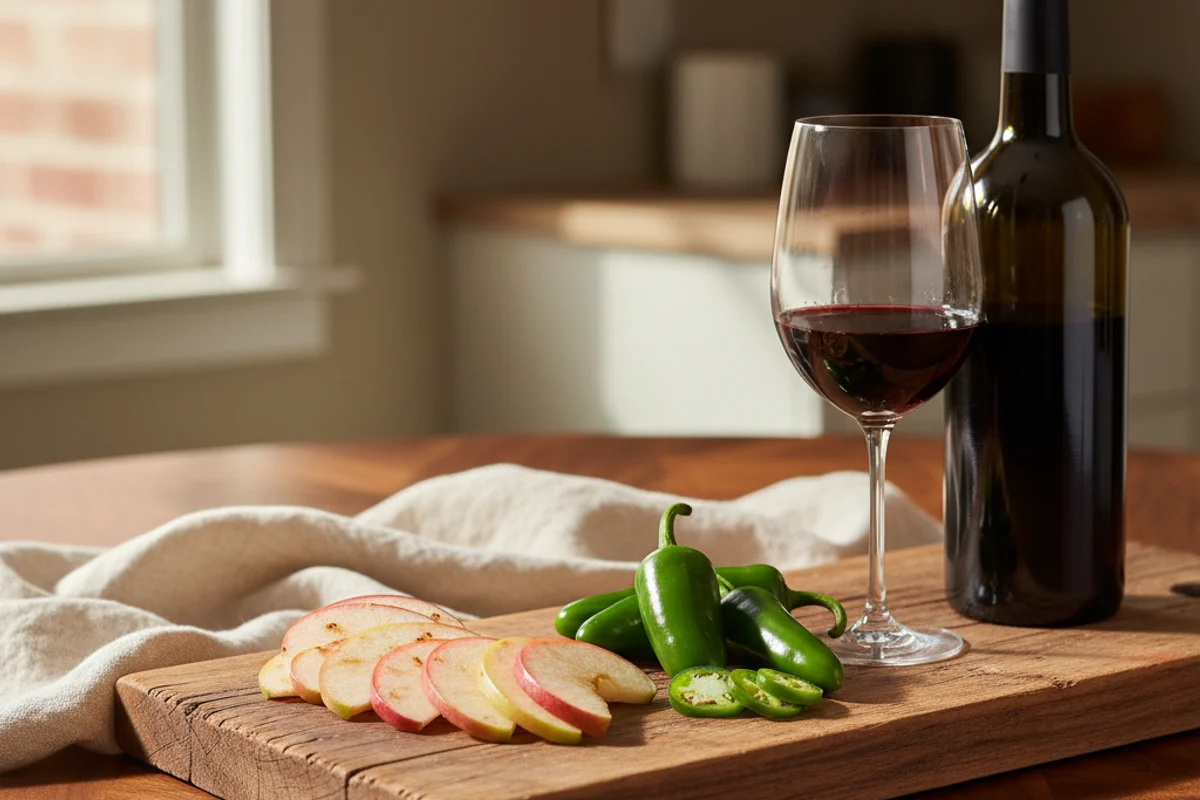
APPLE-JALAPENO WINE
Apple juice is sweet, bright, and a little boring on its own. Jalapeños are grassy, fruity, and carry a slow-building heat that sits right behind your molars. Put them together in a fermentation vessel and something genuinely interesting happens — a wine that opens like a crisp autumn orchard and finishes with a warm, slow burn. It’s not a gimmick. The capsaicin rides the alcohol like it was made to, and the apple’s natural acidity keeps the whole thing from tipping into hot sauce territory. Serve it slightly chilled with smoked pork or sharp cheddar and watch people try to figure out what they’re drinking.
The beginner trap: New winemakers skip the gloves when handling jalapeños, then touch their face — always wear rubber or nitrile gloves, and remember that seeding the peppers controls heat level more than any other single decision in this recipe.
Ingredients
- 1 gallon apple juice, fresh-pressed or store-bought bottled (no preservatives)
- 8 large jalapeños, fresh or frozen
- 1 lb granulated white sugar
- 3/4 tsp acid blend (find it at any homebrew shop or online)
- 1-2/3 tsp pectic enzyme
- 1 Campden tablet, crushed fine
- 1/4 to 1/2 tsp wine tannin powder (grape tannin or oak tannin both work)
- 1-1/2 tsp yeast nutrient
- 1 packet Champagne wine yeast (Lalvin EC-1118 is a solid grocery-store-accessible choice)
Method
- Pour the apple juice into your primary fermenter and stir in the sugar until fully dissolved.
- Add the acid blend, 1/4 tsp tannin, yeast nutrient, and the crushed Campden tablet; stir well, then cover the fermenter and leave it alone for 10 hours.
- Put on rubber or nitrile gloves, wash the jalapeños, and cut off the stems. Slice each pepper lengthwise — remove the seeds and membrane for a milder wine, leave them in if you want heat.
- Chop the peppers coarsely, add them to the fermenter along with the pectic enzyme, re-cover, and wait another 10 hours.
- Activate your yeast according to the packet directions, then add it to the fermenter and replace the cover.
- Stir the must once daily, keeping it covered between stirs, until the vigorous bubbling slows down noticeably.
- Taste the wine for tannin balance — if it tastes flat or flabby, stir in 1/8 tsp more tannin, wait 4 hours, taste again, and repeat if needed up to the 1/2 tsp total ceiling.
- Rack the wine into a 1-gallon glass secondary fermenter (a standard glass jug works fine) and fit an airlock; pour any leftover wine into a small bottle, stopper it, and set it aside for topping up later.
- Every 60 days for 6 months, rack the wine into a clean vessel, top it up, and refit the airlock.
- After 6 months, stabilize the wine (potassium sorbate plus another Campden tablet), sweeten to taste if you like, and wait 2 weeks.
- Rack into bottles and age at least 3 months before opening — 6 months is better.
Why this works
Jalapeños contain capsaicin, a compound that bonds to the same heat receptors in your mouth that respond to actual warmth. Ethanol — the alcohol your yeast produces — is a solvent that extracts capsaicin from the pepper flesh efficiently, which is why seeding the peppers matters so much: most capsaicin lives in the white membrane, not the flesh itself. The pectic enzyme breaks down pectin in both the apple juice and the pepper skins, which prevents a cloudy, hazy finished wine and helps extraction happen cleanly. Apple juice’s natural malic acid gives the wine its bright backbone, while the added acid blend fine-tunes the pH to keep yeast happy and the finished wine stable on the shelf.
Notes
Frozen jalapeños work just as well as fresh — freezing actually ruptures cell walls and speeds up extraction, so you may get slightly more heat from the same quantity. If you can’t find acid blend, a mix of tartaric and malic acid (available online) is a close substitute. If your finished wine tastes too hot even after seeding, extended aging softens capsaicin’s punch noticeably — patience is the cheapest fix.