JALAPENO WINE
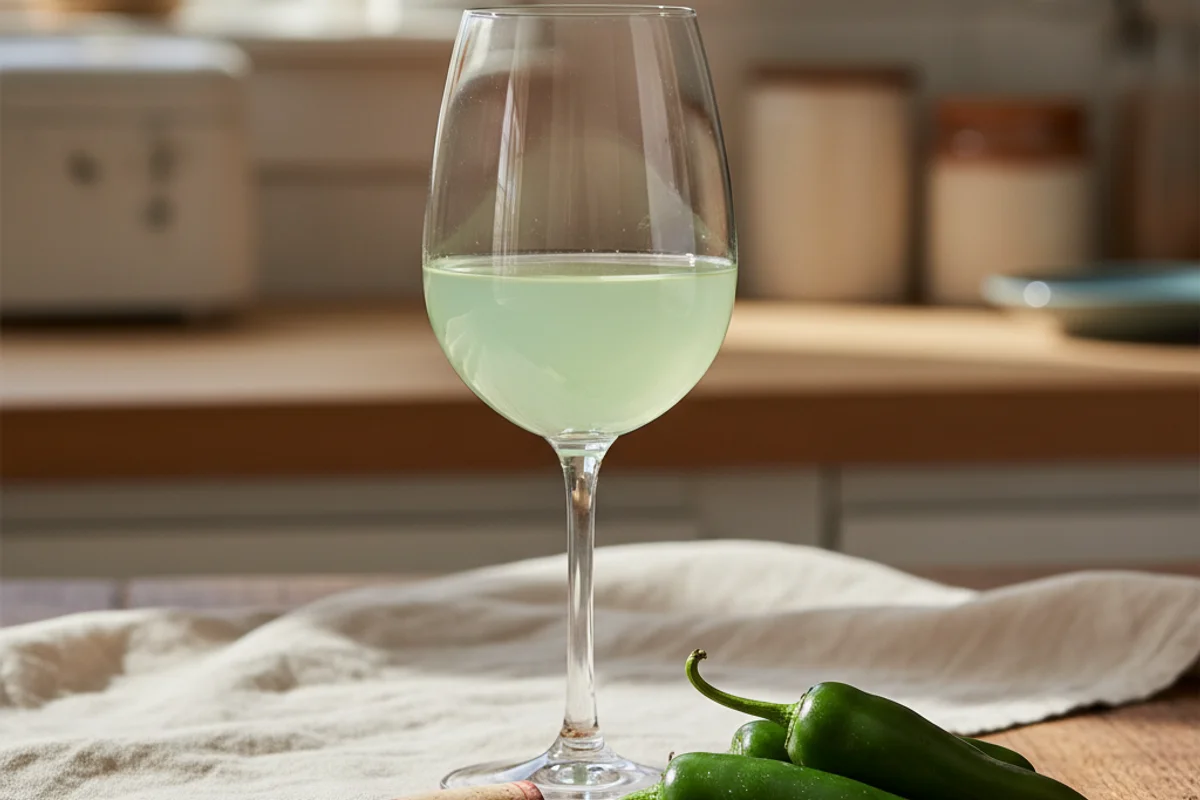
Jalapeños bring capsaicin heat, grassy vegetal notes, and a sharp bite that, when fermented dry, transforms into something genuinely surprising — a pale, straw-colored wine with warmth that builds slowly and lingers. Think less “hot sauce in a glass” and more “white wine with a slow-burn finish.” It works as a sipping wine on a cold night, holds up as a cooking wine in marinades and sauces, and mixed with tomato juice it does a convincing Bloody Mary impression. The heat level is entirely in your hands: seeds in means fire, seeds out means a gentler ride.
The beginner trap: Skipping the rubber gloves — capsaicin transfers to your hands and stays there for hours, so protect your skin every single time you handle the peppers, including when you squeeze the straining bag.
Ingredients
- 16 large fresh jalapeños (use 8 for less heat)
- 1 lb golden raisins, finely chopped
- 2 lbs granulated white sugar
- 1½ tsp acid blend (available at homebrew shops; bottled lemon juice is a rough substitute)
- ½ tsp pectic enzyme
- 1 Campden tablet, crushed
- ¾ tsp yeast nutrient
- 1 packet Champagne yeast (Lalvin EC-1118 works well)
- Water to make 1 gallon
Method
- Put on rubber gloves. Wash the jalapeños, cut off the stems, and slice each one lengthwise. Remove the seeds and membranes for moderate heat; leave them in for a hot wine.
- Add the sliced jalapeños and 2 cups of water to a blender or food processor and pulse until coarsely chopped — you want texture, not purée.
- Place the chopped raisins into a nylon straining bag. Pour the chopped jalapeños directly into the bag with the raisins, then tie the bag closed and drop it into your primary fermenter.
- Add the sugar, acid blend, yeast nutrient, and crushed Campden tablet to the fermenter. Pour in enough water to reach one gallon total, then stir well until the sugar fully dissolves.
- Cover the fermenter and let it sit undisturbed for 12 hours.
- Add the pectic enzyme, re-cover, and wait another 12 hours.
- Sprinkle in the yeast, cover loosely, and stir the must once a day for 7 days. Wear gloves every time.
- After 7 days, put your gloves on, squeeze the straining bag firmly to extract all the liquid, then remove and discard the bag.
- Transfer the liquid to a clean secondary fermenter (glass carboy or jug) and fit an airlock. Ferment until completely dry — this typically takes 45 to 60 days.
- Rack into a clean secondary and refit the airlock. Rack twice more, 30 days apart, then rack into bottles after a final 30-day rest.
Why this works
Capsaicin — the compound responsible for jalapeño heat — is fat-soluble but also slightly soluble in alcohol. As fermentation progresses and alcohol builds, it pulls capsaicin and the pepper’s volatile aroma compounds into solution. The heat doesn’t disappear; it mellows and integrates. Golden raisins add fermentable sugar, body, and a subtle fruity backbone without adding competing fruit flavor. Pectic enzyme breaks down the pectin naturally present in the pepper flesh, which prevents a permanent haze from forming in the finished wine and helps it clear to that clean, pale straw color. Waiting for absolute dryness before racking is critical — residual sugar in a wine with this much microbial activity is an invitation for off-flavors and unwanted re-fermentation in the bottle.
Notes
For a wine that can age beyond a year, add ⅛ tsp of grape tannin powder (available at homebrew shops) along with the other dry ingredients. Fresh jalapeños from the grocery store work perfectly here — choose large, firm, dark green ones and avoid any that have started turning red. Small bottles with screw caps (like 375 ml splits) are ideal for this wine if you plan to use it primarily for cooking.