30-Day Wine
Think of this as the pickup truck of winemaking — no fancy equipment, no hydrometer readings, no Latin yeast strain names printed on a foil packet. You start with a can of frozen grape juice from the grocery store freezer aisle, add sugar and water, and let a humble pinch of yeast do the rest. Thirty days later you have something genuinely drinkable: grape-forward, a little sweet, a little rough around the edges, and completely honest about what it is. It won’t beat a Napa Cabernet. It was never trying to.
The beginner trap: Skipping the two-week rag-to-plastic-wrap swap lets too much oxygen in during late fermentation, which can turn your wine sour before it’s ready to drink.
Ingredients
- 24 oz (one standard can) Welch’s frozen concentrated grape juice, thawed
- 3 cups granulated white sugar
- Water to bring the total volume to 1 gallon
- ¼ tsp active dry yeast (bread yeast works; wine yeast is better)
- 1 clean 1-gallon glass jug
Method
- Pour the thawed grape juice concentrate into the jug, then add the sugar.
- Add water slowly, filling the jug to about 1 inch below where the shoulder starts to narrow — leave that headspace on purpose.
- Cap the jug loosely with a clean cloth rag and secure it with a rubber band; this lets CO₂ escape while keeping debris out.
- Store the jug in a dark spot that stays close to 70°F — a kitchen cabinet works fine.
- At the two-week mark, swap the rag for a thick piece of plastic wrap held tight with the rubber band; fermentation is slowing and you want less air contact now.
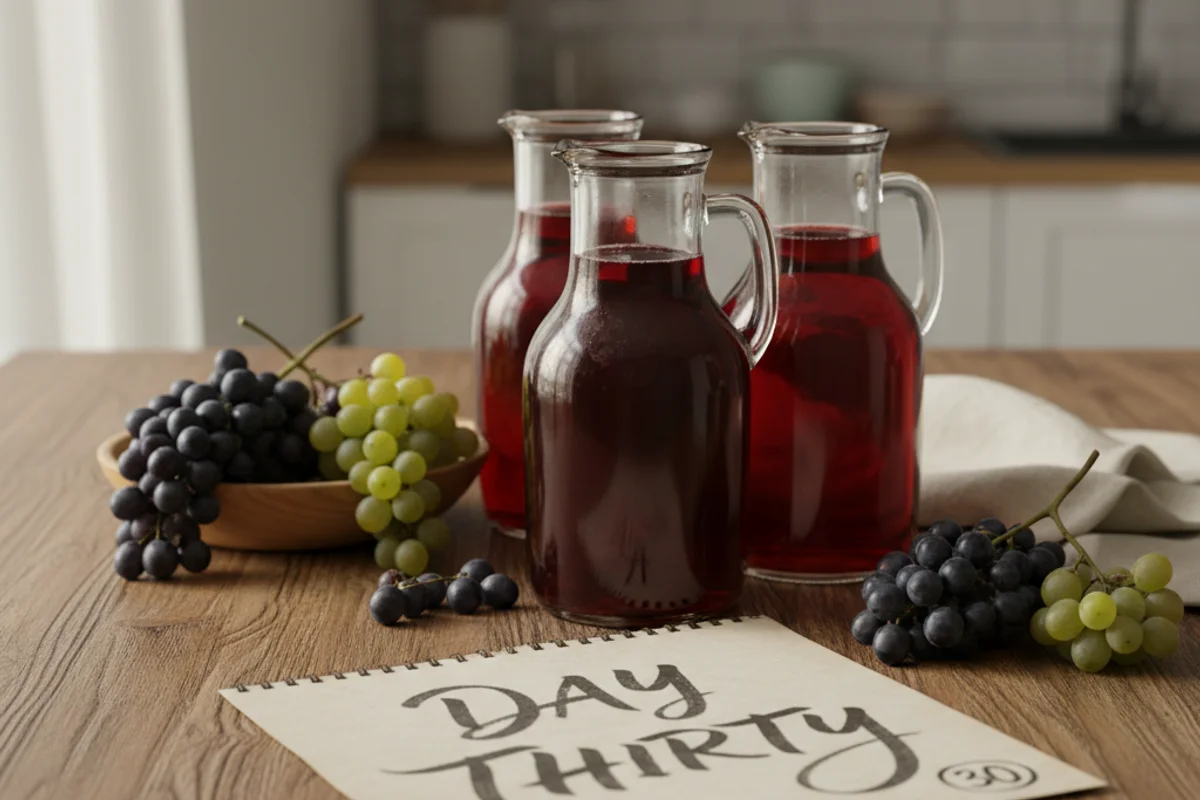
- On day 30, siphon the wine off the layer of sediment sitting at the bottom and pour it into a clean container for drinking.
Why this works
Yeast eat sugar and produce alcohol and carbon dioxide — that’s the whole show. Early on, fermentation is vigorous enough that the CO₂ bubbling out acts as a shield, pushing oxygen away from the liquid. The loose rag lets that gas escape without letting much air back in. By week two, fermentation slows, CO₂ production drops, and oxygen becomes a real threat — that’s exactly why you switch to plastic wrap. The sediment at the bottom is spent yeast cells (lees) mixed with grape solids. Siphoning off the clear wine above that layer removes the main source of off-flavors before they have time to develop.
Notes
Any brand of frozen grape concentrate works here — Welch’s is just the easiest to find. For a richer, darker wine, use a concord grape blend rather than white grape. If you want something closer to a fortified wine at the end, stir in a cup of cheap blackberry brandy just before serving. Bread yeast will ferment this successfully but may leave a slightly bready aftertaste; a packet of Lalvin EC-1118 or Red Star Premier Blanc from a homebrew shop costs under a dollar and gives a cleaner result.