BANANA, PEACH, FIG, AND RAISIN SWEET SHERRY
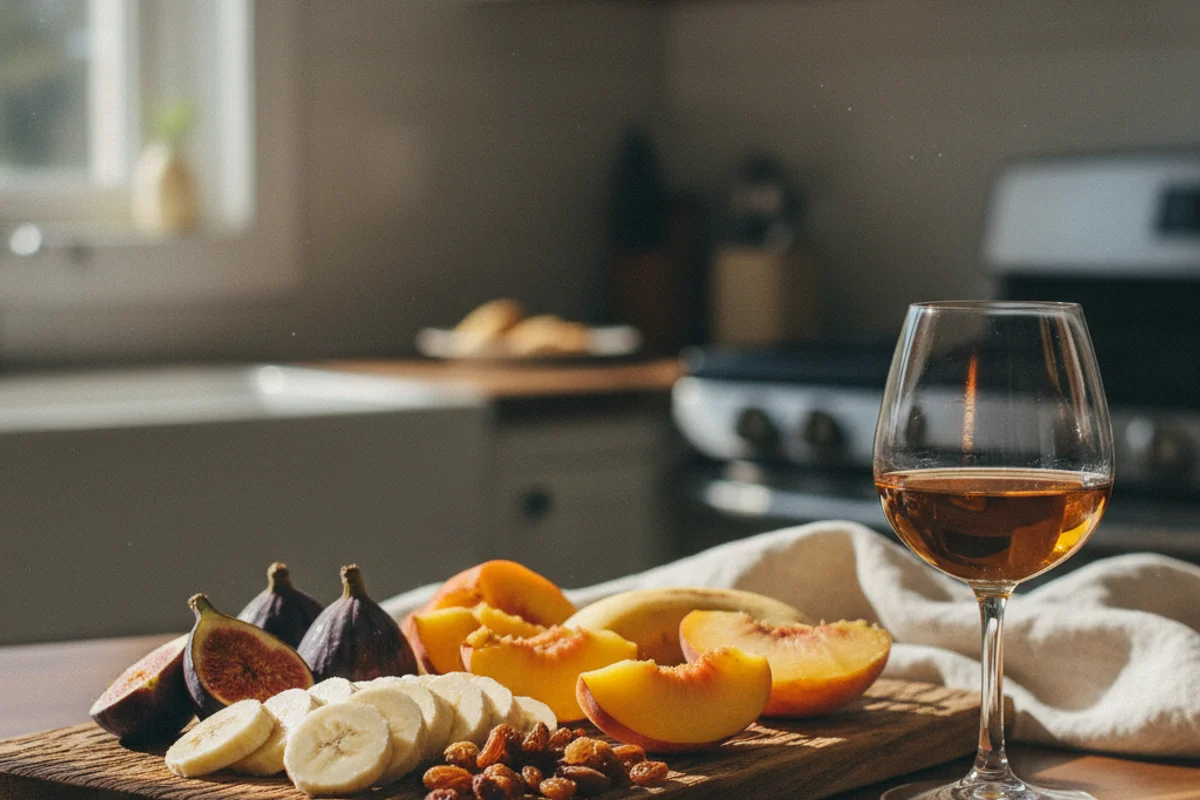
Think of this as a fruit-forward riff on a classic sherry — nutty, rich, and sweet, with banana bringing a creamy backbone, peach adding floral brightness, and fig and raisin layering in that deep, almost caramel complexity you’d expect from a fortified-style wine. This is a slow project. The magic happens in a cool corner of your basement over months, not days, and the payoff is a dessert wine that tastes like it came from somewhere far more exotic than your kitchen.
The beginner trap: Rushing the aging process — this wine needs at least two years to mellow and develop its full character, and bottling it early will leave you with something harsh and unbalanced.
Ingredients
- 2 lb. bananas, peeled and sliced
- 2 lb. peaches, pitted and sliced (fresh or frozen)
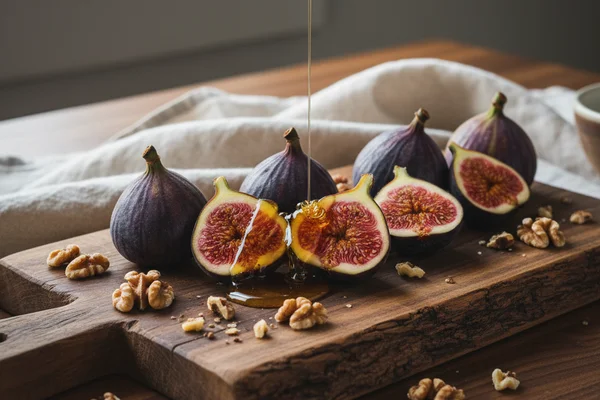
- 1 lb. figs, stemmed, washed, and halved (dried Mission figs from the grocery store work fine)
- 1 lb. raisins, rinsed
- 1½ lb. granulated white sugar
- 1 pint white grape juice concentrate (frozen concentrate from the grocery store works)
- ¼ oz. pectic enzyme
- ½ tsp. tartaric acid (cream of tartar is a rough substitute in a pinch)
- Water to make up 1 gallon total
- 1 packet Sherry wine yeast plus yeast nutrient (bread yeast will not work here)
Method
- Dissolve all the sugar in 2 cups of boiling water, stir until clear, let it cool, and store it in a jar — this is your sugar syrup reserve.
- Simmer the banana slices in 4 pints of water for 30 minutes, then set aside to cool.
- Place the peaches, figs, and raisins in your primary fermenter (a food-safe bucket with a lid works well).
- Strain the banana liquid over the fruit in the bucket, discarding the banana solids.
- Stir in the tartaric acid, yeast nutrient, and 1 cup of the sugar syrup; cover loosely and let the mixture cool to room temperature.
- Once cool, stir in the pectic enzyme and your activated Sherry yeast; cover and ferment for 3 days, stirring once a day.
- Strain the liquid through a fine mesh strainer or nylon bag into a clean vessel, pressing gently on the solids; stir in the grape concentrate.
- Over the next 10 days, add ½ cup of sugar syrup every 3 days until all the syrup is used up; top up with water to reach 1 gallon.
- Ferment for another 10–14 days until activity stops, then rack the wine into a 1½- to 2-gallon secondary vessel — the extra headspace is intentional here.
- Plug the opening loosely with a wad of clean cotton wool (not an airlock) to allow slow air contact while keeping dust and bugs out.
- If you see sediment with pulp particles after two weeks, rack once more into a clean vessel and re-plug with cotton; otherwise, leave it alone.
- Move the vessel to a cool spot (55–60°F) and leave it undisturbed for at least 6 months — watch for a thin, white, wrinkled film called flor forming on the surface.
- If flor forms, do nothing; leave it completely alone until every bit of it sinks to the bottom on its own, then carefully siphon the clear wine through a double layer of fine cloth into bottles.
- If no flor forms after 6 months, siphon the wine into a clean 1-gallon jug, sweeten to taste with extra grape concentrate or a simple syrup (⅓ lb. sugar dissolved in 1 cup water), top up to 1 gallon, then bottle.
- Store the bottles somewhere cool and dark for at least 2 years before opening.
Why this works
Sherry-style wines rely on a phenomenon called flor — a natural yeast film that forms on the surface when the wine has just the right alcohol level and air exposure. That film slowly consumes glycerol and other compounds, adding the nutty, oxidative character sherry is known for. Using a cotton plug instead of an airlock allows the slow, controlled oxygen exchange that encourages this. The step-feeding of sugar syrup (adding it in small doses over time rather than all at once) keeps the yeast from being overwhelmed, pushes the alcohol higher gradually, and is the same principle commercial sherry producers use. The banana is boiled, not fermented directly, because banana starch converts to sugar in hot water — you’re essentially making a banana tea that adds body and a subtle sweetness without the fibrous mess.
Notes
Frozen peaches work just as well as fresh and are often available year-round — thaw completely before using. Dried figs are easier to find than fresh and actually perform better here since their sugars are already concentrated. If you can’t find Sherry yeast, a Tokay or Madeira yeast will give a similar result; avoid standard wine or Champagne yeasts, which won’t develop the right flavor profile for this style.