Figs
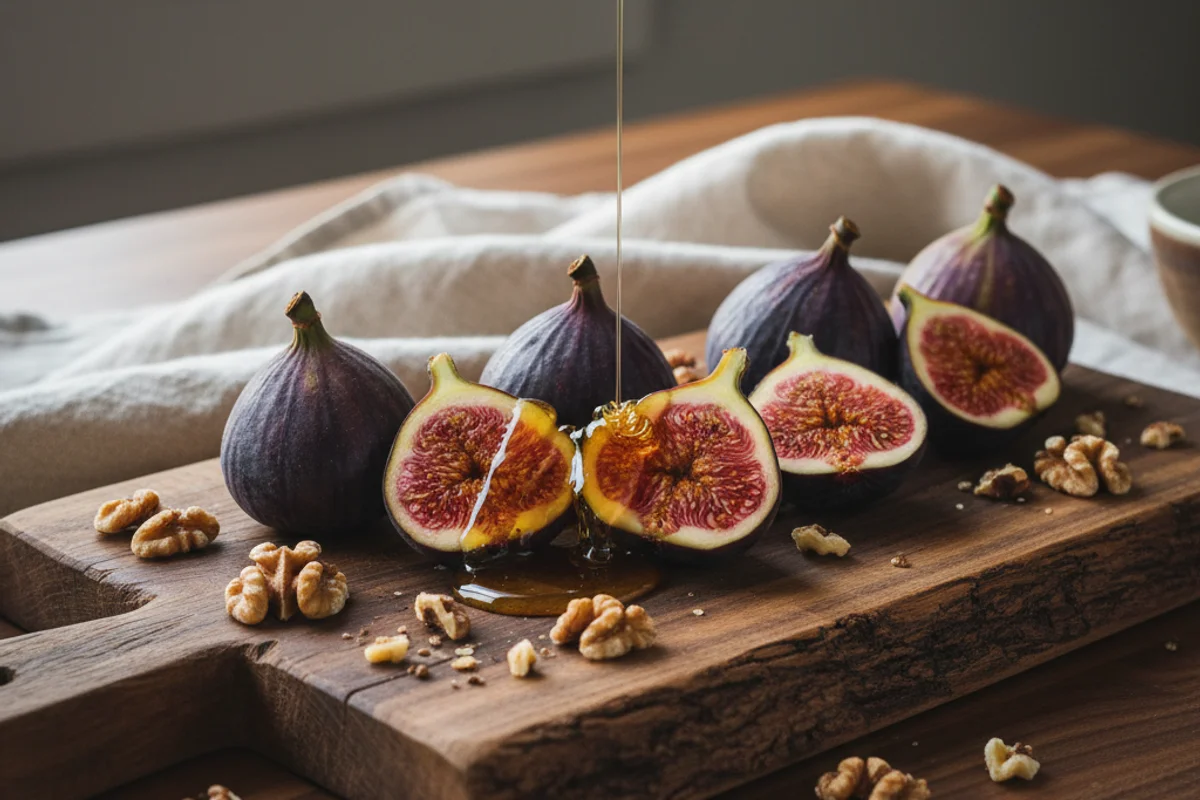
Fresh figs are a rare sight in homemade wine, which is a shame. When you ferment them, they produce something genuinely unexpected — a dry, golden wine with a soft, honeyed depth and just a whisper of the fruit itself. Figs are low in acid and low in tannin, which means they need a little help to become something worth drinking. Give them that help, and you get a wine that drinks well young but gets noticeably better with a year or two of patience.
The beginner trap: Squeezing the pulp bag too hard trying to get every last drop will push fine solids into your wine and leave you with a permanently cloudy batch.
Ingredients
- 4 lbs fresh figs, chopped (fresh or frozen)
- 7 pints water
- 1¾ lbs granulated sugar
- 3½ tsp acid blend (found at homebrew shops; citric acid from the grocery store works in a pinch)
- 1 Campden tablet, crushed
- 1 tsp yeast nutrient
- 1 packet Montrachet wine yeast (or any dry white wine yeast)
Method
- Chop the figs into rough chunks or pulse them in a food processor. Load them into a large fine-mesh nylon straining bag, tie the top closed, and place the bag in your primary fermentation bucket.
- Add the water, sugar, acid blend, Campden tablet, and yeast nutrient directly to the bucket. Stir well until the sugar fully dissolves.
- Check your specific gravity — it should read between 1.085 and 1.100. If it reads low, stir in up to ½ cup more sugar and check again.
- Cover the bucket with a clean cloth and let it sit for 24 hours. This gives the Campden tablet time to do its sanitizing work before the yeast goes in.
- After 24 hours, sprinkle in the yeast. Stir the must daily for the next 3–5 days, gently squeezing the bag to help pull juice from the pulp.
- When the specific gravity drops to around 1.040, lift the bag and let it drain over a bowl. Press lightly — do not wring or force it.
- Siphon the fermenting liquid off any sediment into a clean 1-gallon secondary fermenter (a glass jug works fine). Add the drained liquid from the bag and discard the pulp. Attach an airlock.
- Let the wine ferment to dryness, which takes roughly 3 weeks. You’re aiming for a specific gravity of 1.000 or below.
- Rack into a clean jug, top up to the 1-gallon mark, and reattach the airlock.
- Rack again after 2 months, then once more when the wine runs clear. Bottle at that point.
- For a sweeter wine: After the final racking, stir in ½ tsp potassium sorbate (wine stabilizer) per gallon, then dissolve ¼ lb sugar in a small amount of wine and stir it in before bottling.
Why this works
Figs are naturally low in both acid and tannin — two things wine needs to taste balanced and to age well. Adding acid blend corrects the pH so fermentation runs clean and the finished wine has enough structure to hold itself together. The Campden tablet knocks out wild yeast and bacteria that live on the fruit’s skin before your chosen yeast takes over, giving you a predictable, clean ferment. Montrachet yeast is a strong, reliable fermenter that handles moderate sugar loads without stalling. The long racking schedule — months of patient clearing — lets proteins and tannins slowly drop out of suspension, which is why the wine gets noticeably better with age.
Notes
Frozen figs work extremely well here and are often easier to source than fresh. Freezing also breaks down the cell walls, which means better juice extraction without extra effort. If you can’t find acid blend at a homebrew shop, a mix of 2 tsp citric acid and 1½ tsp tartaric acid is a reasonable substitute. The recipe makes slightly more than a gallon — ferment the overflow in a small wine bottle with a stopper and airlock, and use it to top up your jug after each racking.