BANANA WINE [Spiced] (1)
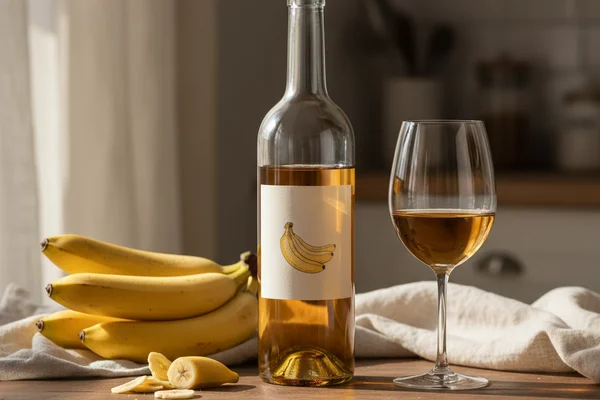
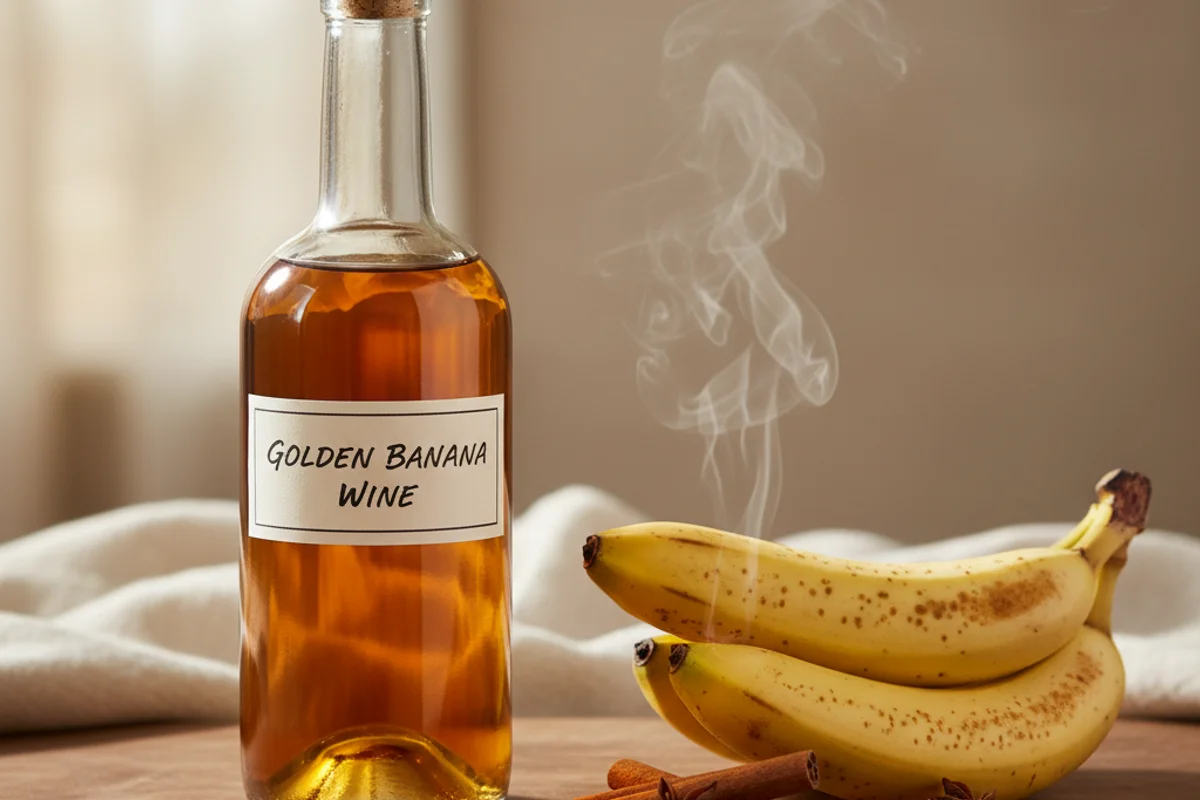
Think of this as a mulled wine that never had grapes to begin with. Ripe bananas bring a thick, almost caramel sweetness that brown sugar deepens further, while cloves, ginger, and cinnamon push the whole thing toward something closer to a holiday drink than a fruit wine. Sherry yeast pulls it together with a nutty, round finish. The result is amber, aromatic, and surprisingly complex — the kind of wine that makes people ask what they’re actually drinking.
The beginner trap: Skipping the full 24-hour rest before adding yeast means pectic enzyme hasn’t had time to break down the banana’s thick pulp, which leaves you with a permanently hazy wine that won’t clear no matter how long you wait.
Ingredients
- 3 lb. ripe bananas (fresh or frozen, peels on)
- ½ lb. golden raisins, chopped
- 2½ lb. light brown sugar
- 1 oz. whole cloves
- 1 oz. fresh or jarred shredded ginger
- 1 cinnamon stick (3-inch), broken in half
- ½ oz. citric acid (find it in homebrew shops or online; lemon juice is a weak substitute and not recommended here)
- 1 tsp. grape tannin (or the contents of 2 plain black tea bags, steeped and cooled)
- ½ tsp. pectic enzyme
- 3 qt. + 1 pint water (total)
- 1 packet Sherry yeast plus yeast nutrient
Method
- Slice the bananas into thin rounds without removing the peels — the peel carries flavor and body.
- Place the banana slices, brown sugar, raisins, cloves, ginger, and cinnamon into your primary fermentation vessel.
- Pour 3 quarts of boiling water over everything and stir until the sugar fully dissolves.
- Let the must cool to 70°F, then stir in the citric acid, grape tannin, and pectic enzyme.
- Cover the vessel tightly and move it to a warm spot for 24 hours — this rest gives the pectic enzyme time to do its job.
- Add the yeast and nutrient, then stir the must twice a day for 10 days.
- Strain the liquid into a secondary fermentation vessel (a 1-gallon glass jug works well), add 1 pint of water, and fit an airlock.
- Move the vessel to a cooler spot — 60–65°F — and let it ferment undisturbed.
- Rack the wine into a clean vessel after 2 months, then rack again 2 months after that.
- Once the wine runs clear, rack one final time and bottle it. Wait at least 6 months before opening — a year is better.
Why this works
Bananas are loaded with pectin, the same stuff that makes jam gel. In wine, pectin creates a stubborn haze that won’t settle on its own. Pectic enzyme (pectinase) breaks those long pectin chains apart, allowing the particles to clump and fall to the bottom. The 24-hour head start before yeast is added matters because yeast activity — and the alcohol it produces — slows the enzyme down. Get the enzyme working first, then bring in the yeast. Brown sugar adds unrefined molasses notes that white sugar can’t touch, and Sherry yeast ferments at a slower, cooler pace that keeps those warm spice aromatics intact rather than boiling them off during a fast, hot ferment.
Notes
Frozen bananas work beautifully here — freezing and thawing breaks down cell walls and releases more juice and flavor than fresh bananas. If Sherry yeast is hard to find locally, Lalvin EC-1118 (Champagne yeast) is a widely available substitute, though it will produce a drier, less nutty result. If your wine is still hazy after the second racking, a dose of bentonite fining agent (available at any homebrew shop) will help it drop clear.