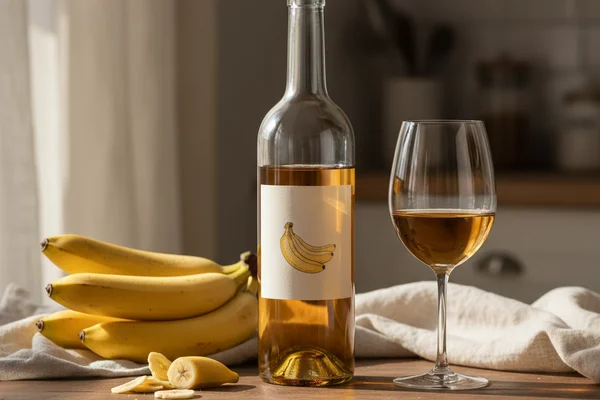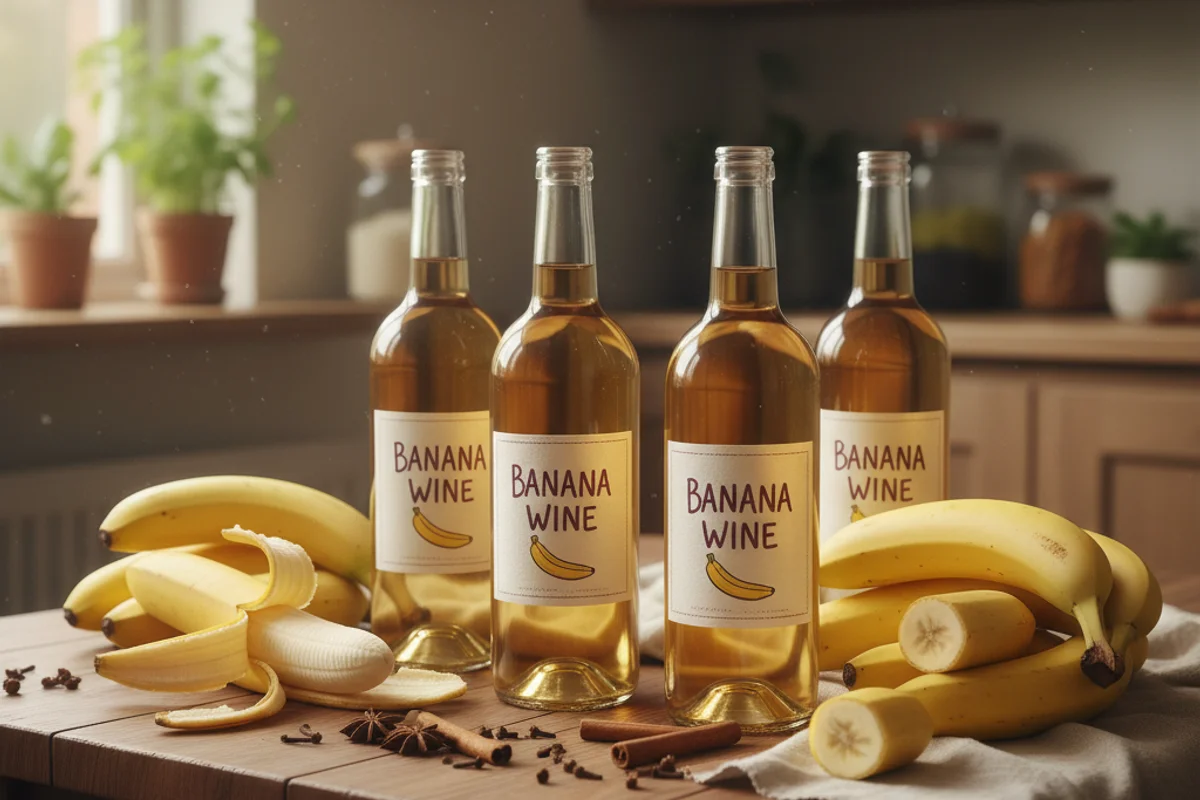
BANANA WINE [Spiced] (2)
Ripe bananas bring a thick, honeyed sweetness to the fermenter — but left alone, they make a flat, one-note wine. This recipe fixes that with a warming spice trio: cloves, ginger, and cinnamon. The result sits somewhere between a dry sherry and a spiced dessert wine, with enough complexity to make people ask what they’re actually drinking. Sherry yeast keeps things nutty and full-bodied, so the banana doesn’t just disappear into the background. Patience is the real ingredient here — six months is the floor, not the goal.
The beginner trap: Squeezing the banana bag extracts harsh, starchy bitterness — let it drip-drain on its own and walk away.
Ingredients
- 3 lb. ripe bananas (fresh or frozen, peels on)
- 8 oz. white grape juice concentrate (frozen concentrate from the grocery store works great)
- 2½ lb. granulated sugar
- 1 oz. whole cloves
- 1 oz. fresh or jarred shredded ginger
- 1 cinnamon stick (3 inches), broken into pieces
- 2½ tsp. acid blend (or substitute 2 tsp. lemon juice per tsp. as a rough stand-in)
- ½ tsp. grape tannin (or 1 strong-brewed black tea bag, steeped and cooled)
- 7 pints (3.5 quarts) water, divided
- 1 packet Sherry yeast plus yeast nutrient (Lalvin 71B is a decent swap if Sherry yeast is hard to find)
Method
- Thinly slice the bananas without peeling them and place the slices inside a nylon mesh bag (a reusable paint-strainer bag from a hardware store works fine); tie it closed.
- Put the bag into 1½ quarts of water, bring to a boil, then reduce heat and simmer for 30 minutes.
- Lift the bag out and suspend it over the pot to drip-drain — do not press or squeeze it.
- Pour the hot banana liquid into your primary fermentation vessel over the remaining water, grape concentrate, sugar, cloves, ginger, cinnamon, acid blend, and grape tannin; stir until the sugar fully dissolves.
- Let the must cool to 70–75°F, then stir in the yeast and yeast nutrient; cover the vessel loosely with a clean cloth or loose lid.
- Stir the must once daily for 5 days.
- Strain the liquid into a 1-gallon secondary fermentation vessel (carboy or jug), fit an airlock, and move it to a cooler spot — aim for 60–65°F.
- Rack the wine off its sediment after one month, then again two months after that.
- Once the wine runs clear, rack one final time into clean bottles and seal.
- Wait at least six months before opening a bottle — a full year is better.
Why this works
Simmering the bananas (peels and all) pulls out soluble sugars and flavor compounds while the pectin in the fruit begins to break down. Keeping the bag out of a squeeze matters because the peels hold bitter tannins and starchy compounds that would cloud and roughen the finished wine. The white grape concentrate adds fermentable sugar and a neutral fruit backbone without competing with the spices. Sherry yeast thrives at slightly cooler temperatures and produces acetaldehyde compounds that give the wine its characteristic nutty, oxidative edge — a perfect foil for the warm spice notes. The long secondary fermentation at 60–65°F slows things down deliberately, letting fine particles settle out cleanly.
Notes
Frozen bananas are actually ideal here — the freeze-thaw cycle breaks down cell walls and releases more juice during the simmer. If acid blend isn’t available at your local homebrew shop, it can be ordered online or approximated with fresh lemon juice, though the balance will be less precise. If the wine is still hazy after three months, a campden tablet (potassium metabisulfite) added at the second racking can help encourage clearing.