BEET AND PARSNIP WINE
Don’t let the vegetables fool you. Beets bring deep, earthy sweetness and a color that looks like someone bottled a sunset, while parsnips add a quiet, almost honeyed warmth that smooths everything out. Together they make a wine that’s genuinely surprising — rich, slightly spiced on the nose, and dry enough to hold its own at a dinner table. Give it a full year in the bottle and it transforms into something that tastes nothing like its root-vegetable origins.
The beginner trap: Simmering the beets and parsnips too long turns them mushy and releases excess starch, which clouds your wine and makes it nearly impossible to clear.
Ingredients
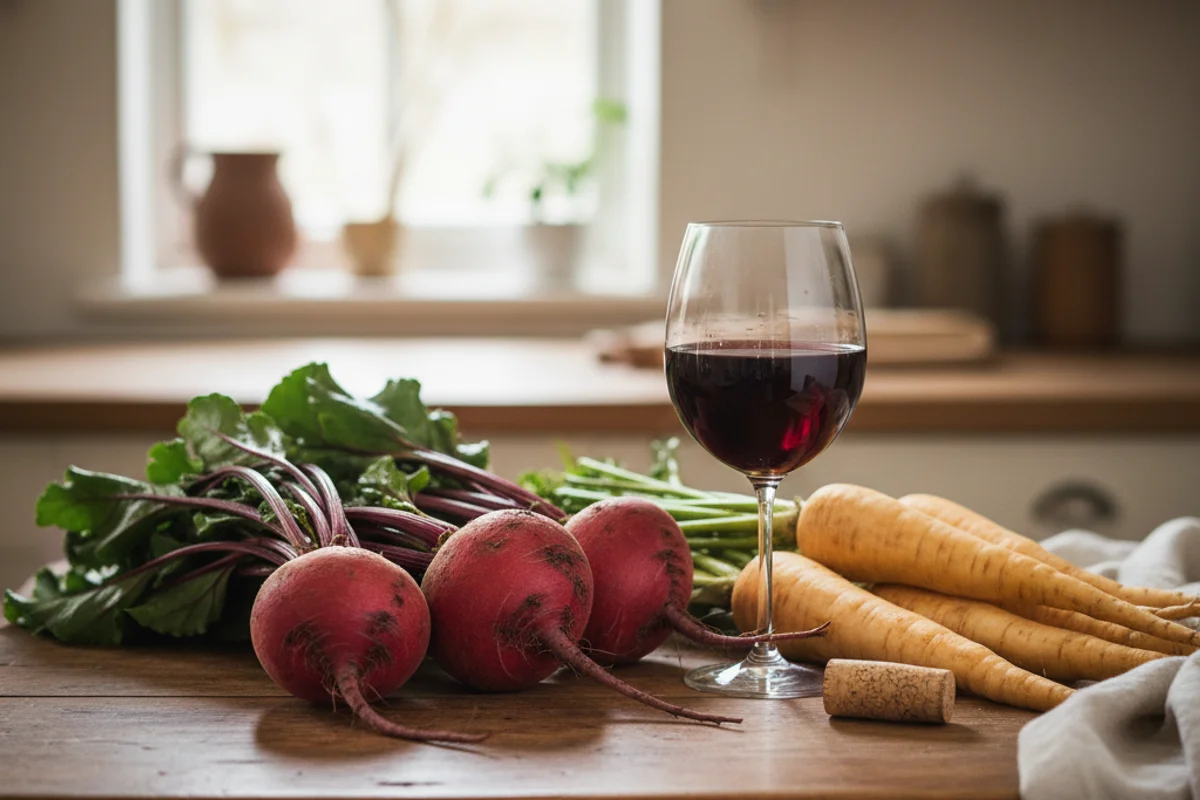
- 2 lb. fresh beets, washed and thinly sliced
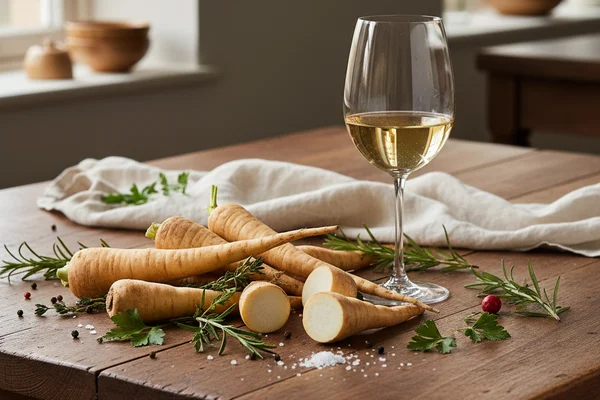
- 2 lb. fresh parsnips, washed and thinly sliced
- 2½ lb. granulated sugar
- 2 lemons, juice and zest
- 2 oranges, juice and zest
- ¼ tsp. grape tannin (or 1 cup cold-brewed black tea as a substitute)
- 1 tsp. pectic enzyme
- 1 gallon water
- 1 packet Sauterne wine yeast (or any white wine yeast such as Lalvin 71B)
- 1 tsp. yeast nutrient
Method
- Combine the sliced beets and parsnips with 6 pints of water in a large pot, bring to a boil, then reduce to a simmer until the vegetables are just tender — not falling apart.
- Strain the liquid through a fine mesh strainer or cheesecloth into your primary fermentation vessel, discarding the solids.
- Add the sugar to the hot liquid and stir until it dissolves completely.
- Allow the must to cool to room temperature, then stir in the lemon juice and zest, orange juice and zest, grape tannin, and pectic enzyme.
- Cover the vessel loosely and wait 24 hours before adding the yeast and yeast nutrient.
- Stir well after adding the yeast, cover the vessel securely, and let fermentation begin for two days at room temperature.
- Transfer the wine to a dark secondary fermentation vessel, fit an airlock, and move it to a cooler location — around 60–65°F is ideal.
- Rack the wine off its sediment after two months, then rack again once the wine has cleared completely.
- Bottle in dark glass and store in a dark place for at least one year before opening.
Why this works
Beets are loaded with naturally occurring sugars and pigment compounds called betalains, which give the wine its color but are sensitive to heat and pH. Keeping the simmer short preserves those pigments and limits the release of excess pectin — a gel-forming carbohydrate that causes haze. That’s where pectic enzyme earns its place: it breaks down residual pectin so the wine can clear cleanly. The citrus juice drops the pH slightly, creating an environment that slows bacterial growth and keeps the yeast happy. Sauterne-style yeast is well suited here because it tolerates moderate sugar levels without stalling and leaves a clean, slightly fruity finish that complements the earthy base.
Notes
If you can’t find Sauterne yeast locally, Lalvin 71B or EC-1118 are widely available online and in homebrew shops. Pectic enzyme is sold at any homebrew retailer and is worth having on hand for any country wine made from high-pectin produce. If your finished wine still looks hazy after the second racking, a fining agent like bentonite can help pull remaining particles out of suspension.