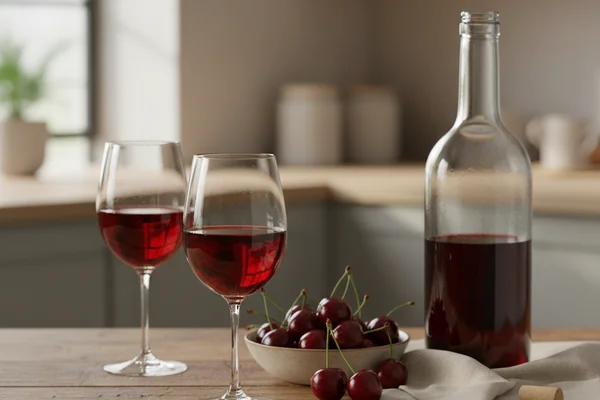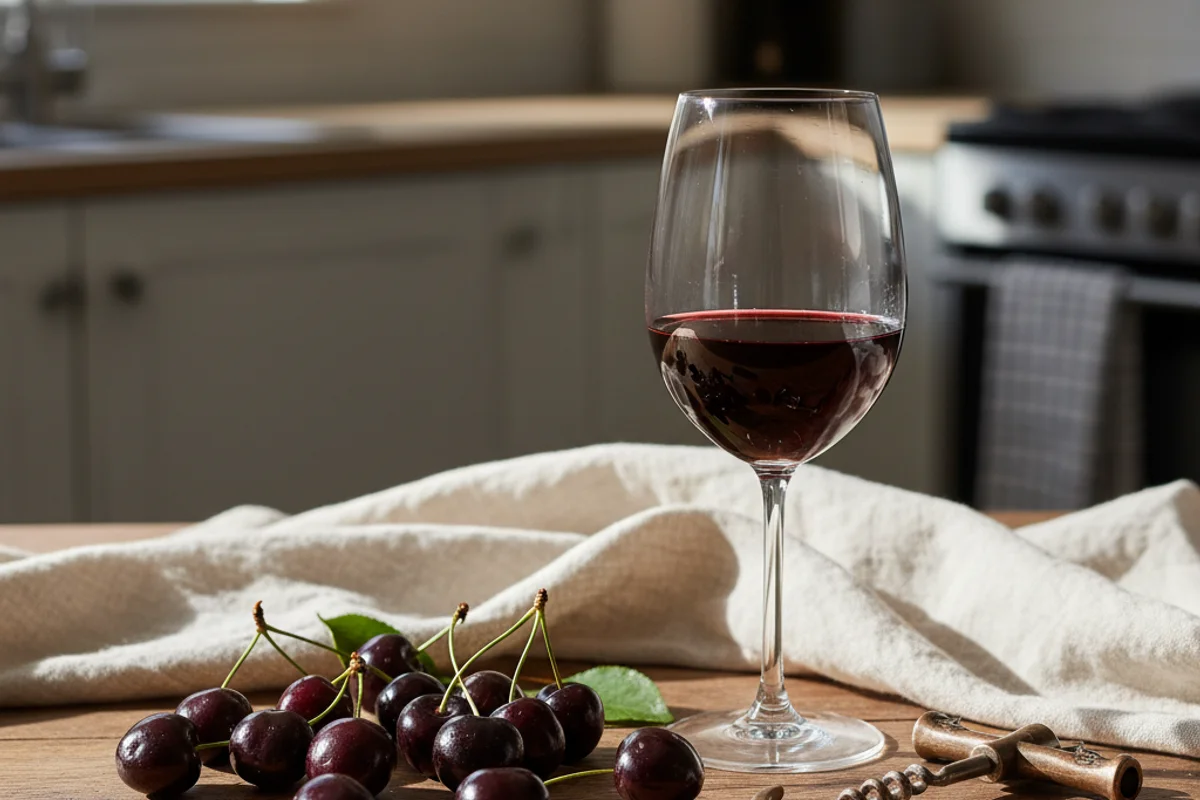
Black Cherry Wines
Black cherry wine should be a slam dunk — you’ve got deep color, rich stone-fruit aroma, and enough sugar to feed a healthy fermentation. But black cherries are deceptive. They look like they have it all together, yet they’re naturally low in the acids that give wine its backbone and its ability to age. Without intervention, you end up with something flat, browning, and forgettable by the six-month mark. Fix the acid, manage the proteins, and this wine rewards patience with a dark, jammy pour worth waiting for.
The beginner trap: Skipping the acid adjustment — black cherries don’t have enough citric acid on their own, so the wine oxidizes and loses its flavor long before it peaks.
Ingredients
- 6–8 lbs black cherries, fresh or frozen, pitted and stemmed
- 1¾ lbs granulated white sugar
- 5½ pints (about 11 cups) water
- ½ tsp citric acid (or 2 tbsp lemon juice as a backup)
- 1½ tsp pectic enzyme
- 1 Campden tablet, crushed
- 1 tsp yeast nutrient
- 1 packet wine yeast (Lalvin EC-1118 or Red Star Côte des Blancs work well)
Method
- Wash, stem, and chop the cherries, discarding any that are soft, moldy, or blemished. Pits don’t need to come out, but toss any that are cracked or broken open.
- Place the fruit in a sanitized primary fermenter and cover with the water. Stir in the crushed Campden tablet.
- Wait 24 hours, then stir in the pectic enzyme. Cover the fermenter and let it sit for 4 days.
- Pour the must through a fine mesh strainer or a clean pillowcase and squeeze firmly to pull out as much juice as possible.
- Stir in the sugar, citric acid, and yeast nutrient until the sugar fully dissolves.
- Transfer the juice to your secondary fermenter, pitch the yeast, and seal with an airlock. Keep it somewhere around 70°F (21°C).
- Once the vigorous bubbling slows down — usually 14 to 21 days — rack the wine off the sediment into a clean vessel and top up with cool water.
- Move the fermenter somewhere cooler, around 60°F (15°C), and let it ferment to dryness. Rack again when sediment builds up.
- If you want a sweeter wine, stabilize with potassium sorbate and potassium metabisulfite, then stir in a simple syrup made from ¼ to ½ cup sugar dissolved in a little water before bottling.
- Bottle and store somewhere dark. Taste at 6 months; it will be better at 12.
Why this works
Black cherries are naturally high in malic acid and short on citric acid. That’s a problem because malic acid alone doesn’t stabilize wine the same way a balanced acid profile does — the wine turns dull and oxidizes faster than you’d expect. Adding citric acid shifts that balance toward something the wine can actually age on. Pectic enzyme is equally critical: cherries are loaded with pectin, a natural thickening agent that will leave your wine cloudy and dull if you don’t break it down enzymatically. The enzyme cuts those long pectin chains into smaller pieces the yeast can’t use, which means they fall out of suspension and your wine clears. Campden tablet at the start suppresses wild yeast and bacteria so your chosen yeast strain can run the show from the beginning.
Notes
Frozen dark sweet cherries from the grocery store work very well here — they’re typically picked ripe and the freezing actually helps break down cell walls, improving juice extraction. For a more complex, age-worthy wine, swap 30% of the black cherries for tart (Montmorency) cherries and reduce total fruit by about 25%; test your acid level before pitching yeast and target around 0.85% total acidity. Adding 2 grams of bentonite per gallon at the start of fermentation helps knock out proteins that cause haze and browning — this is especially worth doing if you plan to age the wine longer than 6 months.