CHERRY WINES
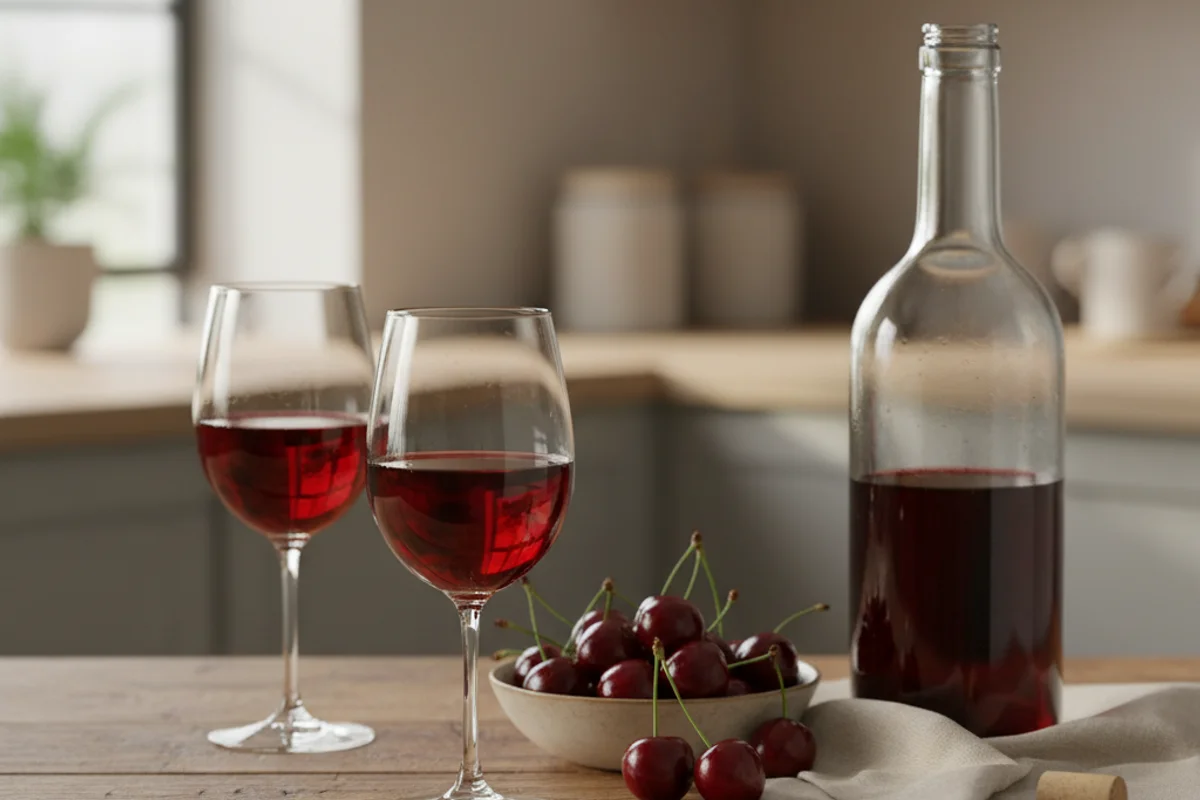
Cherries carry something grapes can only dream about: that deep, almost jammy fruit punch layered under bright acidity, with a faint almond whisper hiding right behind the pit. Ferment that combination and you get a wine that’s bold enough to stand on its own at the dinner table but approachable enough to crack open on a Tuesday. Sweet cherries lean rich and full-bodied. Sour cherries bring tart, sharp edges that age beautifully. Either way, you’re working with one of the most rewarding fruits in the home winery.
The beginner trap: Crushing the pits during fermentation releases amygdalin, which breaks down into bitter compounds — keep the stones intact, no matter how tempting it is to smash everything.
Ingredients
Dry Cherry Wine
- 4–5 lbs sweet cherries, fresh or frozen
- 1¾ lbs granulated white sugar
- 7½ pts (about 15 cups) water
- 2 tsp acid blend (or 1½ tsp citric acid as a substitute)
- ¼ tsp grape tannin powder (or 1 cooled cup of strong black tea)
- ½ tsp pectic enzyme
- 1 tsp yeast nutrient
- 1 packet Montrachet wine yeast (or any dry wine yeast)
Sweet Cherry Wine
- 6 lbs black cherries, fresh or frozen
- 3¼ lbs granulated white sugar
- 7¼ pts (about 14½ cups) water
- 1 tsp yeast nutrient
- 1 packet wine yeast
Method
Dry Cherry Wine
- Dissolve the sugar in the water over heat and bring to a full boil.
- Sort, destem, and wash the cherries; discard any that are soft, split, or moldy.
- Place the cherries in a mesh straining bag, tie it closed, and set it in your primary fermenter (a food-grade bucket works fine).
- Crush the bagged cherries firmly with your hands or a potato masher — press hard enough to split the flesh but not hard enough to crack the pits.
- Pour the hot sugar-water over the crushed cherries, then cover the fermenter loosely with a clean cloth or plastic wrap and let it cool to room temperature.
- Add the acid blend, tannin, pectic enzyme, and yeast nutrient; stir well, re-cover, and wait 12 hours.
- Activate your yeast according to the packet, add it to the must, and re-cover; stir the must once daily.
- After two weeks, lift out the bag and let it drip drain over the bucket — do not squeeze it, or you’ll press bitter compounds and haze into your wine.
- Transfer the liquid to a dark glass carboy (your secondary fermenter) and fit an airlock.
- After two more weeks, rack the wine off its sediment into a clean carboy, top up to minimize headspace, and refit the airlock.
- Rack again after two months, then once more two months after that.
- When your hydrometer reads 0.990 or below (fully dry), rack the wine into bottles and store them in a cool, dark place for at least one year before opening; serve slightly chilled.
Sweet Cherry Wine
- Bring the water to a rolling boil.
- Destem, wash, and crush the cherries in your primary fermenter — split the flesh without cracking the pits.
- Pour the boiling water over the crushed cherries, cover, and leave undisturbed for 48 hours.
- Strain the liquid through a mesh bag into a clean vessel; discard the pulp.
- Dissolve the sugar in a small amount of boiling water, combine with the strained juice, add the yeast nutrient, pitch the yeast, and stir well.
- Cover the fermenter and let it ferment in a warm spot (65–75°F) for 14 days, stirring daily.
- Transfer to a dark secondary carboy and fit an airlock.
- Once the wine clears, rack it off the sediment into a clean carboy.
- After two more months, stabilize with potassium sorbate and potassium metabisulfite (follow package rates); if you want it sweeter, dissolve extra sugar in a small amount of wine, stir it in, wait 10 days to confirm fermentation doesn’t restart, then bottle and store in a dark place.
Why this works
Cherries are loaded with pectin — the same stuff that makes jam gel — and that pectin can turn your finished wine permanently cloudy if you skip one critical step: pectic enzyme. Added before fermentation, it breaks down the pectin chains so they can’t form a haze later. The 12-hour wait after adding enzyme (and before pitching yeast) matters because alcohol actually slows enzyme activity, so you want it working in a low-alcohol environment first. The hot water pour serves double duty: it starts breaking down cell walls to release juice and color, while also pasteurizing the must just enough to knock back wild yeast and bacteria without fully sterilizing it — letting your chosen yeast take charge cleanly.
Notes
Frozen cherries work extremely well here and are often the smarter choice outside of peak summer — freezing ruptures cell walls and releases more juice than fresh fruit alone. Thaw completely before crushing. If you can’t find acid blend at a homebrew shop, citric acid (sold in the canning aisle at most grocery stores) is a straightforward substitute. If your finished wine tastes flat or thin, the culprit is usually too little fruit — err toward the higher end of the quantity range.