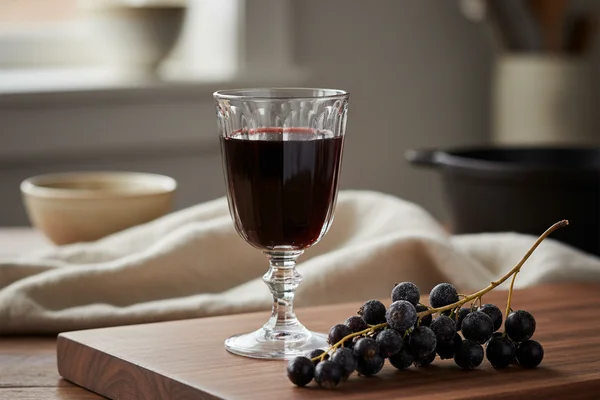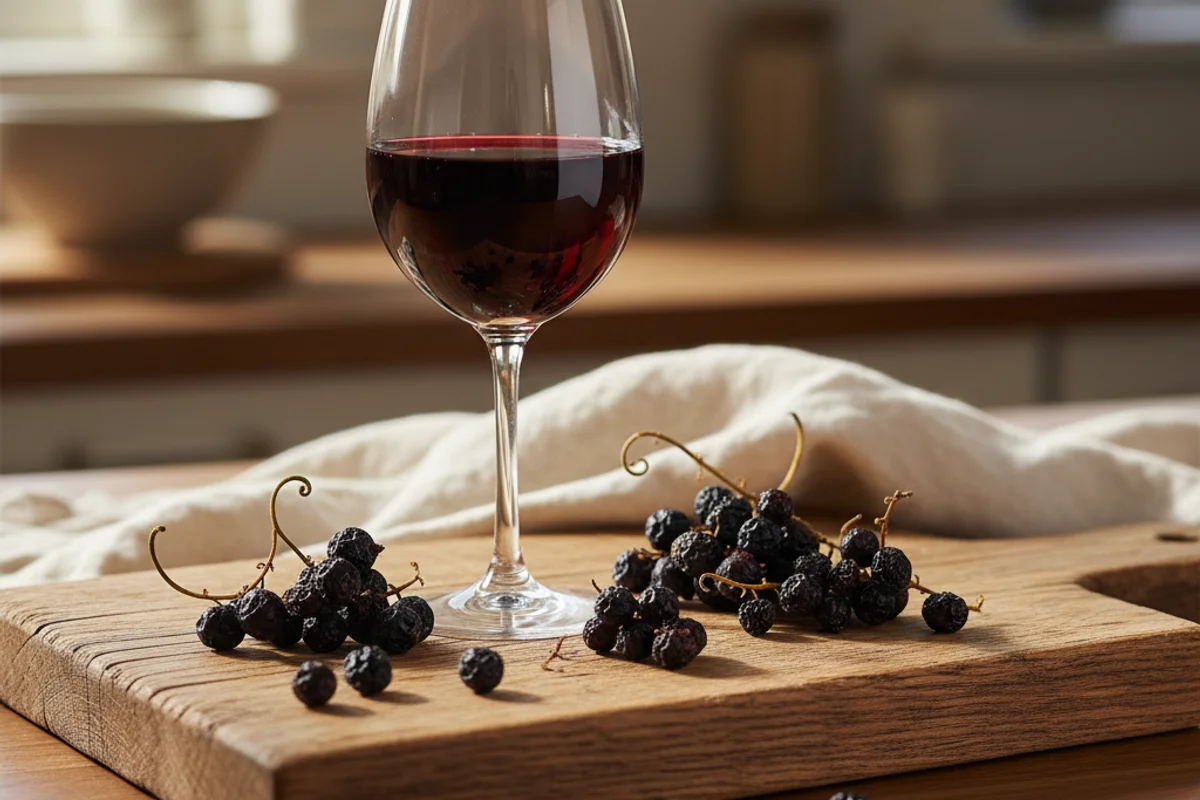
BLACK CURRANT (DRIED) WINE
Dried black currants are basically flavor grenades — small, dark, and loaded with tannin, acid, and anthocyanins that fresh fruit takes months to develop on the vine. Strip away the water, and what’s left is an intensely concentrated berry with an almost jammy depth and a sharp, earthy backbone. That concentration translates directly into the glass: this wine finishes with the kind of inky, brooding character that commercial black currant wines charge a premium for. And the best part? You can make it any time of year with a bag from the bulk bin or the baking aisle.
The beginner trap: Skipping the 12-hour rest before pitching yeast — that soak is doing real work, and rushing it leaves flavor (and color) locked inside the fruit.
Ingredients
- 14 oz. dried black currants
- 2¼ lb. granulated white sugar
- 7¼ pt. (about 3.6 quarts) water
- ½ tsp. pectic enzyme
- ¾ tsp. acid blend (or 1 tsp. fresh lemon juice per cup as a rough substitute)
- 1 tsp. yeast nutrient
- 1 packet wine yeast (Lalvin 71B or EC-1118 both work well)
Method
- Bring 1 quart of water to a boil in a large pot and stir in the sugar until fully dissolved.
- Remove the pot from heat, add the dried currants, and cover the pot — let everything sit for 30 minutes.
- Pour the hot currant mixture into your primary fermenter, then add the remaining water and stir to combine.
- Add the pectic enzyme, acid blend, and yeast nutrient — stir well, then cover the fermenter loosely and leave it alone for 12 hours.
- Activate your yeast according to the packet directions, then pitch it into the must and re-cover the fermenter.
- Once fermentation kicks into high gear (you’ll see active bubbling), stir the must once a day for 7 days.
- Strain out the spent fruit solids and transfer the liquid to a clean secondary fermenter (a 1-gallon glass jug works perfectly).
- Fit an airlock and move the jug to a cool spot — 60–65°F — and leave it for one month.
- Rack the wine into a clean vessel, top it up with a small amount of plain water or similar wine to minimize headspace, refit the airlock, and wait two more months.
- Rack again once the wine runs clear, then stabilize with potassium sorbate and potassium metabisulfite.
- Sweeten to taste if desired, then bottle.
Why this works
Dried fruit skips a step that fresh fruit forces on you: the cell walls are already broken down, so the juice and pigment release fast in hot water. The 12-hour cold soak after that initial hot steep gives pectic enzyme time to dismantle pectin chains that would otherwise cloud your finished wine. Pectin is essentially the cellular glue in fruit — if you don’t break it down enzymatically before fermentation starts, the heat and alcohol created during fermentation will set it permanently, leaving you with a haze no amount of racking will fix. The month-long cool secondary fermentation slows things down enough to let tannins soften and the wine settle cleanly on its own.
Notes
Dried zante currants (the tiny ones sold as “currants” in most grocery stores) are actually a variety of dried grape, not true black currants — look specifically for dried black currants at natural food stores or online. This wine is drinkable at six months but genuinely improves after a full year in the bottle, so make more than you think you need.