BLACK CURRANT WINE
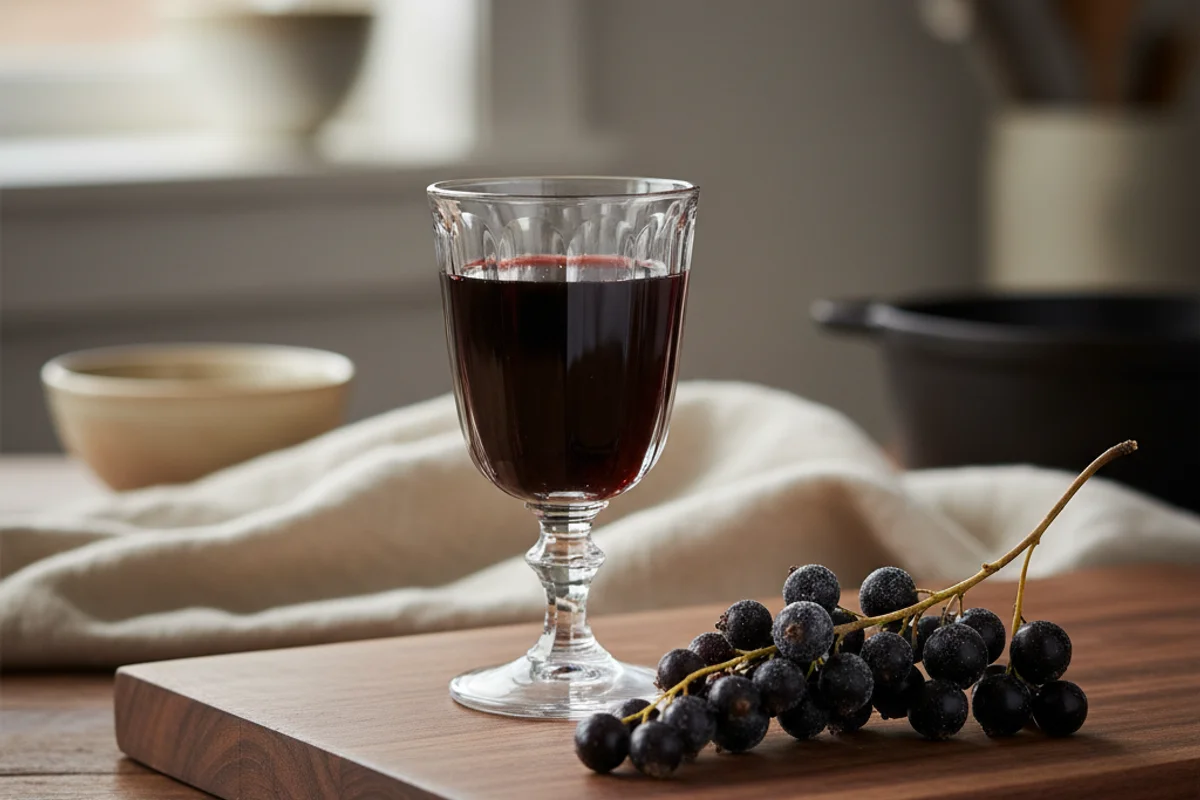
Black currants are the dark, brooding rebels of the fruit world — small, nearly black berries that pack more flavor per ounce than almost anything else you’ll ferment. Their skins are thick and stubborn, locking in deep, jammy juice that smells of earth, dark fruit, and a sharp tartness that lingers. A pressure cooker cracks those skins open fast and hard, pulling out every bit of color and flavor in minutes instead of days. The trade-off? A little heat-driven warmth creeps into the final wine — which, depending on your goals, is either a bug or a feature. Both versions below lean into that reality.
The beginner trap: Squeezing the fruit bag to get more juice will push harsh, bitter compounds into your wine — let gravity do the draining and walk away.
Ingredients
Table Wine Version
- 1½ lbs fresh or frozen black currants
- ¾ lb black raisins (grocery store seedless work fine)
- 2 lbs ripe bananas, skin on
- 1¼ lbs granulated sugar
- 1 tsp pectic enzyme
- 1 tsp citric acid (or the juice of 1 large lemon)
- ¼ tsp wine tannin (or 1 cooled cup of strong black tea)
- 1 Campden tablet, crushed
- 1 tsp yeast nutrient
- Water to reach 1 gallon
- Lalvin RC-212 wine yeast (Burgundy-style; available online or at homebrew shops)
Port-Style Version
- 1½ lbs fresh or frozen black currants
- ¾ lb black raisins
- 2 lbs ripe bananas, skin on
- 1¾ lbs granulated sugar, divided
- 1 tsp pectic enzyme
- 1 tsp citric acid
- ¼ tsp wine tannin
- 1 Campden tablet, crushed
- 2 tsp yeast nutrient fortified with yeast hulls (Fermaid K or similar; plain yeast nutrient will not cut it here)
- Water to reach 1 gallon
- Lalvin K1V-1116 wine yeast (high-alcohol tolerant; available online)
Method
Table Wine
- Bring 1 quart of water to a boil. Slice the bananas crosswise into ½-inch rounds — peel and all — then place them in the pressure cooker along with the raisins and black currants.
- Pour the boiling water over the fruit, secure the lid, and bring to 15 psi (pounds per square inch) for exactly 3 minutes. Then move the pressure cooker to the sink and run cold water over the outside until pressure drops to zero.
- Open the lid and pour the hot fruit mixture directly over the sugar in your primary fermenter. Add cold water to bring the temperature down further and stir well until the sugar fully dissolves. Cover and let cool to room temperature.
- Add the citric acid, tannin, crushed Campden tablet, and yeast nutrient. Stir, cover, and wait 12 hours.
- Add the pectic enzyme, stir again, cover, and wait another 12 hours.
- Prepare your yeast according to the packet instructions, then add it to the must. Cover the fermenter loosely.
- Once fermentation is active and vigorous, stir the must twice a day for three days.
- Pour the must through a nylon straining bag into a clean container and let it drip drain for at least one hour. Do not squeeze.
- Transfer the strained liquid into your secondary fermenter (a 1-gallon glass jug works well) and fit an airlock.
- Rack into a clean, sanitized secondary every 30 days until the wine is clear and drops no new sediment over a full 30-day period.
- Stabilize the wine (potassium sorbate + Campden tablet), then refrigerate for 3 days. Rack again, sweeten to your liking, top up, refit the airlock, and store in a cool, dark place for 4–6 months.
- Rack into bottles. This wine improves for up to 3 years, but you can start drinking it earlier.
Port-Style Wine
- Bring 1 quart of water to a boil. Slice the bananas crosswise into ½-inch rounds, skin on, and place them in the pressure cooker with the raisins and black currants.
- Pour the boiling water over the fruit, seal the lid, and bring to 15 psi for 3 minutes. Remove from heat and let the pressure drop on its own — do not use cold water this time.
- Open the lid and pour the mixture over half the sugar in your primary fermenter. Add cold water, stir until dissolved, and let cool to room temperature.
- Add the citric acid, tannin, crushed Campden tablet, and half the yeast nutrient. Stir, cover, and wait 12 hours.
- Stir in the pectic enzyme, cover, and wait another 12 hours.
- Add your activated K1V-1116 yeast and cover the fermenter loosely.
- When fermentation is strong, stir twice daily for three days.
- Strain through a nylon bag and drip drain for at least an hour. Do not squeeze.
- Stir in half of the remaining sugar and half of the remaining yeast nutrient into the liquid until dissolved, then transfer to your secondary fermenter and fit an airlock.
- When the specific gravity falls to 1.010, stir in the last of the sugar and yeast nutrient until fully dissolved.
- Rack every 30 days into a clean secondary until the wine is clear and stable over a full 30-day period. This may take several months — be patient.
- Stabilize, then refrigerate for 5 days. Rack into a clean secondary, sweeten to a specific gravity of 1.030, top up, refit the airlock, and store in a cool, dark place for 4–6 months.
- Rack into bottles. This port-style wine peaks at around 6 years, but it’s enjoyable well before that.
Why this works
Black currant skins are loaded with anthocyanins — the pigment molecules responsible for that deep red-purple color — but those molecules are locked behind tough cell walls. Pressure cooking forces superheated water (above 212°F at 15 psi) into those cells, bursting them open and releasing color, flavor compounds, and juice far faster than cold soaking ever could. The downside is that high heat also drives Maillard-style browning reactions, nudging the flavor toward a warmer, more caramel-like “tawny” character. For the table wine, the quick cold-water pressure release cuts that heat exposure short, minimizing the effect. For the port-style version, the slow natural release keeps the heat on longer — deliberately deepening that richness. Bananas and raisins contribute body through pectins and unfermentable sugars, rounding out what would otherwise be a thin, tart wine.
Notes
Frozen black currants are an excellent substitute for fresh — freezing actually helps break down the cell walls, which means even more juice extraction. Look for them at international grocery stores, online, or in the freezer section of natural food stores. If you can’t find wine tannin, a half-cup of very strong, cooled black tea adds a workable substitute. For the port-style version, don’t skip the yeast-hull nutrient — standard yeast nutrient alone won’t support K1V-1116 through a high-gravity, high-alcohol fermentation, and a stuck ferment at that stage is a real headache.