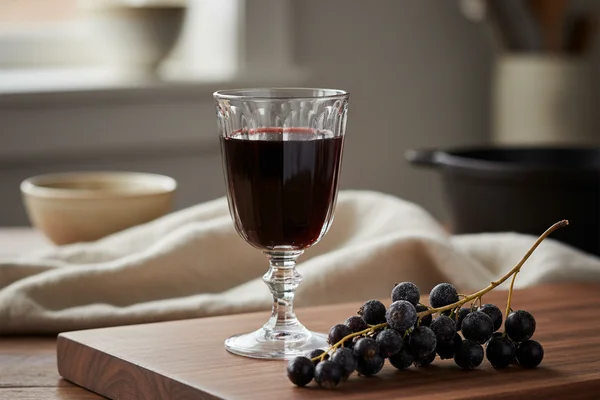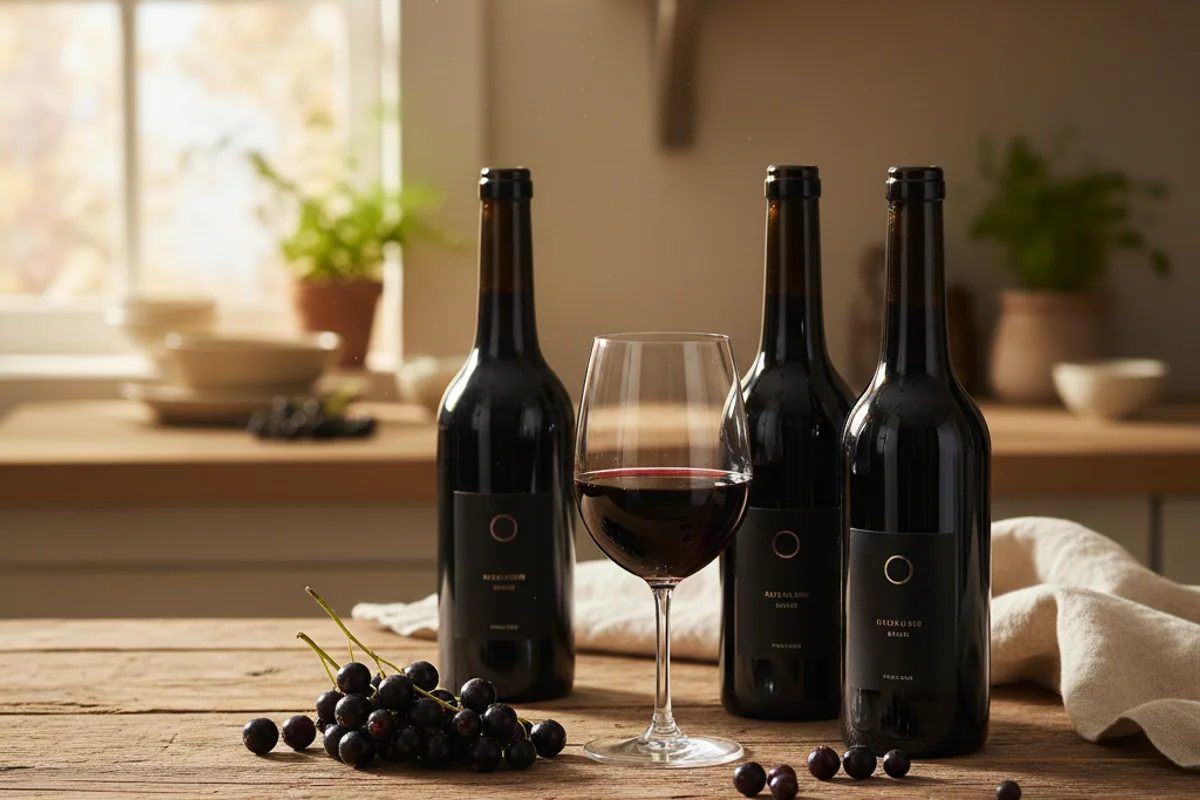
BLACK CURRANT WINE (1) [Full Bodied]
Black currants punch way above their weight. These small, dark berries carry an almost aggressive depth — tart, earthy, faintly floral, with a tannic backbone that most fruit wines can only dream about. Hot water unlocks their deep purple pigments and thick skin compounds, and four pounds of sugar gives the yeast enough fuel to build something genuinely wine-like rather than just a fancy juice. What comes out of the bottle after a few years is rich, complex, and absolutely worth the wait.
The beginner trap: Tasting this wine too early — at the one-year mark it still tastes sharp and raw, but by years three or four it transforms into something genuinely impressive, so hide it from yourself.
Ingredients
- 3 lb. black currants, fresh or frozen, stems and leaves removed
- 4 lb. granulated white sugar
- 1 gallon water
- 1 packet wine yeast (Lalvin 71B or EC-1118 work well)
- 1 tsp. yeast nutrient
Method
- Pick over the currants and remove any remaining stems, leaves, or soft spots. Wash them thoroughly, then crush them well in your primary fermentation bucket.
- Bring the water to a boil, add the sugar, and stir until fully dissolved. Allow it to return briefly to a boil, then remove from heat.
- Pour the hot sugar water over the crushed currants in the primary bucket. Let the mixture cool to between 70–75°F before moving on.
- Once cooled, stir in the yeast nutrient, then sprinkle the wine yeast on top. Cover the bucket with a cloth or loose lid.
- Set the bucket somewhere warm and stir it daily for 5 days, pressing the fruit down into the liquid each time.
- Strain the must through a fine mesh bag or strainer, pressing the pulp firmly to squeeze out every drop of liquid. Discard the solids.
- Transfer the liquid to a clean 1-gallon glass carboy or secondary fermentation vessel and fit an airlock. Let it sit undisturbed for 3 months.
- Rack the wine off its sediment into a clean vessel. Wait another 2 months, rack once more, then bottle.
- Store the bottles somewhere dark and cool. Crack the first one after a year, but plan to age it 3–4 years for the best results.
Why this works
Black currants are loaded with anthocyanins — the same pigment compounds that give red wine its color and contribute to its structure. Hot water does double duty here: it sterilizes the fruit and ruptures cell walls faster than cold water would, releasing more color, flavor, and tannin from the skins. A five-day open fermentation with daily stirring keeps the fruit cap submerged and in contact with the liquid, maximizing extraction. The long secondary aging isn’t just patience for its own sake — tannins polymerize over time, binding together into longer chains that feel smoother on your palate, which is exactly why that three-year-old bottle drinks so much better than the one-year-old version.
Notes
Frozen black currants are an excellent choice here — the freeze-thaw cycle breaks down cell walls even further, often giving you better color and flavor extraction than fresh fruit. If you can’t find black currants, black elderberries make a reasonable substitute with a similar tannic punch, though the flavor profile will shift. If your finished wine tastes flat, a small addition of acid blend (1 tsp.) at the must stage can bring the brightness back.