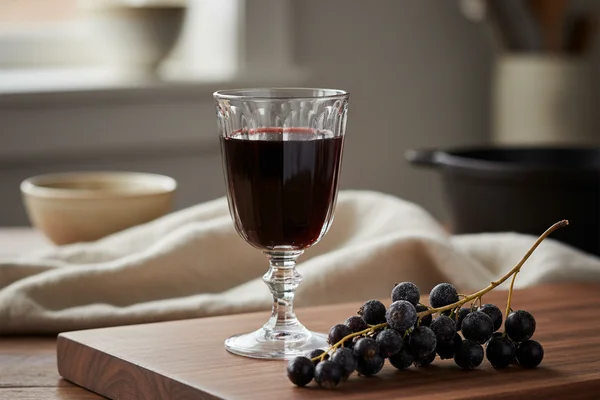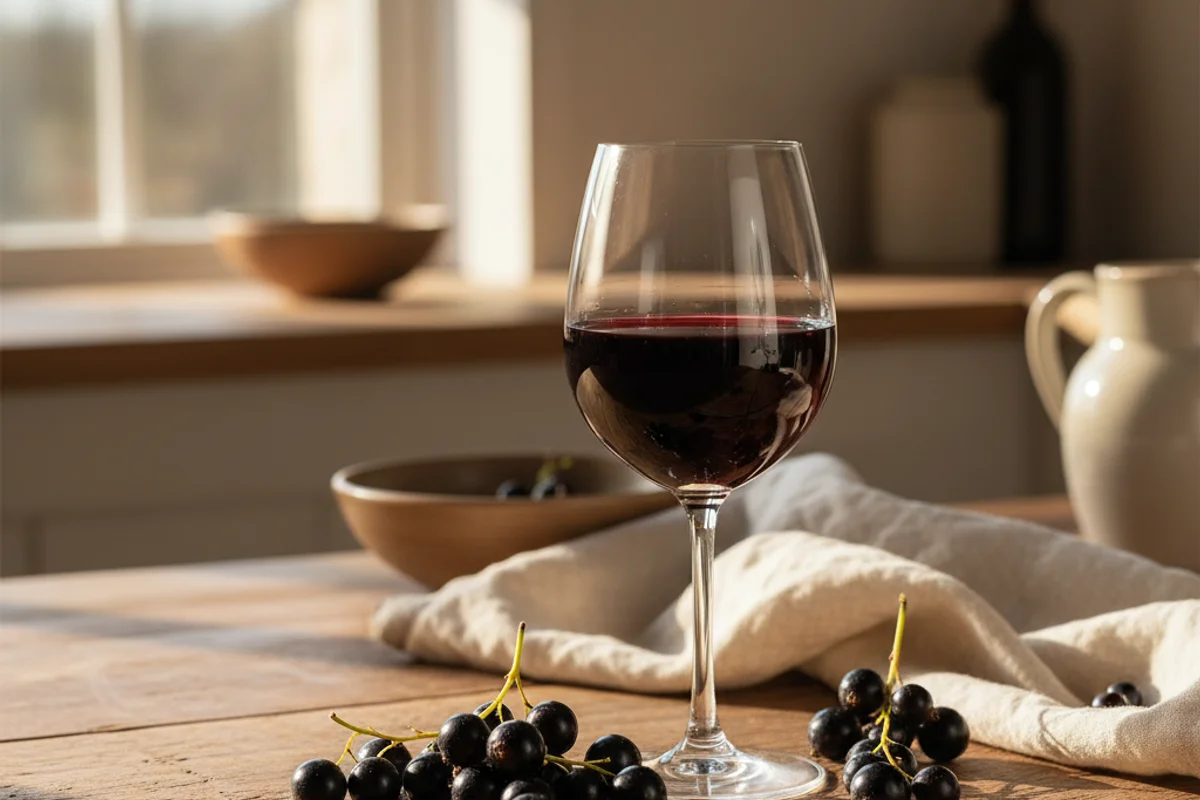
BLACK CURRANT WINE (2) [Medium Bodied]
Black currants punch above their weight. These small, dark berries carry an almost savage intensity — think deep berry jam crossed with a hint of earth and a lip-puckering tartness that softens beautifully over time. The wine they produce is richly colored, full of character, and genuinely worth the wait. This is a slow build of a recipe: simple to put together, but it rewards patience the way a good cast iron skillet rewards a low, steady heat. Give it two years and it will surprise you.
The beginner trap: New winemakers often bottle too early — this wine needs at least nine months in secondary and a full year before you even think about opening a bottle, or the flavor will be harsh and unbalanced.
Ingredients
- 1 gallon black currants, fresh or frozen (stems and leaf matter removed)
- 3½ lb. granulated white sugar per gallon of juice extracted
- 1 gallon water
- 1 packet wine yeast (Lalvin EC-1118 or Red Star Côte des Blancs work well)
- 1 tsp yeast nutrient
Method
- Remove all stems and any leafy bits from the currants, then wash the fruit thoroughly and crush it well inside your primary fermentation vessel.
- Pour one gallon of boiling water over the crushed fruit, cover the vessel tightly, and let everything steep overnight.
- Strain the mixture through a fine mesh strainer or cheesecloth, pressing the pulp firmly to pull out as much juice as possible.
- Measure the juice you collected, then stir in 3½ lb. of sugar for every gallon of juice until the sugar is fully dissolved.
- Add the yeast nutrient, sprinkle in the activated wine yeast, and transfer everything to your secondary fermentation vessel (a glass carboy works great here).
- Fit an airlock and move the vessel somewhere cool and dark; let it ferment until all bubbling stops and the wine has cleared on its own.
- Siphon the cleared wine off the sediment (the lees) and return it to the clean secondary vessel, then seal it with a bung or cork.
- After nine months, rack the wine one more time to remove any remaining sediment, then bottle it.
- Wait at least one year before tasting — two years is better, and the difference is not subtle.
Why this works
Black currants are loaded with anthocyanins — the same pigment compounds that give blueberries and red cabbage their deep color. These molecules do more than look pretty; they act as natural antioxidants that help stabilize the wine during its long aging process. The high sugar addition pushes the potential alcohol up enough to give the wine structure and body without crossing into rocket-fuel territory. The overnight hot-water steep acts like a gentle extraction, pulling color, flavor, and tannins from the skins without boiling away the delicate aromatic compounds. Tannins from the fruit skins are what make young black currant wine taste rough — and exactly what mellows into that smooth, complex finish after two years in the bottle.
Notes
Frozen black currants work just as well as fresh, and in many grocery stores they are far easier to find — look in the frozen fruit aisle or at stores that carry European or Eastern European specialty foods. If you cannot find black currants at all, a mix of blackberries and blueberries (roughly 3:1) will get you into similar flavor territory, though the result will be lighter and less tart.