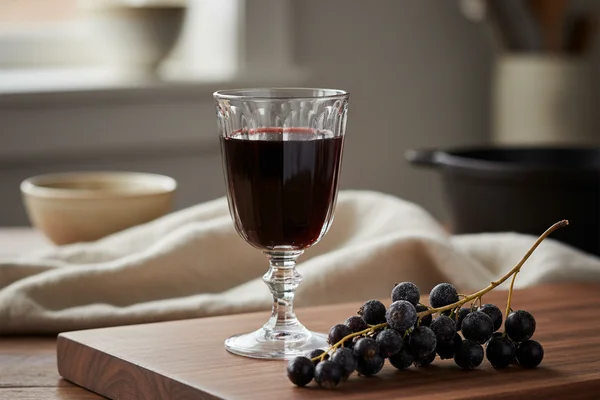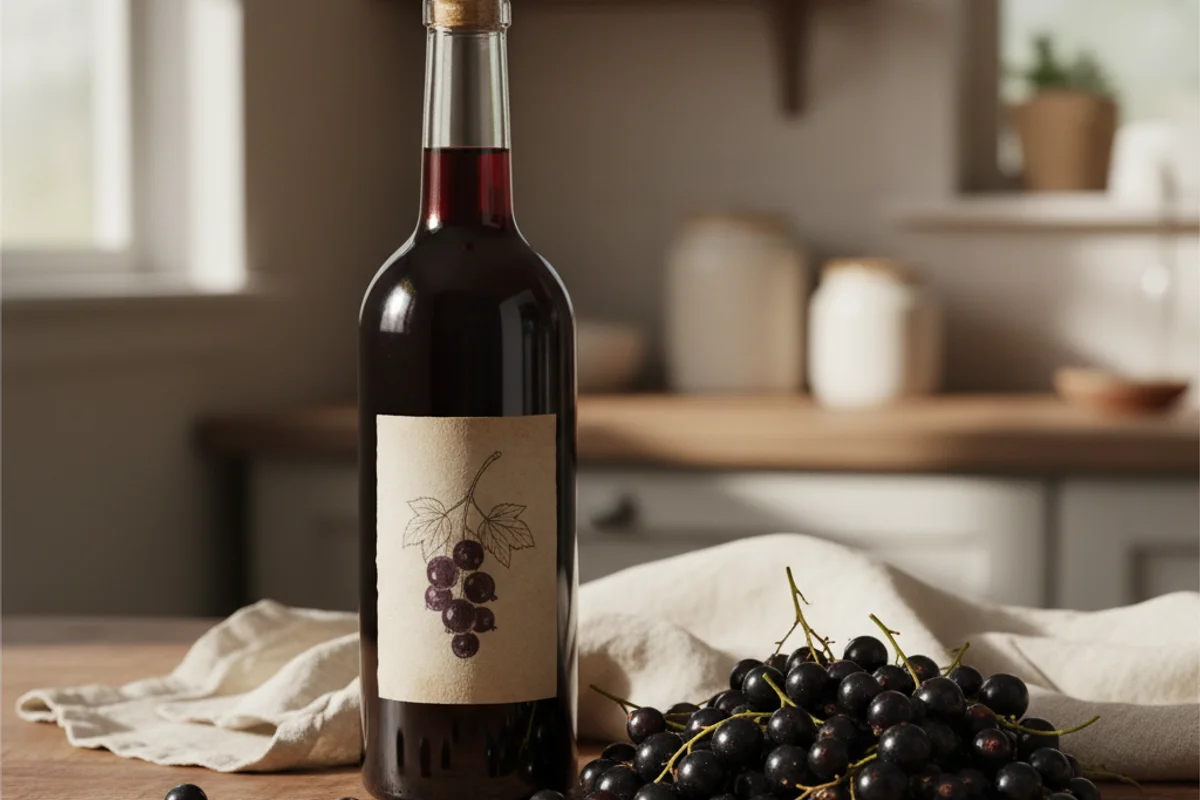
BLACK CURRANT WINE (3) [Light Bodied Dry]
Black currants punch well above their weight. These small, dark berries carry an almost electric tartness — think tart cherry crossed with a pine forest — and they back it up with enough tannin and acid to build a genuinely interesting dry wine. This recipe keeps things lean and bright, yielding a light-bodied red that lets the fruit’s sharp, aromatic character do the talking rather than burying it under body and residual sugar. Patience is the only real requirement: give it a full year before you open a bottle, and it rewards you with something that tastes far more deliberate than the effort involved.
The beginner trap: Skipping the full racking schedule — this wine throws sediment in stages, and bottling it too early means cloudy, off-tasting wine that age won’t fix.
Ingredients
- 2½ lb. black currants, fresh or frozen, stems and leaves removed
- 2¼ lb. granulated white sugar (measured per gallon of juice — see Notes)
- 7 pints (3.5 quarts) water
- ½ tsp. pectic enzyme (found at homebrew shops or online)
- 1 Campden tablet, crushed
- 1 packet wine yeast plus yeast nutrient (Lalvin EC-1118 or 71B work well)
Method
- Place the stemmed, cleaned currants in a fine-mesh nylon straining bag (a paint-straining bag from the hardware store works fine) and mash them firmly over your primary fermenter to press out the juice. Tie the bag closed and drop it into the fermenter.
- Add the water, sugar, crushed Campden tablet, and pectic enzyme. Stir well until the sugar fully dissolves.
- Cover the fermenter and leave it alone for 24 hours. This rest period lets the Campden tablet do its sanitizing work before yeast enters the picture.
- Add the yeast and yeast nutrient, cover the fermenter again, and move it to a warm spot (68–75°F). Stir the must once daily for 5 days.
- Lift out the straining bag and press it gently to extract remaining juice — don’t squeeze hard or you’ll force bitter compounds into the wine. Discard the spent fruit.
- Siphon the liquid off the sediment into a clean secondary fermenter (a 1-gallon glass jug works perfectly). Fit an airlock and move the vessel to a cooler location, around 60–65°F.
- After one month, rack the wine into a clean vessel, leaving the sediment behind. Rack again two months after that.
- Once the wine runs clear, rack one final time and bottle it. Wait at least one year before opening the first bottle — this wine genuinely improves with age.
Why this works
Black currants are loaded with pectin, the same stuff that makes jam gel. Left alone, pectin creates a stubborn haze that no amount of racking will clear. Pectic enzyme (pectinase) breaks those long-chain molecules apart early in fermentation, so they never get the chance to cloud your finished wine. The 24-hour wait after adding the Campden tablet matters for a different reason: sulfur dioxide from the tablet kills off wild yeast and bacteria that would compete with your wine yeast and muddy the flavor. Letting it off-gas before pitching your yeast means you get a clean, controlled fermentation where the currant character can actually shine through.
Notes
Frozen black currants are an excellent choice here — freezing ruptures the cell walls and releases more juice with less effort when you mash them. Look for them in the frozen fruit aisle of larger grocery stores, or at Eastern European or Middle Eastern markets where black currants are a pantry staple. If your grocery store only carries blackberries, they can substitute in a pinch, but expect a softer, less assertive flavor.