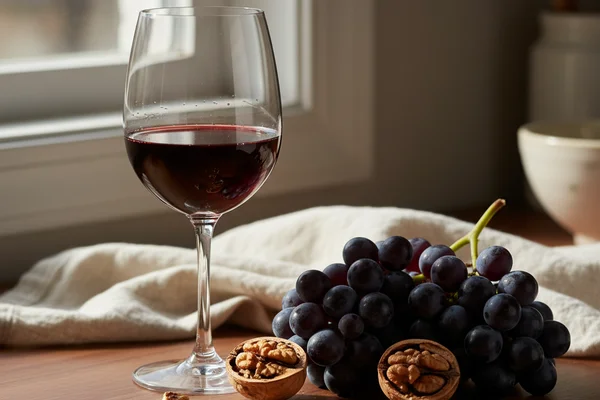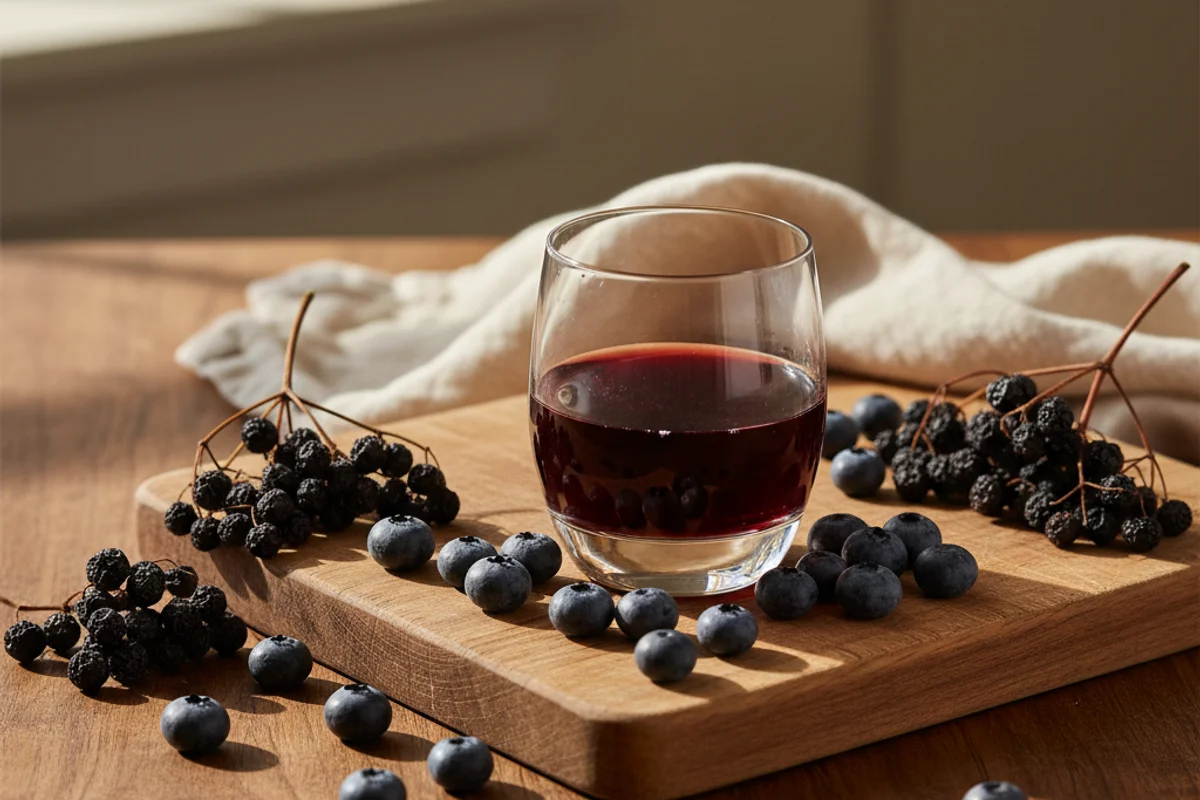
BLUEBERRY-ELDERBERRY PORT
Blueberry brings jammy sweetness and deep violet color. Dried elderberry brings tannic backbone and a dark, almost winey funk. Together, they don’t just coexist — they build something that tastes like it’s been aging in a cellar for decades. This recipe pushes fermentation to 16% alcohol, then fortifies with brandy to hit 20%, which is right in port territory. The result is rich, velvety, and complex enough that people will ask what winery it came from.
The beginner trap: Skipping the two-stage wait before pitching yeast — those 24 hours let the Campden tablet do its job and the pectic enzyme break down the fruit, and rushing past them will cost you clarity and flavor.
Ingredients
- 6 lb. blueberries, fresh or frozen, crushed
- 6 oz. dried elderberries (available online; dried cranberries are not a substitute)
- 1 cup red grape concentrate (found at homebrew shops or online)
- ½ cup light dry malt extract (homebrew shops; can omit if unavailable)
- 1½ lb. granulated white sugar
- 1½ tsp. acid blend (homebrew shops; or 1 tsp. citric acid as a backup)
- ½ tsp. pectic enzyme
- ½ tsp. yeast energizer (homebrew shops)
- ½ tsp. USP glycerin (adds body; optional but worth it)
- 4 pt. (8 cups) water
- 63 ml brandy (about 2 oz.; any affordable VS-grade brandy works)
- 2 Campden tablets, finely crushed and dissolved separately
- 1 packet port wine yeast (Red Star Côte des Blancs or Lalvin ICV-D21 also work)
Method
- Wash and crush the blueberries inside a nylon straining bag, then squeeze the juice into your primary fermentation vessel.
- Add the dried elderberries to the same bag, tie it closed, and drop it into the primary.
- Stir in the dry malt, sugar, acid blend, yeast energizer, water, and one dissolved Campden tablet until everything is fully dissolved. Your starting specific gravity should read 1.118.
- Cover the primary and leave it alone for 12 hours.
- Stir in the pectic enzyme, cover again, and wait another 12 hours.
- Sprinkle in the yeast, cover, and stir daily — pressing and squeezing the fruit bag each time to pull out color and flavor.
- When the specific gravity drops to 1.030 (typically 5–7 days), pull the fruit bag out and press it firmly to extract the remaining juice, then discard the pulp.
- Rack the liquid off any sediment into a glass secondary fermenter and fit an airlock.
- Let fermentation run to dryness (S.G. near 0.995–1.000), then rack again after 3 weeks and once more after 2 months.
- Once the wine is clear and stable, stir in the red grape concentrate, brandy, the second Campden tablet, and the glycerin.
- Let the wine rest for 2 more months, rack one final time, and bottle. Age at least 1 year before drinking.
Why this works
Port-style wines use a two-phase strategy: ferment dry to build alcohol naturally, then fortify with spirits to push past 18–20% and stop any residual yeast cold. At that alcohol level, most spoilage organisms can’t survive, which is why real port ages so well. The red grape concentrate added at the end isn’t just sweetener — it brings tannin structure and a grape backbone that ties the blueberry and elderberry together. The glycerin adds a silky mouthfeel by increasing viscosity without adding sweetness. Pectic enzyme breaks down the pectin in the fruit cell walls, which would otherwise turn your wine hazy no matter how long you wait.
Notes
Frozen blueberries work just as well here — in fact, freezing ruptures the cell walls and makes juice extraction easier. Dried elderberries are available from most homebrew suppliers and on Amazon; do not substitute elderflower or fresh elderberries without adjusting the quantity significantly. If your hydrometer reads noticeably below 1.118 at the start, dissolve a little extra sugar in warm water and stir it in before adding the yeast.