BROOM WINE (1) [Sweet]
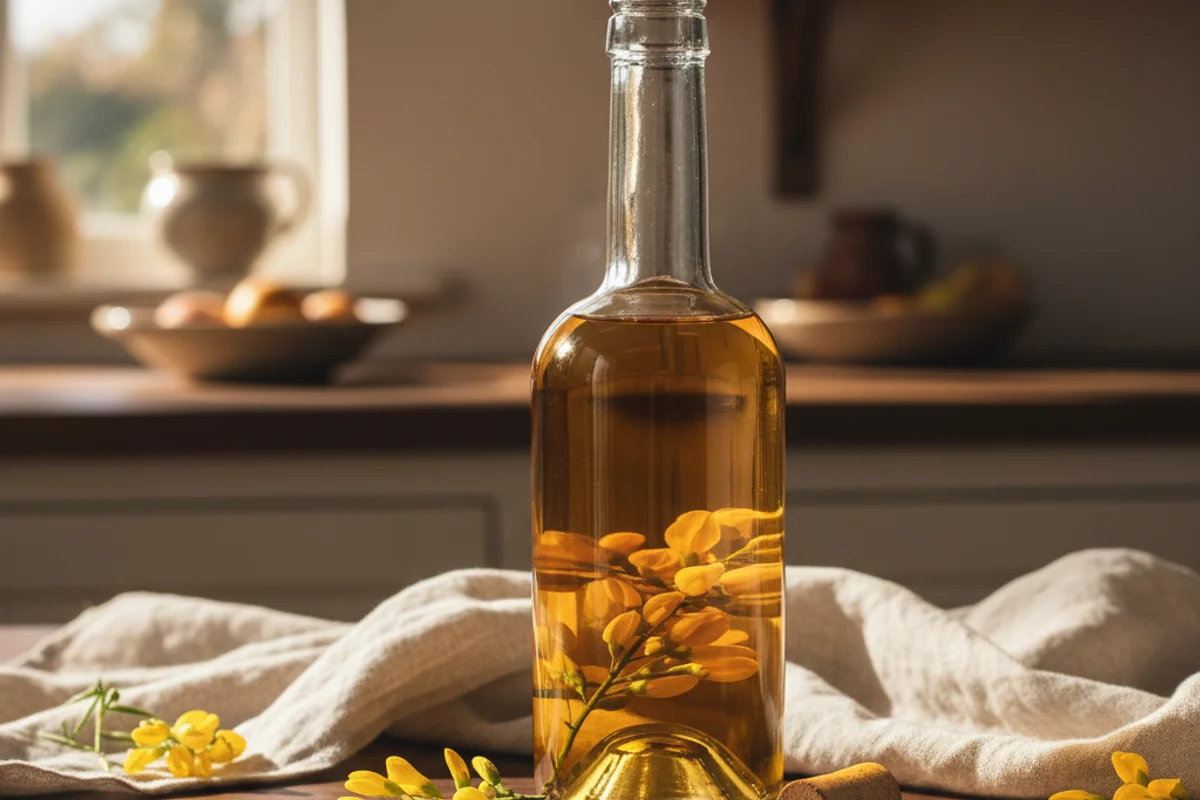
Scotch broom flowers are the kind of ingredient that makes people do a double-take when you tell them what’s in the bottle. Harvested at full bloom, the golden heads carry a faint coconut-vanilla warmth that plays beautifully against the bright acidity of citrus. The result is a pale, fragrant wine — light on tannin, generous on aroma — that lands somewhere between a floral mead and a dry-climate white. Give it six months of patience and it rewards you with something genuinely surprising.
The beginner trap: Adding the flowers while the liquid is still hot will cook off the delicate aromatic compounds that make this wine worth making — wait until it cools to 70 °F before they go in.
Ingredients
- 1 gallon broom flower heads, freshly picked (flowers only, no stems)
- 3 lb. granulated white sugar
- 2 oranges — zest and juice
- 2 lemons — zest and juice
- 1 tsp. yeast nutrient
- 1 gallon water
- 1 packet wine yeast (Lalvin 71B or EC-1118 work well)
Method
- Bring 6 pints of water to a full boil, add the sugar, and stir until completely dissolved.
- Zest the oranges and lemons, keeping only the colored outer layer — no white pith. Place the zest in a sanitized fermentation crock and pour the hot sugar water over it.
- Let the liquid cool all the way down to 70 °F. This is non-negotiable — check it with a thermometer.
- Once cool, add the broom flowers, the juice of both oranges and both lemons, the yeast nutrient, and the yeast.
- Cover the crock loosely with a clean cloth and set it somewhere warm (65–75 °F). Stir it every day for seven days.
- Strain the liquid through a fine mesh strainer or a piece of cheesecloth into a clean 1-gallon glass jug, discarding the solids.
- Top the jug up with water to the base of the neck, then fit an airlock.
- Leave undisturbed in a warm spot for three months, then rack (siphon) the clear wine off the sediment into a clean jug.
- Wait another three months, rack once more, and bottle.
- Resist the urge to open a bottle for at least six months from the bottling date.
Why this works
Broom flowers are rich in volatile aromatic compounds — think of them like hops in beer: they need a gentle extraction, not a boil. Hot liquid drives those aromatics straight out of the flower and into the air instead of into your wine. Cooling to 70 °F before adding them keeps those compounds intact and dissolved in the must. The citrus zest, added to the hot liquid, behaves the opposite way — heat helps pull the fragrant oils out of the peel efficiently. The long two-stage racking schedule gives proteins and dead yeast cells time to fall out of suspension naturally, so the finished wine clears without filtering and tastes clean rather than funky.
Notes
Scotch broom (Cytisus scoparius) is the target here — collect only the yellow flower heads at peak bloom and use them the same day if possible. If broom isn’t available in your area, elderflower makes a structurally similar wine and can be swapped at the same volume. Fresh-squeezed citrus juice is worth the effort, but 100% bottled juice (no added sugar or preservatives) works fine in a pinch.