CABBAGE WINES
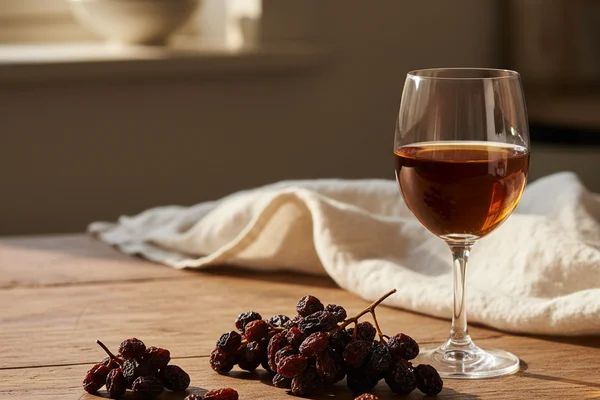
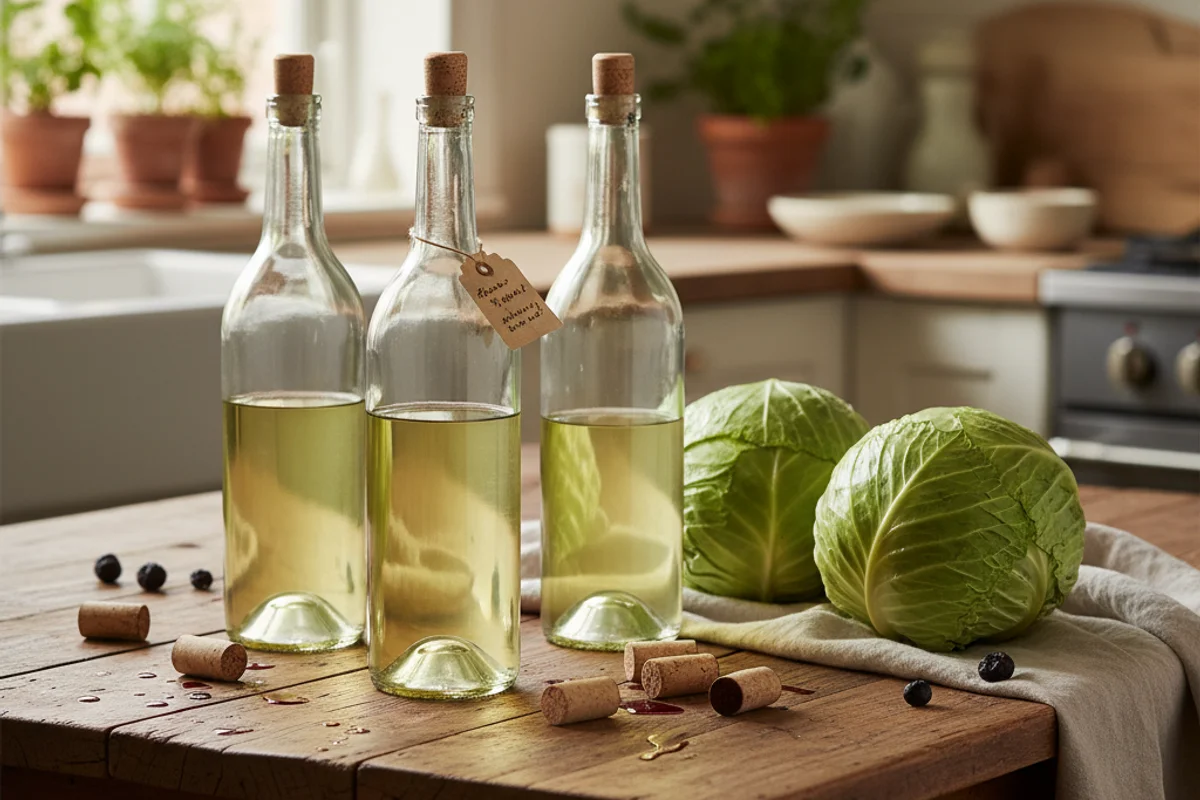
Cabbage is not a vegetable that announces itself quietly. It’s sulfurous, assertive, and deeply savory — not exactly the flavor profile you’d associate with a glass of wine. And yet, winemakers have been coaxing fermentable liquid from this humble brassica for generations. Done right, cabbage wine lands somewhere dry and vegetal, with enough body from supporting ingredients to actually earn a place at the table. Three recipes below tackle the “thin wine” problem in three different ways: raisins, grain, or grape concentrate.
The beginner trap: Skipping or skimping on the body-building additions — raisins, grain, or grape concentrate — and expecting plain cabbage to carry the wine on its own.
Recipe 1 — Cabbage & Golden Raisin Wine
Ingredients
- 3 lbs shredded green cabbage (fresh)
- ½ lb golden raisins, minced (fresh or from the baking aisle)
- 3 lbs granulated white sugar
- 7½ pts (about 15 cups) water
- 1½ tsp citric acid (lemon juice powder works as a backup)
- ⅛ tsp wine tannin (a strong-brewed black tea bag steeped and cooled can substitute)
- 1 tsp yeast nutrient
- 1 packet Champagne wine yeast (Lalvin EC-1118 is widely available)
Method
- Bring the water to a boil. Meanwhile, shred the cabbage and place it in your primary fermenter, then add the minced raisins.
- Add the sugar to the boiling water and stir until fully dissolved.
- Once the water returns to a boil, pour it directly over the cabbage and raisins. Cover the fermenter and let everything cool to room temperature (below 75°F).
- Stir in the citric acid, tannin, and yeast nutrient. Activate your yeast according to the packet instructions, then add it to the must.
- Once active fermentation is clearly underway, ferment for 5 days, stirring twice daily.
- Strain the must into a secondary fermenter (a glass carboy or food-grade jug) and fit an airlock.
- Rack after 30 days, top up to minimize headspace, and refit the airlock.
- After another 30 days, measure the specific gravity. When it reads 1.004 or lower, add your stabilizers (potassium sorbate + potassium metabisulfite), wait 10 days, then rack again.
- Refit the airlock and set aside for 45 days. Rack into bottles and age at least 6 months before drinking.
Recipe 2 — Cabbage, Grain & Citrus Wine
Ingredients
- 2 lbs green cabbage, roughly chopped then minced
- 1 lb cracked wheat, cracked barley, or uncooked white rice (any grocery-store grain works)
- ½ lb raisins, minced
- 3 medium oranges or lemons (zest and juice; no white pith)
- 2¼ lbs granulated white sugar
- 7 pts (14 cups) water
- ½ pt (1 cup) cold-brewed black tea (2 tea bags, steeped strong and cooled)
- 1 tsp yeast nutrient
- 1 packet wine yeast (Lalvin EC-1118 or Red Star Côte des Blancs)
Method
- Soak the grain in enough water to cover overnight. Drain, reserving the soaking water in a pot.
- Bring the reserved soaking water to a boil. While it heats, peel the citrus thinly — remove only the colored zest, not the bitter white pith — and juice the fruit.
- Add the raisins to the boiling water and let them boil for 3 minutes, then strain them out, keeping the liquid.
- Combine the strained raisins, soaked grain, citrus zest, and chopped cabbage. Mince everything together until fine, then transfer to your primary fermenter.
- Pour the reserved hot liquid (from soaking and scalding) over the mixture, add the sugar, and stir until dissolved.
- Add the cold tea, citrus juice, and yeast nutrient. Cover and let cool to room temperature.
- Add activated yeast, recover, and stir the must daily for 7 days.
- Strain the liquid into a secondary fermenter and fit an airlock. Rack after 30 days.
- Top up, refit the airlock, and ferment for another 60 days. Rack, stabilize, sweeten to taste if desired, wait 10 days, then bottle. Taste after 4–6 months.
Recipe 3 — Cabbage & Grape Concentrate Wine
Ingredients
- 3 lbs shredded green cabbage (fresh)
- 1 can (12 oz) white grape juice concentrate, thawed (Welch’s white grape works fine)
- 2¼ lbs granulated white sugar
- 7¼ pts (about 14½ cups) water
- 1½ tsp citric acid
- ⅛ tsp wine tannin (or substitute cold-brewed black tea)
- 1 tsp yeast nutrient
- 1 packet Champagne or Sauternes-style wine yeast (Lalvin EC-1118 or 71B)
Method
- Bring the water to a boil. Shred the cabbage thinly and load it into a nylon mesh straining bag; tie the bag closed and set it in your primary fermenter.
- Dissolve the sugar in the hot water, then pour the whole batch over the bagged cabbage. Cover and let cool to room temperature.
- Add the grape concentrate, citric acid, tannin, and yeast nutrient. Stir well. Add activated yeast, then cover the fermenter.
- Punch the bag down twice a day for 7 days to keep the cabbage submerged and extracting.
- Lift the bag and let it drip-drain fully — do not squeeze. Pour the liquid into a secondary fermenter and fit an airlock.
- Rack every 30 days until the wine runs clear and reads dry on your hydrometer.
- Stabilize, sweeten to taste if desired, wait 10 days, then rack into bottles. Ready to drink after 6 months.
Why this works
Cabbage on its own ferments into a watery, sulfur-tinged liquid with little to recommend it. The fix is body — and each recipe delivers it differently. Raisins bring natural grape sugars, amino acids, and a slight richness. Grain contributes starch that partially converts to fermentable sugar and adds mouthfeel. Grape concentrate is essentially pre-made wine must, bringing balanced sugar, acid, and grape character straight out of the can. Citric acid and tannin round out the structure that cabbage can’t provide on its own. The long aging — 6 months minimum — gives the sulfur compounds time to off-gas and the wine time to mellow into something drinkable.
Notes
Green cabbage from any grocery store works well here; red cabbage will shift the color and add more tannin, which may require adjustment. If you can’t find wine tannin powder, steep 2 black tea bags in ½ cup of boiling water for 10 minutes, let it cool, and use that in place of the powdered tannin. All three recipes benefit from extra patience — open a bottle early and you may write off the whole batch unfairly.