RAISIN WINE
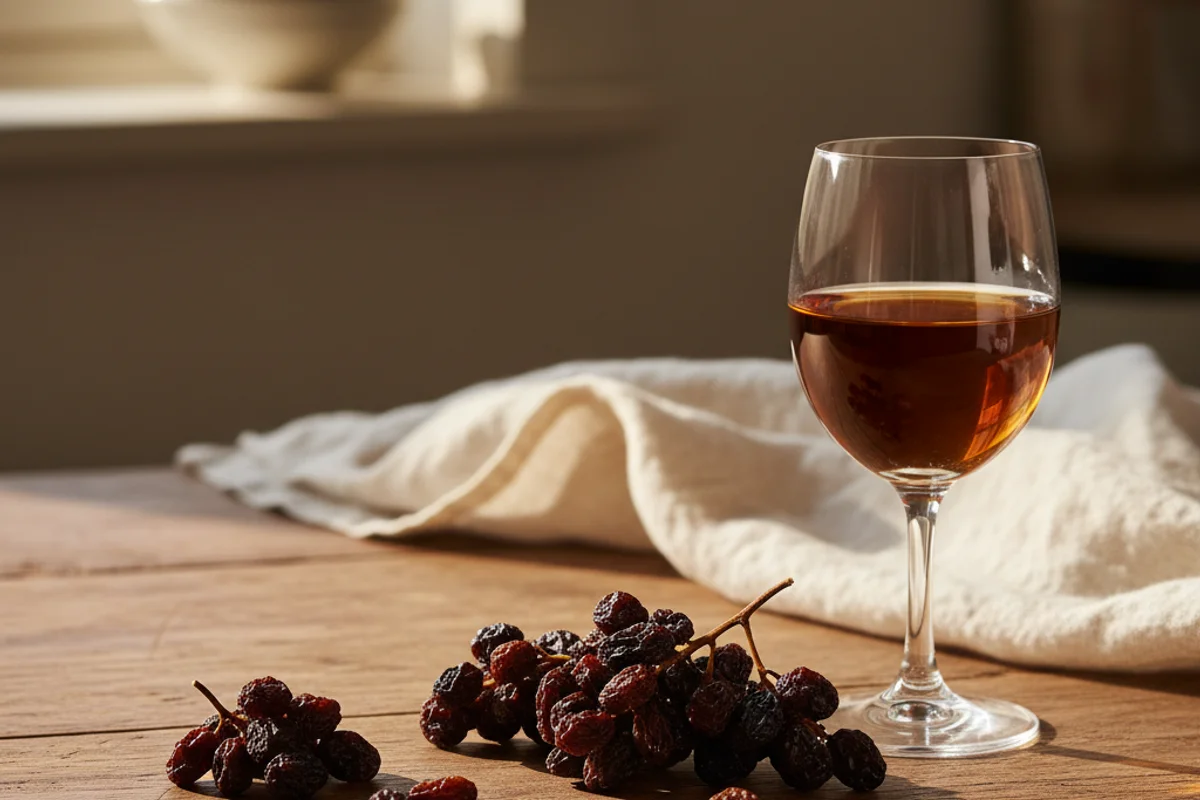
Think of raisins as grapes with the water wrung out — all that sugar, acid, and flavor packed into a wrinkled little package. When you rehydrate four pounds of them and let yeast loose, something genuinely wine-like happens. The result is rich, amber, and faintly grape-forward without tasting like a juice box. Dark raisins push toward a deep, tawny finish. Golden raisins keep things lighter and more delicate. Either way, this is one of the most pantry-friendly wines you can make, and it ages surprisingly well.
The beginner trap: Skipping the chop — whole raisins release their sugars and flavor slowly and unevenly, so always chop or mince them before adding to the must.
Ingredients
- 4 lbs raisins, chopped (dark for a rich amber wine; golden for a lighter style)
- 1 lb granulated white sugar
- 1 gallon water
- 1 Campden tablet, crushed
- 1 tsp pectic enzyme
- 1 tsp yeast nutrient
- 1 packet wine yeast (Lalvin EC-1118 or Red Star Côte des Blancs work well)
Method
- Chop or mince the raisins, then place them in your primary fermenter along with the sugar and yeast nutrient.
- Bring the water to a full boil, then pour it over the raisin mixture and stir until the sugar fully dissolves.
- Cover the fermenter with a sanitized cloth and let the must cool to room temperature (around 70–75°F).
- Add the crushed Campden tablet, stir well, recover, and let it rest for 12 hours.
- Add the pectic enzyme, stir, recover, and wait another 12 hours.
- Activate your yeast per the packet instructions, then pitch it into the must.
- Stir the must once daily for 7 days, keeping it covered between stirs.
- Strain the liquid through a fine mesh strainer or cheesecloth, pressing the pulp firmly to extract all the juice.
- Transfer the liquid to a clean secondary fermenter (a 1-gallon glass jug works perfectly) and fit an airlock.
- Rack into a clean vessel every 30 days, topping up to minimize headspace, until the wine is clear and produces no new sediment over a full 30-day period.
- Stabilize with potassium sorbate and potassium metabisulfite, sweeten to taste if desired, wait 10 days, then rack into bottles.
Why this works
Raisins are grape juice in solid form — drying concentrates sugars, acids, and flavor compounds while also increasing tannins. When you chop them and hit them with boiling water, you’re essentially rehydrating that concentrated must. Pectic enzyme is critical here: raisins contain pectin, and without something to break it down, your finished wine will be hazy no matter how long you wait. The 24-hour Campden-then-enzyme sequence matters too — sulfite knocks out wild yeast and bacteria first, then the enzyme goes to work without interference. The result is a cleaner, clearer wine that actually lets the fruit character shine through.
Notes
Golden (sultana) raisins from any grocery store produce a lighter, more elegant wine and are a great swap if you want something closer to a white wine style. If your finished wine tastes thin, bump the raisins to 5 lbs next time rather than adding more sugar. Yeast nutrient is sold at homebrew shops, but a plain grocery-store option doesn’t exist — it’s worth ordering online, as raisin must can stall without it.