CELERY WINES
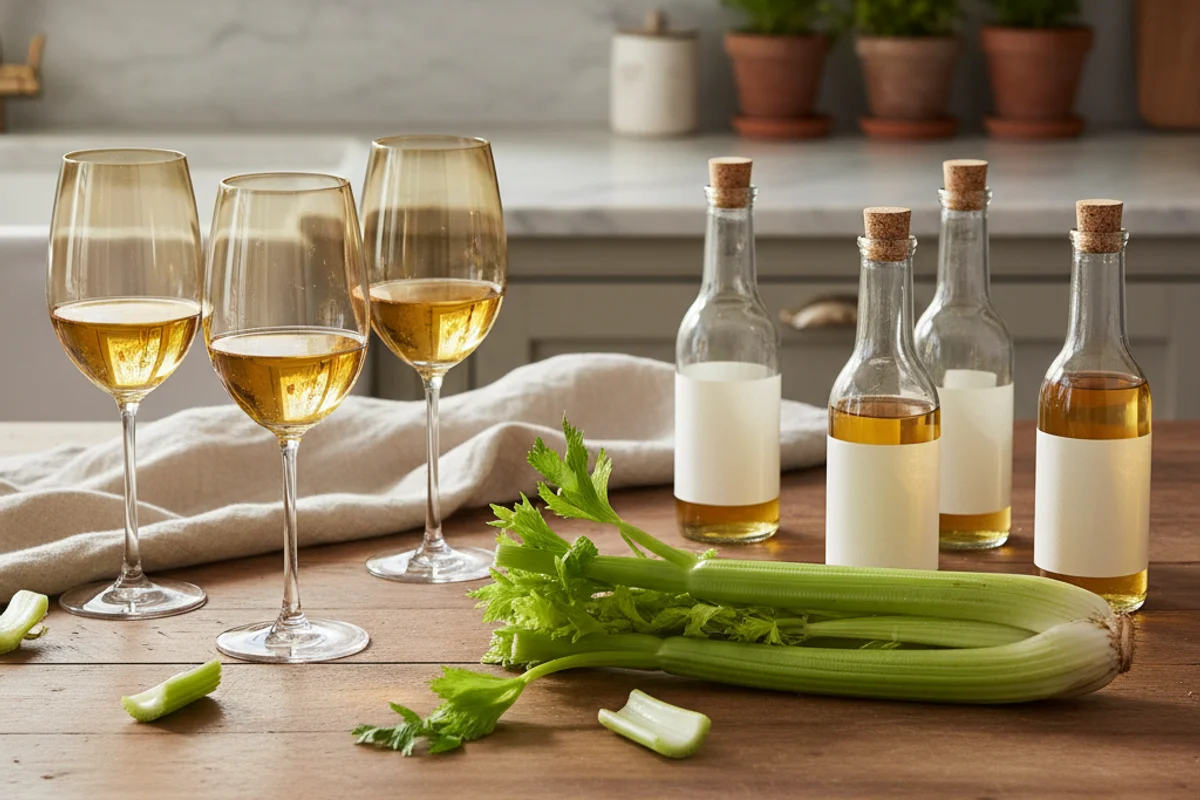
Celery is one of those ingredients that makes people tilt their head sideways when you mention wine. But that sharp, vegetal, almost saline bite that celery brings to a Bloody Mary? It can translate into something genuinely interesting in a glass — a dry, herb-forward aperitif with a faint bitterness that wakes up your palate. Think dry vermouth’s quieter cousin. The two recipes here pull in different directions: one leans lighter and neutral, the other goes fuller and more structured with added acid. Both are worth trying.
The beginner trap: Skipping the acid addition — celery is naturally low in acid, so without citric acid (Recipe 2) or careful sugar selection, the finished wine tastes flat and lifeless.
Ingredients
Recipe 1 (lighter, neutral style)
- 4 lbs green and white celery stalks, leaves removed, chopped into 1-inch pieces
- 2 lbs sugar (white granulated for neutral color; Demerara for gold; light brown for amber)
- 7½ pints water (about 3.75 quarts)
- 1 tsp yeast nutrient
- 1 packet wine yeast (Lalvin 71B or EC-1118 work well)
Recipe 2 (fuller, more structured style)
- 6 lbs white celery stalks, leaves removed, finely chopped
- 3¼ lbs white granulated sugar
- 7¼ pints water (about 3.6 quarts)
- 1½ tsp citric acid (find it in homebrew shops or the canning aisle)
- 1 tsp yeast nutrient
- 1 packet wine yeast, activated per package instructions
Method
Recipe 1
- Wash the celery, remove all leaves, and chop into 1-inch pieces. Add to a pot with the water and boil for 30 minutes.
- Strain the liquid into your primary fermenter — do not press the pulp. Save the cooked celery for soup if you like.
- Add the sugar to the hot liquid and stir until fully dissolved, then stir in the yeast nutrient.
- Cover and let cool to room temperature (below 75°F), then sprinkle the yeast over the top without stirring. Cover again.
- Once fermentation is vigorous (usually 24–48 hours), stir the must and let it ferment for four more days.
- Transfer to a secondary fermenter (carboy or jug) and fit an airlock.
- When the wine clears, rack into a clean secondary, top up to minimize headspace, and refit the airlock.
- Ferment until completely dry, then rack into bottles — or stabilize, sweeten to taste, wait 10 days, and rack into bottles as an aperitif.
Recipe 2
- Remove leaves, chop celery finely, and combine with the water in a pot. Bring to a boil, then simmer until the celery is tender.
- Stir in the sugar until fully dissolved, then strain the liquid into your secondary fermenter and let it cool to room temperature.
- Stir in the citric acid, yeast nutrient, and activated yeast. Cover loosely until fermentation is clearly active.
- Fit an airlock and set aside. Rack after 30 days, top up, and refit the airlock.
- Ferment for an additional 60 days, then rack again. Stabilize, sweeten if desired, wait 10 days, and rack into bottles.
Why this works
Celery holds a surprisingly complex mix of compounds — phthalides, terpenes, and furanocoumarins — that give it that distinctive herbal, slightly bitter flavor. When you boil the celery and strain without pressing, you pull flavor and aroma into the water while leaving behind the fibrous pulp that would make fermentation messy. Celery is very low in natural sugar and acid, which is why both recipes lean hard on added sugar and Recipe 2 adds citric acid directly. The acid does two jobs: it gives yeast a healthy environment to work in, and it sharpens the finished wine so it doesn’t taste dull. Sugar choice in Recipe 1 isn’t just cosmetic — unrefined sugars like Demerara bring molasses notes that add body and warmth to an otherwise lean base.
Notes
White celery (also called blanched celery) is milder and works better here — if your grocery store only carries standard green celery, use it for Recipe 1 but expect a slightly more bitter result. Citric acid is available at most homebrew supply stores or online; lemon juice is a rough substitute (use about 3 tablespoons per 1½ tsp called for), though it adds a faint fruity note. Both wines work best as dry aperitifs rather than table wines — lean into that and serve chilled.