VERMOUTH
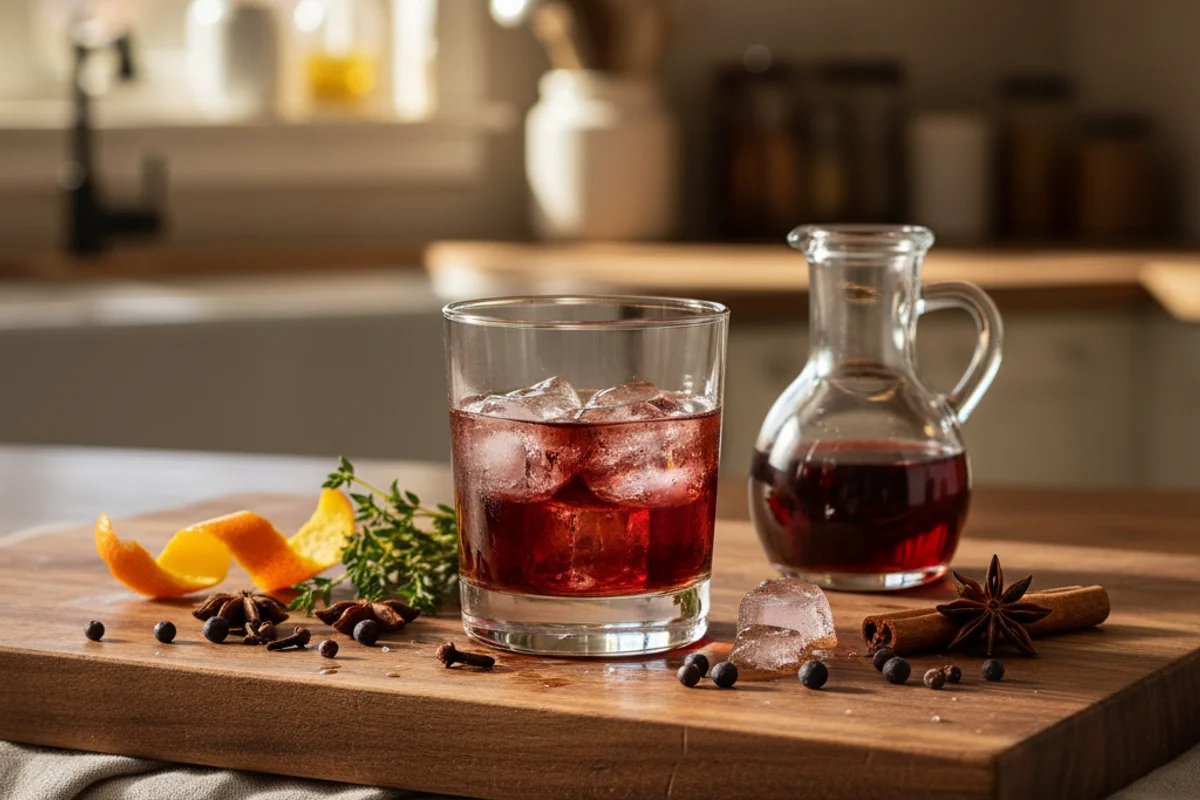
Vermouth is what happens when a bottle of wine gets interesting. At its core, it’s an aromatized, fortified wine — meaning herbs and spices do the heavy lifting, and a small shot of brandy locks everything in place. The result lands somewhere between a cocktail ingredient and a sipping aperitif: bitter, herbal, slightly sweet or bone-dry depending on which direction you lean. Italian-style goes red and sweet. French-style goes pale and dry. Both are built from the same pantry you probably already have.
The beginner trap: Most first-timers dump the herbs directly into the wine and call it done — skipping the simmer step — which produces a flat, grassy flavor instead of the warm, rounded complexity vermouth needs.
Ingredients
- 750 ml finished red wine (for Italian-style) or dry white wine (for French-style), divided
- 1 tsp whole cloves
- 1 tsp cinnamon chips or 1 small cinnamon stick, broken up
- 1 tsp aniseed or star anise (or one of each)
- 1 tsp dried citrus peel (orange or lemon, from the baking aisle)
- 1 tsp ground or sliced dried ginger
- 1 tsp coriander seed
- 1 tsp dried sage
- 1 chamomile tea bag, emptied (or 1 tsp loose chamomile)
- 1 tsp juniper berries (from the spice aisle; gin fans, you know this one)
- 60 ml brandy per 750 ml finished vermouth
- Sugar to taste, for Italian-style sweetening (start with 1–2 tbsp)
Method
- Choose the herbs you actually enjoy from the list above — you do not need all of them, and personal taste is the whole point here.
- Combine your chosen dried herbs in a small saucepan. Pour in just enough wine to cover them — roughly ½ cup.
- Place the lid on the pan and simmer on low heat for 5 to 10 minutes. Do not boil; keep it gentle.
- Remove from heat and let the mixture cool overnight with the lid on.
- Strain out all solids through a fine mesh strainer or cheesecloth. What remains is your herbal essence.
- Stir the essence into the rest of your wine a little at a time, tasting as you go, until the flavor intensity suits you.
- For Italian-style, stir in sugar now — taste and adjust until it hits the sweetness you want.
- Add 60 ml of brandy per 750 ml of finished vermouth and stir to combine.
- Bottle, cap, and let it rest for at least a few days before serving. Flavor mellows noticeably with a week or two of age.
Why this works
The simmer step is doing two things at once. Heat drives volatile aromatic compounds out of the dried herbs and into the wine, which acts as a solvent far more effective than water for fat-soluble flavor molecules. At the same time, the brief exposure to heat and air creates mild oxidation — exactly the slightly “cooked” quality that defines vermouth’s flavor profile and separates it from just throwing herbs in a jar. Using wine instead of water as your simmering liquid means you’re pulling flavor into a medium that blends seamlessly with your base. The brandy addition raises the alcohol to roughly 16–18%, which both preserves the final product and rounds out the bitter edges from the herbs.
Notes
If a single herb isn’t punching through the way you’d like, simmer it alone in a small splash of wine and blend that concentrate in separately. A few oak chips added during the cool-down step can add a pleasant woody depth — look for these at homebrew shops or online. If your finished vermouth tastes too intense, simply dilute with more plain base wine rather than starting over.