CHICORY WINE
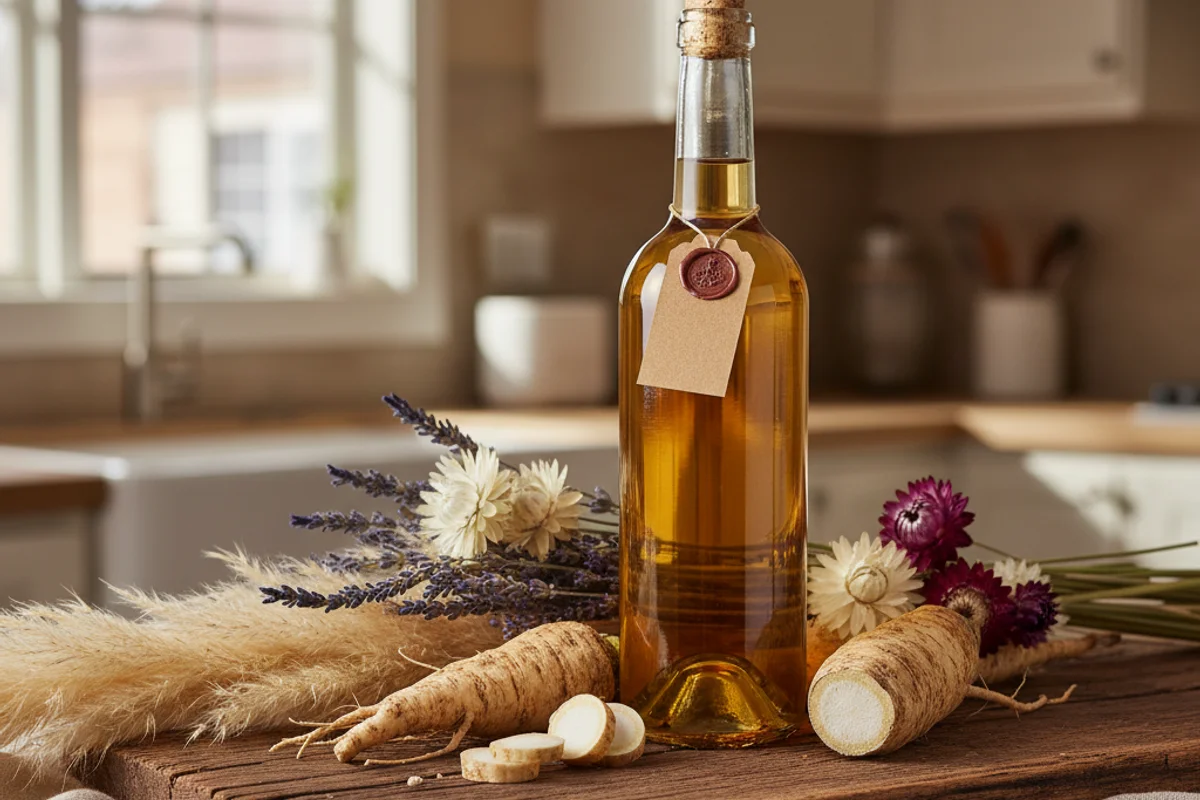
That weedy blue-flowered plant growing along the roadside? It’s not just a pretty nuisance — it’s chicory, and its dried taproot has been roasted and brewed as a coffee substitute for centuries. Think bitter, earthy, and faintly woody, with a depth that plays surprisingly well against a bright white grape base. This one-gallon recipe pulls those bold root flavors into a dry, complex country wine that tastes like something your great-grandmother would have made — and been proud of.
The beginner trap: Skipping the 10-hour wait after adding the Campden tablet — that rest time is what neutralizes wild microbes and chlorine before your yeast goes in, and rushing it can sabotage your fermentation from the start.
Ingredients
- 4 oz. dried chicory root, finely chopped or coarsely ground
- 1 (11 oz.) can Welch’s 100% White Grape Juice frozen concentrate
- 1¾ lb. granulated sugar
- 1½ tsp. acid blend
- 1 tsp. yeast nutrient
- 1 crushed Campden tablet
- Water to make 1 gallon total
- Wine yeast (Lalvin 71B or EC-1118 work well)
Method
- Combine chicory root and 2 cups of water in a small saucepan, bring to a boil, then reduce heat and simmer covered for 15 minutes.
- Strain the liquid through a fine-mesh strainer or cheesecloth into your primary fermenter, pressing the solids to extract as much liquid as possible.
- Add the grape juice concentrate, sugar, acid blend, yeast nutrient, and crushed Campden tablet; stir thoroughly until the sugar is fully dissolved.
- Top up with water to reach 1 gallon, cover the fermenter, and let it sit undisturbed for 10 hours.
- Prepare your yeast according to package directions, then pitch it into the must; re-cover the fermenter.
- Stir the must once daily until vigorous bubbling slows significantly, usually 5–7 days.
- Transfer to a 1-gallon glass jug (secondary fermenter) and fit with an airlock; let ferment to dryness.
- Rack the wine off its sediment every 30 days until it runs clear and no new sediment appears between rackings.
- Stabilize with potassium sorbate and potassium metabisulfite, sweeten to taste if desired, then wait 14 days before bottling.
Why this works
Chicory root contains inulin, a soluble fiber and complex carbohydrate that simmers out into the water along with bitter compounds called lactucopicrin and chicoric acid. Those bitterness compounds behave a lot like tannins — they add structure and a dry finish to the finished wine. The brief boil-and-simmer extracts flavor without pulling excessive starch into your must, which would cloud the wine and stress your yeast. The white grape concentrate steps in as a flavor backbone and adds natural grape acids and sugars, giving the yeast something familiar to work with while balancing chicory’s intensity.
Notes
Dried chicory root is available at most health food stores, online retailers like Amazon, or in the coffee-alternative aisle (look for roasted chicory sold as a coffee blend add-in — just make sure it’s plain, with no additives). Acid blend can be swapped for 1 tsp. of lemon juice per cup of must in a pinch, though results may vary. If your finished wine is too bitter after aging, a touch of back-sweetening with sugar syrup at bottling time does a nice job of rounding it out.