CORN WINE 2
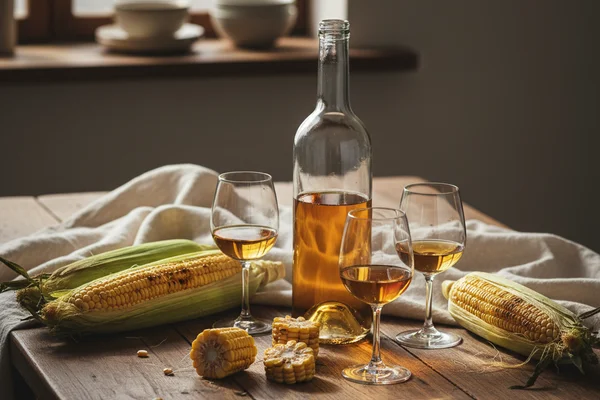
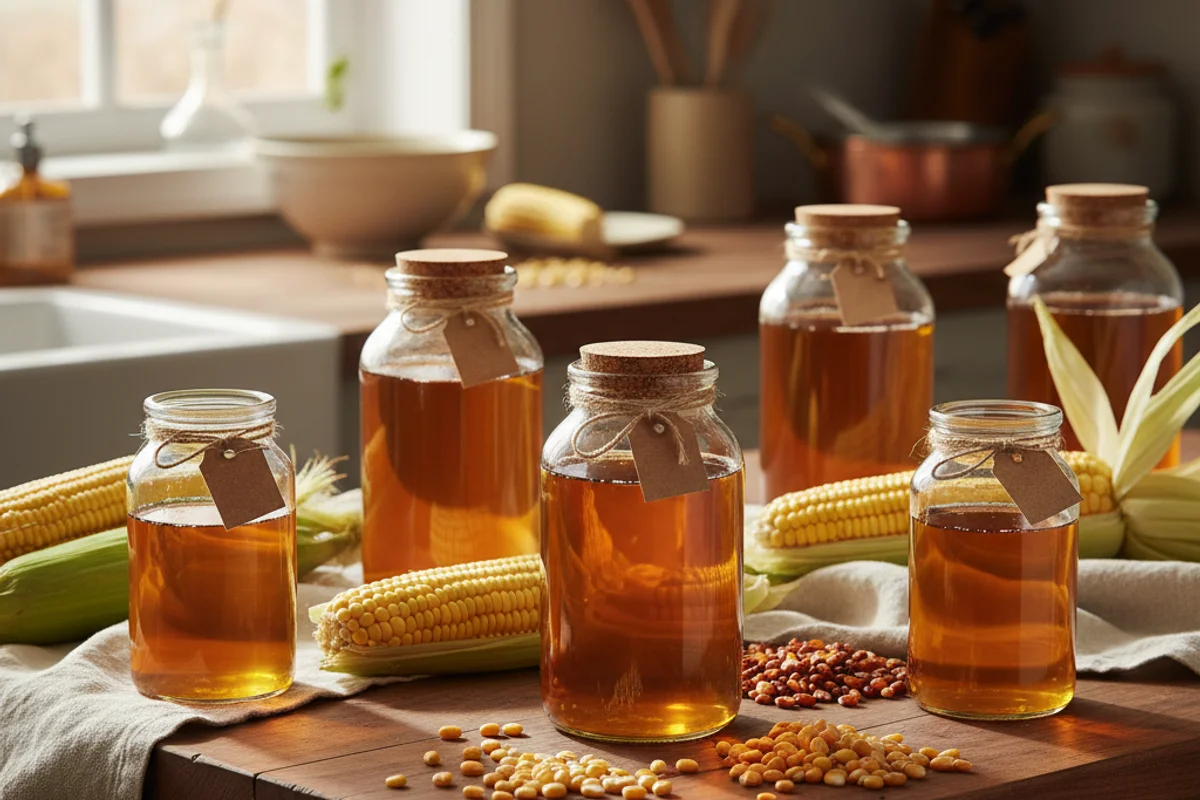
Fresh corn is basically sugar water wrapped in a husk — but only for a brief window after picking. The moment an ear leaves the stalk, its sugars start converting to starch. That fleeting sweetness, plus corn’s subtle buttery, almost vanilla-like aroma, is exactly what you want to trap in a bottle. This recipe boils the kernels and cobs together to pull every last bit of flavor into the must, then lets a sherry yeast work its magic over several months to build a surprisingly smooth, golden country wine.
The beginner trap: Using corn that sat in the fridge for a few days — by then the sugars are mostly gone and you’re fermenting starch water instead of a flavorful must.
Ingredients
- 4 to 6 ears fresh corn (pick and use same day; frozen whole-kernel corn works in a pinch — see Notes)
- 1½ lbs (680 g) granulated sugar, for the primary
- ½ lb (225 g) granulated sugar, reserved for after racking
- 1½ tbsp acid blend (find it at homebrew shops or online)
- ½ tsp pectic enzyme
- 1 tsp yeast nutrient
- ⅛ tsp wine tannin (or 1 cup unsweetened strong-brewed black tea)
- Water to make 1 gallon total
- 1 packet sherry wine yeast (Lalvin EC-1118 works as an everyday substitute)
Method
- Pour roughly half a gallon of water into a large pot and bring it to a boil. While it heats, shuck the corn, cut the kernels off the cobs, and chop the bare cobs into 2-inch sections.
- Add the kernels and cob pieces to the boiling water and boil for 15 minutes.
- Strain the liquid into your primary fermenter, discard the solids, and stir in 1½ lbs of sugar until fully dissolved.
- Add enough cool water to bring the total volume to 1 gallon minus 1 cup. Cover the fermenter and let it cool to room temperature.
- Once cool, stir in the pectic enzyme, acid blend, tannin, and yeast nutrient. Cover and leave it alone for 12 hours.
- Activate your yeast according to the packet instructions, add it to the must, and cover the fermenter again. Stir the must once a day for 7 days.
- Boil the reserved 1 cup of water, dissolve the remaining ½ lb of sugar into it, and let it cool completely.
- Rack the wine into a 1-gallon secondary (glass jug), add the cooled sugar syrup, and fit an airlock. Leave it for 30 days.
- Rack again, top up with water or a similar wine to minimize headspace, and refit the airlock. Wait another 60 days, then rack and top up one more time.
- Age for 4 more months, checking airlock fluid occasionally. The wine should clear on its own.
- If the wine is still hazy after aging, treat for starchy haze by adding amylase enzyme (available at homebrew shops) per the package directions.
- Rack into bottles and age at least 3 more months before drinking — longer is better.
Why this works
Corn is packed with starch and a smaller fraction of simple sugars. Boiling the kernels and cobs together serves two jobs: it gelatinizes the starch (making it water-soluble) and extracts flavor compounds from the cob’s woody tissue. Pectic enzyme breaks down pectin that would otherwise cause a stubborn haze. The two-stage sugar addition — part upfront, part after the first rack — keeps the yeast from getting overwhelmed by a sky-high starting gravity, which reduces the risk of a stalled ferment. Sherry yeast is chosen for its ability to work cleanly at moderate alcohol levels and to contribute a slightly nutty, rounded character that plays well with corn’s natural sweetness.
Notes
If garden-fresh corn isn’t an option, use 2 lbs of frozen corn kernels (no cob sections needed — just boil the kernels). Skip adding the cob pieces and proceed as written. Acid blend is the easiest option for balance, but 3–4 tbsp of fresh lemon juice per gallon is a workable grocery-store swap. This wine clears slowly; patience pays off — don’t rush to bottle.