CORN WINE
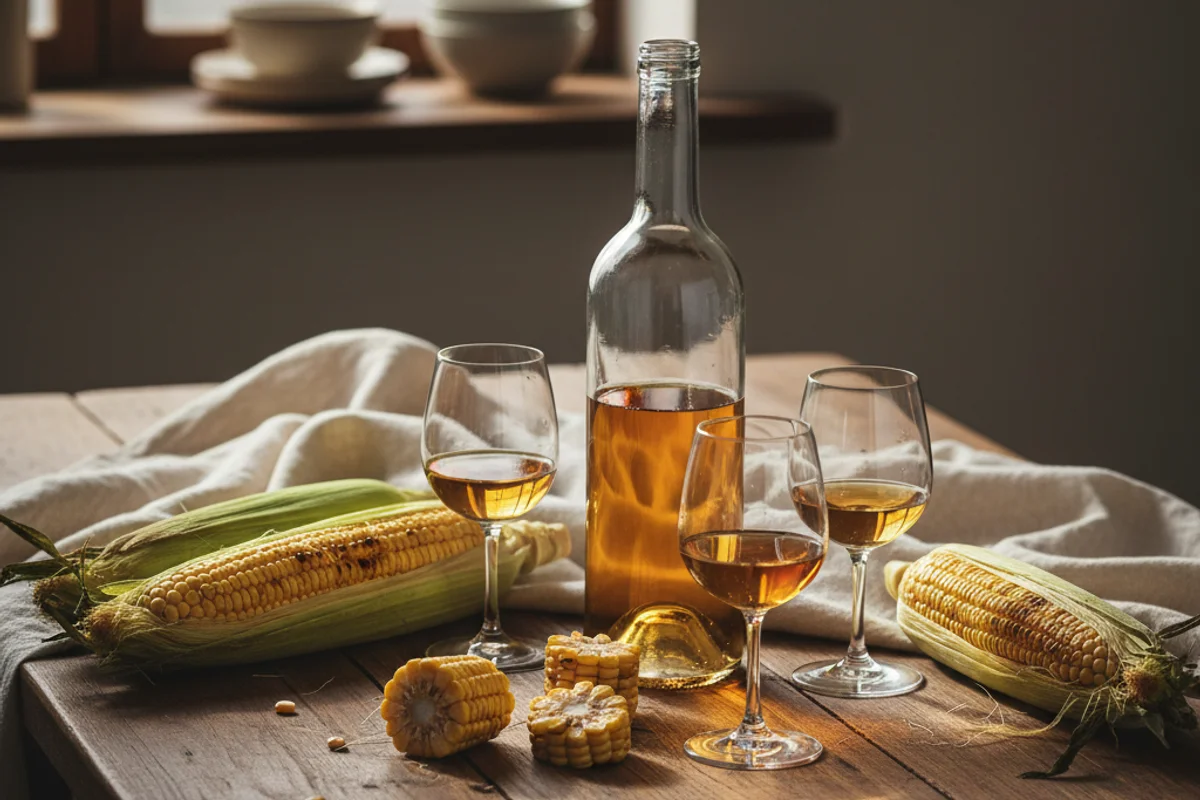
Think of corn wine as the farmyard cousin nobody talks about at Thanksgiving — quiet, unassuming, but surprisingly easy to like. Cracked corn brings a faint starchy sweetness, while golden raisins layer in body and a hint of dried fruit. The result is a pale, medium-bodied wine with a clean finish that doesn’t taste like a corn field so much as it tastes like something you can’t quite place. It rewards patience more than most country wines, but the hands-on time is minimal.
The beginner trap: Using fresh corn — it won’t work here; you need cracked corn, which is dried and broken down enough to release its starches into the must.
Ingredients
- 2 lbs cracked corn (sold at feed stores or farm supply shops; bird corn works fine)
- 1 lb golden raisins, chopped
- 2 lbs granulated sugar
- 4 tsp acid blend (found at homebrew shops; or substitute 2 tsp cream of tartar + 2 tsp citric acid)
- 1 tsp yeast nutrient
- ½ tsp wine tannin (or substitute 2 tsp strong black tea)
- 1 Campden tablet, crushed
- Water to make 1 gallon total
- Champagne or Sherry wine yeast
Method
- Rinse the cracked corn thoroughly and pick out any debris or pebbles. Combine corn and chopped raisins in a large bowl, cover with just enough water to submerge them, and soak overnight.
- The next day, transfer the corn and raisins into a fine mesh straining bag, tie it closed, and place it in your primary fermenter. Pour the soaking water in too.
- Bring the remaining water to a boil with the sugar, stirring until fully dissolved. Pour the hot sugar water into the primary fermenter.
- Add the acid blend, yeast nutrient, and tannin. Stir to combine, then cover the fermenter loosely with plastic wrap secured with a rubber band.
- Once the must cools to room temperature, add the crushed Campden tablet. Re-cover and wait 24 hours.
- Proof your yeast: boil a cup of orange juice, let it cool to room temperature, then stir in the yeast and cover. Let it sit for the same 24 hours the must is resting.
- After 24 hours, add the yeast starter to the primary. Stir the must daily for two weeks.
- After two weeks, lift out the grain bag and let it drip-drain — do not squeeze it. Discard the solids.
- Cover the primary and let the liquid settle overnight, then rack into a clean secondary fermenter and fit with an airlock.
- Rack every two months for six months total. After the final racking, check the specific gravity — you’re aiming for 0.990 or below. If it isn’t there yet, wait two more months and rack again.
- Once fully dry, bottle the wine. It can be enjoyed right away, though a few more months of aging smooths it out.
Why this works
Corn is mostly starch, not sugar, which means yeast can’t directly eat it the way they eat grape juice. Soaking overnight starts breaking down the cell walls and hydrates the grain, releasing some of the soluble compounds into the water. The sugar you add is the real fuel for fermentation — it gives the yeast what they need to produce alcohol while the corn contributes flavor compounds and body. Raisins pull double duty: they add unfermentable solids that build mouthfeel, plus their natural sugars and amino acids feed the yeast and help prevent a sluggish fermentation. That’s why you don’t squeeze the bag — pressing forces starch and pectin into the must, which clouds the wine and can create off-flavors.
Notes
Cracked corn is widely available at Tractor Supply, farm co-ops, and stores selling wild bird feed — look for “cracked corn” on the label, not cornmeal, which is too fine and will turn your must into a paste. If acid blend is hard to find locally, the cream of tartar and citric acid substitute above works well. This wine clears slowly; don’t rush the racking schedule.