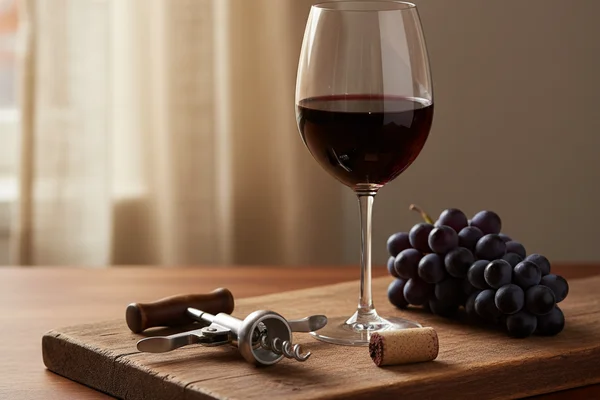
DAGO RED WINE
Think of this as the red wine equivalent of a grandmother’s Sunday gravy — no single definitive recipe exists, because the whole point is that your family made it their way. Dago Red is simply a full-bodied, deeply colored red wine made outside Italy in the Italian farmhouse tradition. Dark, tannic, and unapologetically rustic, it rewards patience. The grape variety matters less than the darkness of the skin, because that skin is where all the color, tannin, and character live. Grab 70 pounds of whatever black-skinned wine grape you can source, and let’s get to work.
The beginner trap: Skipping the daily cap punch-down during primary fermentation — that floating mat of grape skins will dry out, go rogue, and hand you a stuck ferment or a vinegar problem fast.
Ingredients
- 70 lbs dark-skinned (black) wine grapes, fresh or frozen — Cabernet Sauvignon, Merlot, Zinfandel, or any dark Italian variety
- 4 tsp pectic enzyme
- ½ to ¾ tsp potassium metabisulfite (sold as “Campden powder” or use 7–10 Campden tablets crushed)
- 3 tsp yeast nutrient
- 1 packet red wine yeast (Lalvin RC212 or EC-1118 work well)
- Tartaric acid, as needed to reach 6.5 g/L titratable acidity
- Sugar, as needed to reach a starting specific gravity of 1.088
Method
- Wash the grapes thoroughly, then crush them and transfer the crushed fruit and juice into your primary fermenter.
- Test the juice with a hydrometer and acid test kit. Add tartaric acid to reach 6.5 g/L acidity, and dissolve sugar into the must if the gravity reads below 1.088.
- Sprinkle ¼ tsp potassium metabisulfite over the must and stir it in well. Cover the fermenter and let it rest for 12 hours.
- Sprinkle the pectic enzyme over the must, stir it in well, re-cover, and wait another 12 hours.
- Stir in the yeast nutrient, then add your activated red wine yeast. Cover the fermenter loosely to allow CO₂ to escape.
- Punch the grape cap down into the juice at least once daily, stirring vigorously each time — do this every day without exception.
- When active fermentation slows and the specific gravity drops below 1.020, press the grapes and transfer the juice to a 5-gallon glass carboy (secondary fermenter).
- Fit an airlock and let the wine ferment to dryness — the gravity should reach about 0.995–0.998.
- Rack the wine into a clean carboy, stirring in ¼ tsp potassium metabisulfite as you go. Top up the carboy to minimize headspace and refit the airlock.
- Once the wine clears, wait 30–45 days, then rack again into a clean, topped-up carboy and refit the airlock.
- Wait three more months, then stabilize with potassium sorbate (if you plan to back-sweeten), sweeten to taste if desired, and wait 10 days.
- Rack into bottles and age at least three months before opening — longer aging will smooth out the tannins and deepen the complexity.
Why this works
Dark grape skins are loaded with anthocyanins (color pigments) and tannins. During primary fermentation, CO₂ pushes all that skin material to the surface, forming what winemakers call “the cap.” If it stays dry, it becomes a breeding ground for spoilage bacteria and wild yeast. Punching it down keeps those skins wet and submerged, continuously extracting color and tannin into the juice. Pectic enzyme breaks down pectin in the grape pulp, which improves juice yield and prevents haze later. The initial sulfite dose knocks out wild yeast and bacteria, giving your chosen wine yeast a clean runway. Racking at multiple stages removes dead yeast cells (lees) that can add off-flavors if left in contact with the wine too long.
Notes
Frozen dark grapes work well here — freezing ruptures the cell walls, which actually boosts juice and color extraction. If you can’t find bulk wine grapes locally, check out regional grape co-ops or order frozen must online. If you don’t own an acid testing kit, a pH meter reading of about 3.4–3.5 at pressing is a reasonable target. For yeast, Lalvin RC212 is a classic Burgundy strain that handles dark grapes beautifully and is widely available at homebrew shops.