Dandelion and Apricot Wine
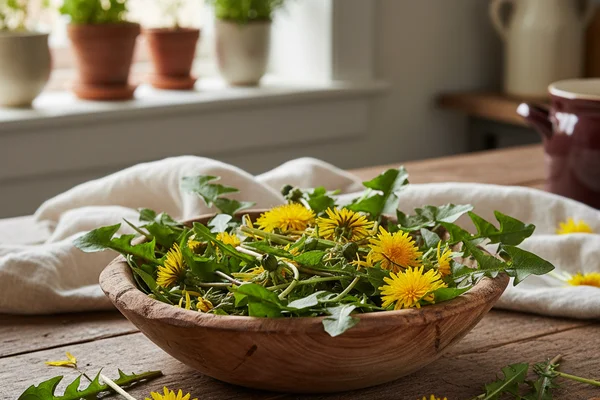
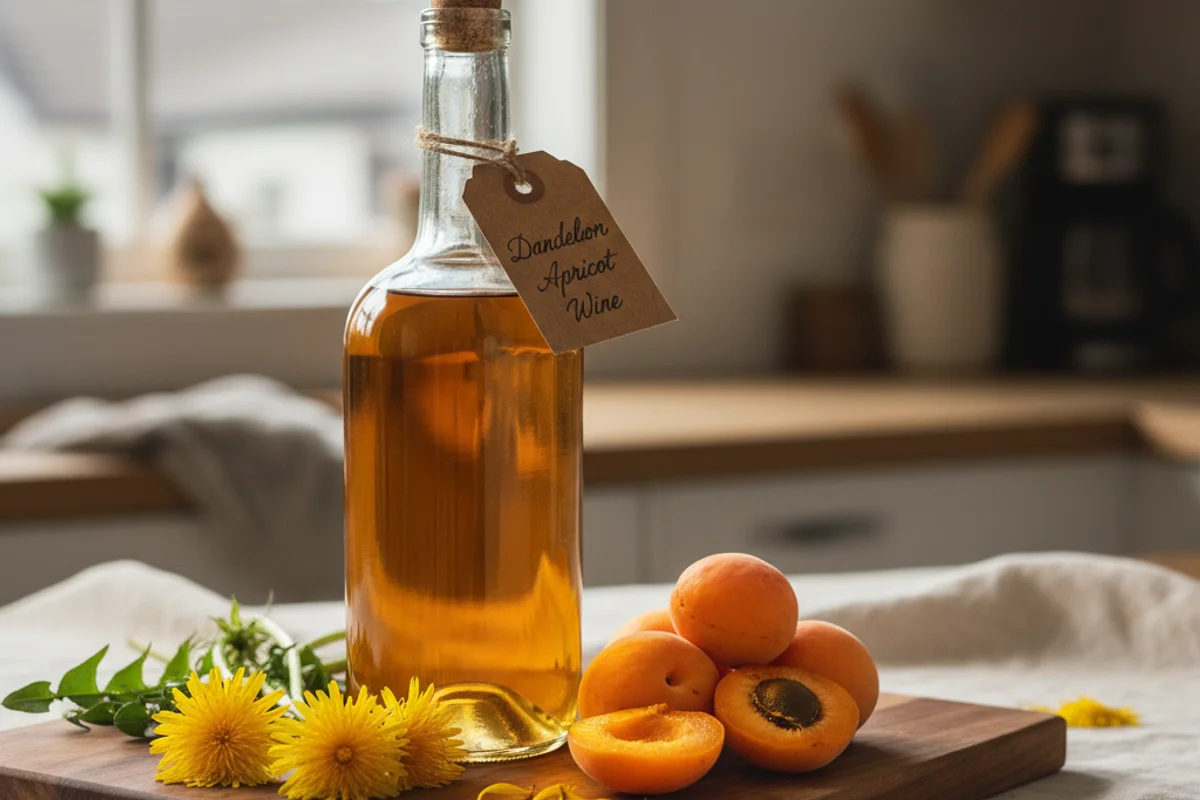
Spring dandelions are usually treated like a lawn problem. Here, they’re the star. Their faintly honey-like, slightly bitter petals pair with ripe apricot in a way that feels both rustic and surprisingly elegant. The citrus zest ties everything together with a bright top note, while golden raisins quietly add body and a touch of tannin. The result is a pale golden wine that smells like a warm afternoon and tastes like you planned it that way.
The beginner trap: Pulling dandelion petals takes patience — leave behind any green sepals or stems, because even a small amount will make your wine bitter.
Ingredients
- 3 quarts dandelion petals (green parts removed)
- 16 apricots, pitted and chopped (fresh or frozen)
- ¼ cup golden raisins, finely chopped
- Juice and zest of 2 lemons
- Juice and zest of 1 orange
- 5 cups granulated white sugar
- 7¼ pints water
- 1 Campden tablet, crushed
- 1 tsp yeast nutrient
- ½ tsp pectic enzyme
- 1 packet wine yeast (Lalvin 71B or EC-1118 work well)
Method
- Bring the water to a full boil.
- Pit and chop the apricots, finely chop the raisins, and zest and juice the citrus fruit.
- Add the dandelion petals, apricots, raisins, citrus juice and zest, sugar, Campden tablet, and yeast nutrient to your primary fermenter.
- Pour the boiling water over everything and stir well until the sugar fully dissolves.
- Cover the fermenter and let it cool to room temperature — this takes a couple of hours, so be patient.
- Once cool, stir in the pectic enzyme, recover, and leave it alone for 10 hours.
- Activate your yeast according to the packet instructions, then add it to the must and cover again.
- Stir the must once daily for 5 days of active fermentation.
- After 5 days, strain out all solids through a mesh bag or fine strainer and transfer the liquid to a glass secondary fermenter — do not top it up yet.
- Fit an airlock and let it sit for another 5 days, then top up with water or a neutral white wine and reattach the airlock.
- Once the wine clears, rack it into a clean vessel, top up, and refit the airlock.
- Continue racking every 3 months until no new sediment forms over a full 3-month period.
- Stabilize with a Campden tablet and potassium sorbate, wait 2 weeks, then rack carefully into bottles.
- Wait at least 6 months before opening a bottle — a year or more rewards you even more.
Why this works
Dandelion petals carry volatile aromatic compounds that dissolve well into a water-and-sugar must, but those same compounds can fade fast with heat. Pouring boiling water over the petals rather than simmering them is a deliberate trade-off — you extract flavor and sanitize without cooking out the delicate floral notes entirely. Pectic enzyme is essential here because both apricots and citrus are loaded with pectin, a natural gelling agent that will permanently cloud your wine if left unchecked. Adding the enzyme after the must cools below about 85°F matters — heat denatures the enzyme and makes it useless. The 10-hour wait gives it time to break down that pectin before fermentation kicks off and the yeast activity gets in the way.
Notes
Frozen apricots work great here and are often riper-tasting than off-season fresh ones — just thaw and chop them before use. If you can’t find golden raisins, regular raisins or a small handful of golden sultanas from the baking aisle are fine swaps. Picking 3 quarts of dandelion petals is a project — enlist help, and make sure your yard (or wherever you’re harvesting) hasn’t been treated with pesticides or herbicides.