Dandelions
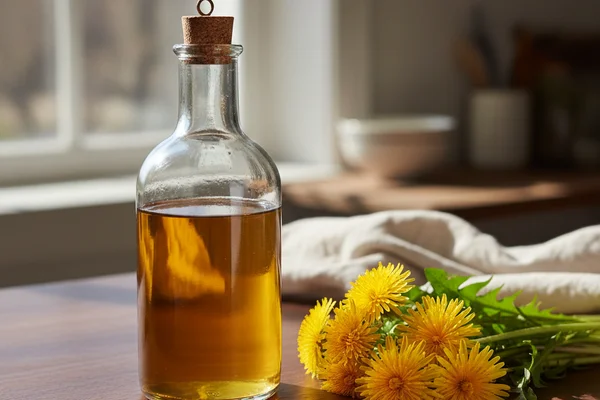
Every spring, lawns across the country go to war against a flower that deserves far more respect. Dandelion wine is pale gold, lightly floral, and surprisingly refreshing — closer to a dry white wine than anything you’d expect from a so-called weed. The flavor is delicate and honey-like with just enough citrus brightness to keep things interesting. Pick your flowers mid-morning when they’re fully open and the pollen is at its peak, and you’re already halfway to something worth cellaring.
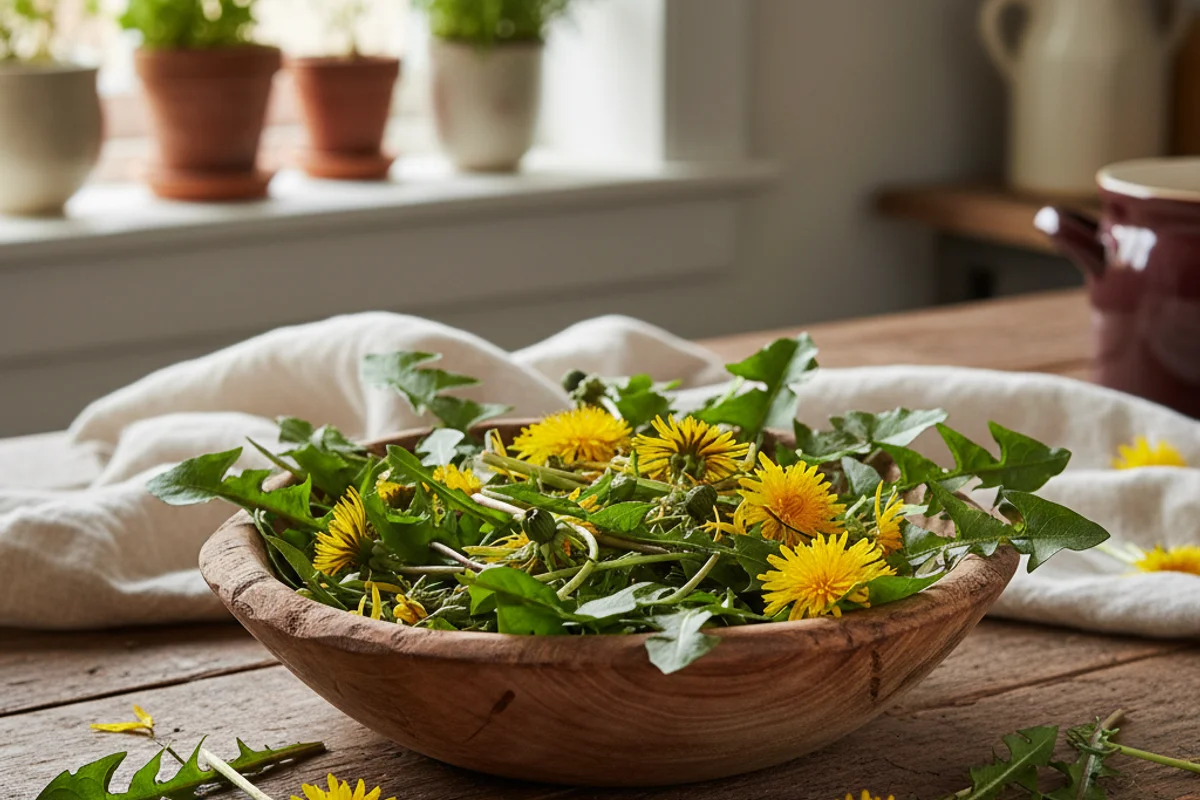
The beginner trap: Leaving green material on the flowers — the sepals, stem, and base — introduces a harsh, bitter flavor that no amount of aging will fix; use petals only.
Ingredients
- 2 quarts dandelion petals (fresh or frozen), green parts removed
- 1 can (11.5 oz) frozen white grape juice concentrate (Welch’s 100% White Grape Juice works perfectly)
- 6¾ pints (about 3.4 quarts) water
- 2¼ lbs granulated sugar
- 2 lemons, zest and juice (pith removed)
- 1 orange, zest and juice (pith removed)
- ⅛ tsp powdered tannin (or substitute 1 cup unsweetened strong-brewed black tea)
- 1 tsp yeast nutrient
- 1 packet Champagne yeast (or any dry white wine yeast)
Method
- Place the petals in a nylon straining bag and tie it closed. Bring the water to a boil in a large pot, add the bag, reduce to a simmer, cover, and cook for 20 minutes.
- Remove the pot from heat and let it cool until you can handle the bag. Squeeze the bag gently to drain it, then remove it and discard the spent petals.
- Return the liquid to a low boil. Add the sugar and the thinly cut citrus zest — no white pith at all — and simmer for one hour.
- Pour the hot liquid into a sanitized fermentation bucket or crock. Add the citrus juice and pulp, then stir in the frozen grape concentrate.
- Let the must cool to 70–75°F (room temperature). Stir in the tannin and yeast nutrient until fully dissolved.
- Sprinkle in the yeast, cover loosely, and move the bucket to a warm spot (68–75°F) for three days of primary fermentation.
- Strain the must through a clean nylon bag and transfer the liquid to a sanitized one-gallon jug or carboy. Fit an airlock.
- Wait for the wine to fall clear — it happens fast, usually within a few weeks, and the whole batch clears in under 30 minutes. Rack into a clean vessel once it does, top up to minimize headspace, and refit the airlock.
- Rack every 60 days as long as lees continue to form. Once 60 days pass with no new sediment, bottle the wine.
- Age at least six months before opening; one full year gives noticeably better results.
Why this works
Dandelion petals are loaded with pigments, pollen, and wild microbes, which is why fresh must looks milky yellow rather than clear. As fermentation winds down, yeast cells and pigment particles clump together through a process called flocculation and drop out of suspension all at once — that dramatic “falling clear” moment. The frozen white grape concentrate isn’t just filler: it adds fermentable sugars, natural grape acids, and enough dissolved solids to give the finished wine real body. Without it, dandelion wine can taste thin and watery. The tannin plays a structural role too, giving the wine a subtle backbone and helping it age well in the bottle.
Notes
Petals freeze beautifully, so collect and freeze small batches over several weeks until you hit your 2-quart target. If powdered tannin isn’t available at your local homebrew shop, one cup of strong-brewed black tea is a solid substitute. Any white wine yeast will work here if Champagne yeast is hard to find — look for Lalvin EC-1118 or Red Star Cote des Blancs at homebrew retailers or online.