Dandelion Wine
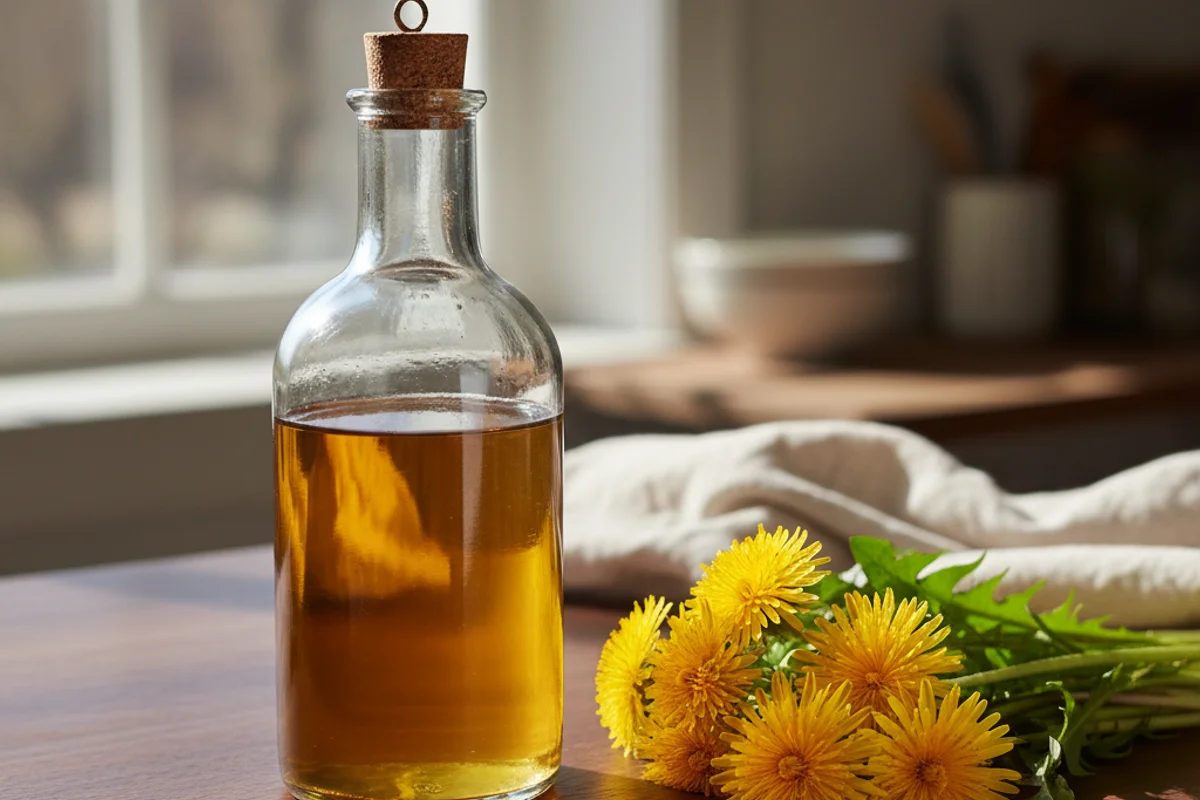
Every spring, suburbanites declare war on their lawns with herbicides and pull-tools, trying to eradicate one of the most useful plants in the yard. Dandelions make a wine that is genuinely unlike anything you can buy in a store — pale gold, faintly honeyed, with a dry floral finish that tastes like a warm afternoon smells. Pick them on a sunny morning when the blooms are wide open, and you have the makings of something worth waiting a full year to drink.
The beginner trap: Leaving any white pith on the citrus peel — even a thin layer — will push a harsh, mouth-coating bitterness into the wine that no amount of aging can fix.
Ingredients
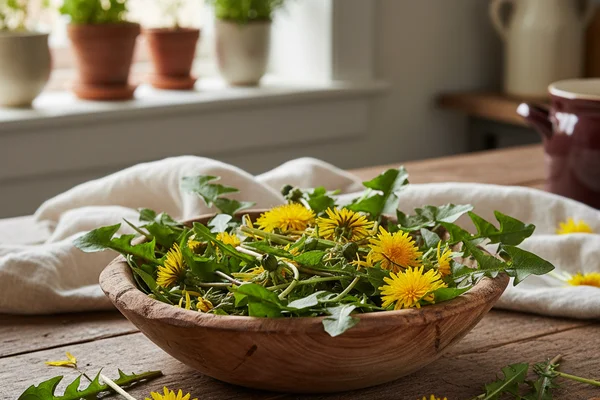
- 3 quarts dandelion flower heads, green stalks trimmed away (fresh or frozen petals work)
- 3 lbs granulated white sugar
- 1 lb golden raisins (sultanans), fresh or from the baking aisle
- 1 gallon water, divided (reserve 1 pint)
- 2 lemons, zest peeled paper-thin, juice and pulp saved
- 1 orange, zest peeled paper-thin, juice and pulp saved
- 1 packet wine yeast (Lalvin EC-1118 or bread yeast in a pinch)
- 1 tsp yeast nutrient (optional but recommended; find it at any homebrew shop)
Method
- Trim any green stalk from the flower heads and place them in a large heatproof bowl or bucket.
- Bring roughly 7 pints of the water to a full boil, then pour it over the flowers and cover tightly with plastic wrap or a clean cloth.
- Let the flowers steep for exactly two days at room temperature, stirring the mixture twice each day — do not go past 48 hours.
- Pour the flowers and liquid into a large pot and bring to a gentle boil.
- Add the sugar and the citrus peels, making sure every white strip of pith has been removed before they go in; boil for one hour.
- Pour the hot liquid into a sanitized fermenting bucket or crock, then stir in the lemon and orange juice and pulp.
- Let the must cool to 70–75°F (room temperature is fine overnight), then stir in the yeast and yeast nutrient, cover loosely, and set somewhere warm for three days.
- Strain out the solids through a mesh strainer or cheesecloth and pour the liquid into a 1-gallon glass jug or carboy.
- Drop in the golden raisins and fit an airlock; let the wine ferment in a cool, dark spot until it falls completely clear — this can take several weeks, and when it happens it happens fast (usually within 30 minutes you’ll see the cloudiness drop to the bottom).
- Once clear, rack the wine off the sediment into a clean jug, top up with the reserved pint of water, and refit the airlock.
- Rack again every 60 days as long as sediment keeps forming; when no new sediment appears for 60 days, bottle the wine.
- Age in the bottle for at least 6 months before opening — one full year is better.
Why this works
Dandelion flowers carry pigments, pollen, and aromatic compounds that dissolve readily into hot water, much like steeping tea. The two-day steep pulls out flavor without over-extracting bitter compounds that would emerge with longer contact. Golden raisins add body and a tiny bit of tannin — dandelion wine is naturally thin, and without some structural support it can taste watery. Citrus peel contributes pectin and aromatic oils that round out the floral notes, while the juice adds acid to keep the yeast healthy and the finished wine stable. The long boil with sugar creates a light syrup that fully integrates the sweetness and drives off any unwanted wild microbes still hitchhiking on the petals.
Notes
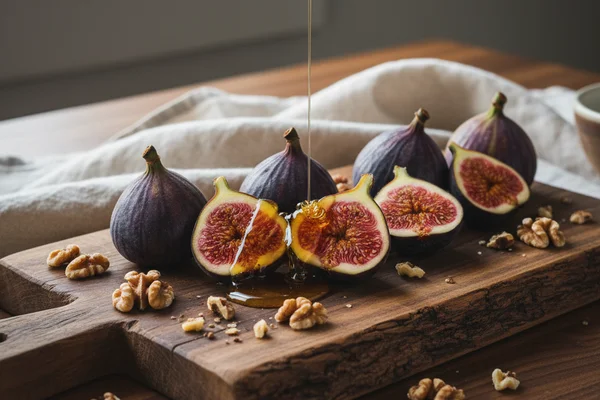
For a drier wine, cut the sugar to 2½ lbs. Golden raisins can be swapped with an equal weight of dried unsulfured apricots or golden figs — both keep the wine pale. If fresh dandelions aren’t available, freeze petals in zip-lock bags as you collect them and start the recipe once you have enough; frozen petals actually give up their color and flavor more readily than fresh ones.