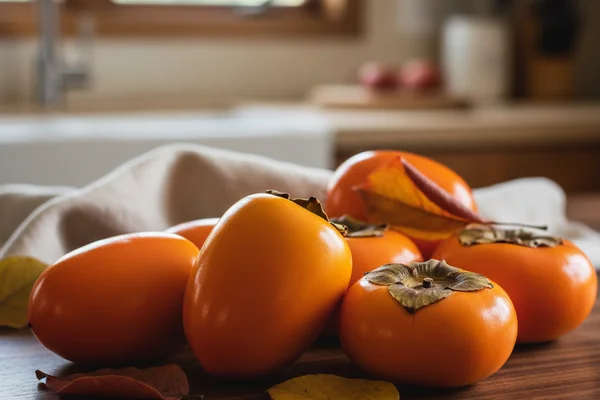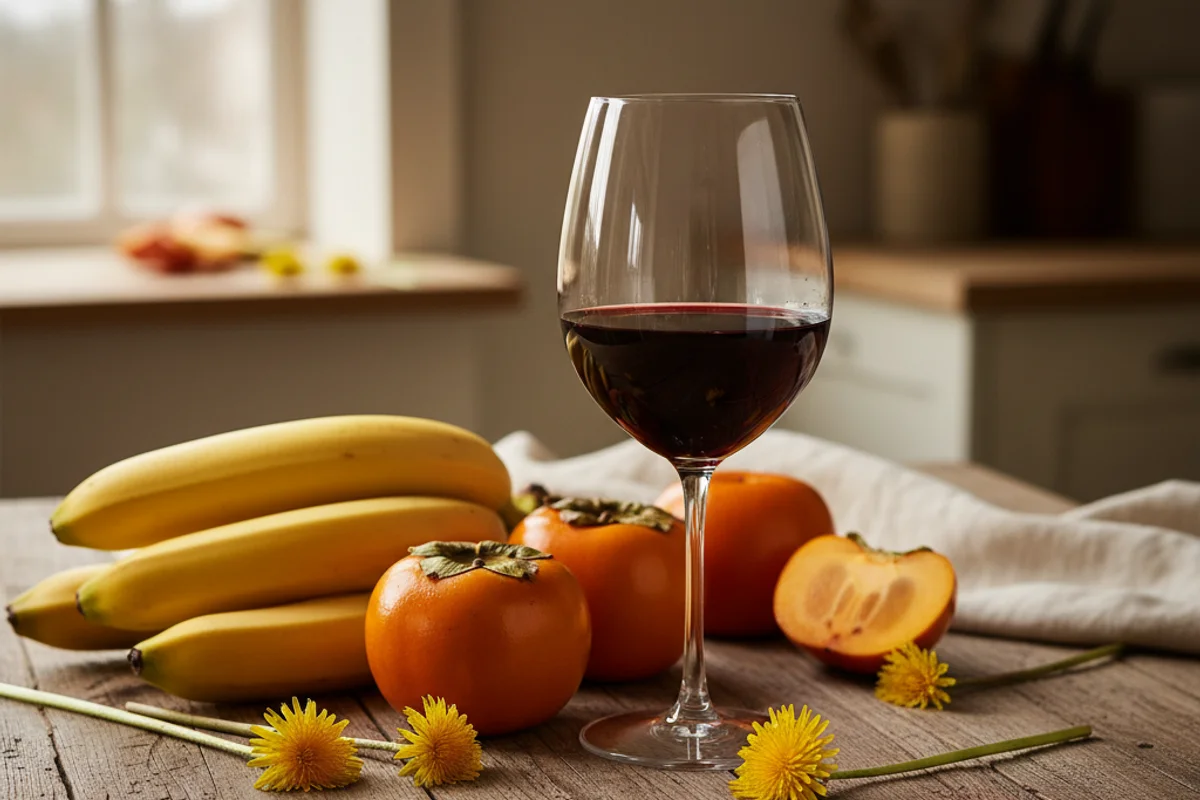
Dandelion, Banana and Persimmon Wine
Spring meets autumn in a single bottle. Dandelion petals bring a grassy, faintly honey-like floral note. Ripe persimmons add a jammy, almost apricot-adjacent sweetness. Banana acts as the quiet backbone — not fruity in the obvious sense, but rich with body and a silky texture that holds the whole thing together. The result is a golden wine that smells like a warm afternoon and tastes like none of its parts individually. It takes patience — real patience — but what ends up in the glass rewards every week of waiting.
The beginner trap: Skipping the full aging time; this wine tastes thin and sharp at six months and genuinely good only after a full year from start to bottle.
Ingredients
- 3 pints dandelion petals (yellow only — no green parts)
- 2 very ripe bananas, peeled and thinly sliced
- 2 very ripe persimmons, pulp only (Hachiya or Fuyu, both work)
- ¼ cup golden raisins, finely chopped
- 5 cups granulated white sugar
- 7 pints water, divided
- ¾ tsp acid blend (from any homebrew shop or online)
- ¼ tsp pectic enzyme
- 1 tsp yeast nutrient
- 1 packet wine yeast (Lalvin 71B or EC-1118 work well)
Method
- Combine sliced bananas and 2 cups of the water in a saucepan. Bring to a boil, reduce to a simmer, and cook for 15 minutes.
- Remove from heat, skim off any foam, then strain the liquid into your primary fermenter — discard the banana solids.
- Add the persimmon pulp and all dandelion petals to the warm liquid in the fermenter. Cover loosely with plastic wrap and let it cool to room temperature.
- Once cool, stir in the chopped raisins, sugar, acid blend, pectic enzyme, yeast nutrient, and the remaining water. Stir thoroughly until the sugar fully dissolves.
- Cover the fermenter and wait 12 hours, then sprinkle in the yeast.
- Stir the must once daily for 7–10 days, then strain out all solids and discard them.
- Let the strained liquid settle for 24 hours, then rack it into a clean secondary fermentation vessel and fit an airlock.
- Set aside for 4 weeks, then rack again, top up to minimize headspace, and wait another 4 weeks.
- Rack one more time and age under airlock for 4–6 months.
- Stabilize with potassium sorbate and potassium metabisulfite, wait 10 days, then rack a final time.
- Sweeten to taste if desired, bottle, and age in the bottle for at least 6 more months before drinking.
Why this works
Banana does something sneaky in wine: its starches and long-chain sugars break down during simmering and release into the water, creating a liquid packed with fermentable material and mouthfeel-building compounds. Pectic enzyme is the other unsung hero here — both bananas and persimmons are high in pectin, which clouds wine and makes it stubbornly hazy. The enzyme breaks pectin chains apart before fermentation starts, giving you a clear, bright wine instead of a murky one. The golden raisins add a small but meaningful dose of tannin and extra fermentable sugar, which helps the yeast do its job and gives the finished wine a bit of structure to age on.
Notes
If fresh dandelion petals aren’t available, dried petals from a health food store or online can substitute — use about 1.5 ounces by weight. Hachiya persimmons must be fully soft (almost jelly-like) before use or they will be intensely astringent; Fuyu persimmons can be used when still slightly firm. Frozen banana slices work perfectly in step 1 — thaw first for easier slicing.