Persimmons
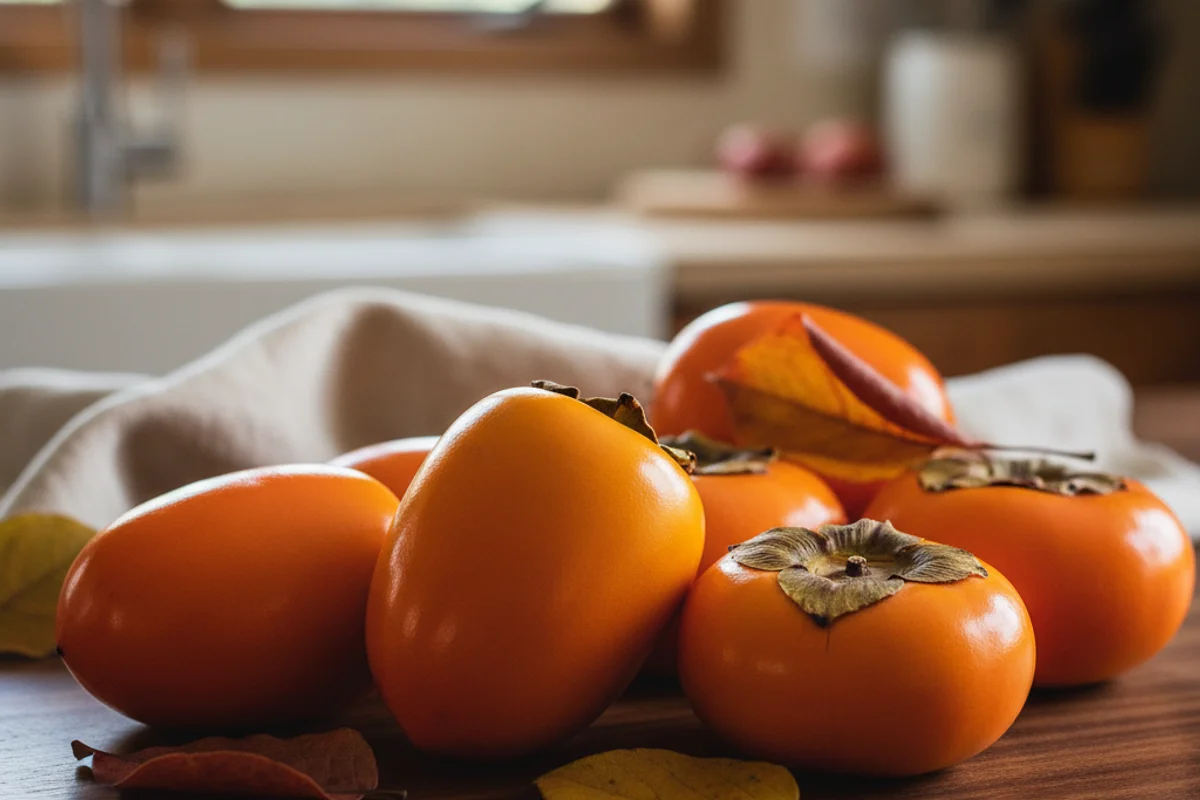
Bite into an unripe persimmon and your mouth will pucker like you’ve chewed a cotton ball soaked in tannin — it’s one of nature’s rudest surprises. But catch one at peak ripeness, after the first hard frost has done its work, and you get something almost honeylike: rich, sweet, and faintly spiced. That transformation carries straight into the glass. Persimmon wine finishes amber and gently fruity, with a softness that rewards patience. Oriental persimmons from the grocery store work beautifully here and are available fall through early winter.
The beginner trap: Using fruit that isn’t fully ripe will load your wine with harsh tannins that no amount of aging will fix — if the persimmon still has any firmness or bitterness to it, wait longer.
Ingredients
- 3 lbs ripe persimmons, quartered and seeded
- 2½ lbs granulated white sugar, divided
- 1 tbsp acid blend (or 1½ tsp citric acid)
- ½ tsp pectic enzyme
- ½ tsp yeast nutrient
- 1 Campden tablet, crushed
- 7 pts (3.5 quarts) water
- 1 packet wine yeast (Montrachet, Red Star Pasteur Red, or Champagne)
Method
- Wash the persimmons, cut them into quarters, and press out the seeds with your hands. Mash the pulp thoroughly and transfer it to your primary fermenter.
- Add half the sugar, the acid blend, yeast nutrient, and crushed Campden tablet to the pulp. Pour in enough water to reach one gallon total, then stir well until the sugar dissolves. Cover the fermenter.
- After 12 hours, stir in the pectic enzyme. Re-cover and wait another 12 hours.
- Pitch the yeast, cover loosely, and ferment for 5–7 days, stirring once daily.
- Strain the must through a fine mesh bag or nylon strainer into a clean vessel. Don’t worry if some fine pulp slips through — it will settle out on its own.
- Stir in the remaining sugar until fully dissolved, then transfer the wine to a glass carboy or secondary fermenter, leaving about 3 inches of headspace. Fit an airlock.
- Rack the wine every 30 days, pulling it off the sediment each time, until it clears completely and no new lees form — typically 4 to 6 months.
- Bottle the wine. If you want it slightly sweet, stabilize first with potassium sorbate before adding any sugar. Age in the bottle for at least one year before drinking.
Why this works
Persimmons are loaded with soluble tannins called proanthocyanidins, which are the compounds responsible for that mouth-drying astringency in unripe fruit. As the fruit ripens — especially after frost — enzymes break those tannins down into simpler, less reactive forms. The pectic enzyme you add does similar work on the fruit’s pectin, which would otherwise leave your wine hazy for months. Adding the Campden tablet first gives it 24 hours to suppress wild yeast and bacteria before your chosen yeast takes over. Splitting the sugar addition — half at the start, half after straining — keeps the initial sugar load from stressing the yeast before fermentation gets rolling.
Notes
Fuyu persimmons (the flat, squat kind) are easier to find at most grocery stores in fall and work well here; Hachiya persimmons (the acorn-shaped variety) must be fully soft and almost jelly-like before use or the tannins will overwhelm the wine. Frozen persimmon pulp, thawed completely before use, is a solid option if fresh fruit is out of season — freezing also helps break down cell walls, making mashing easier.