Dandelion Wine (10)
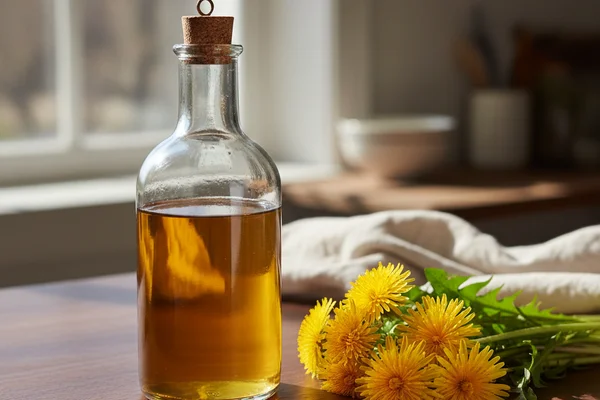
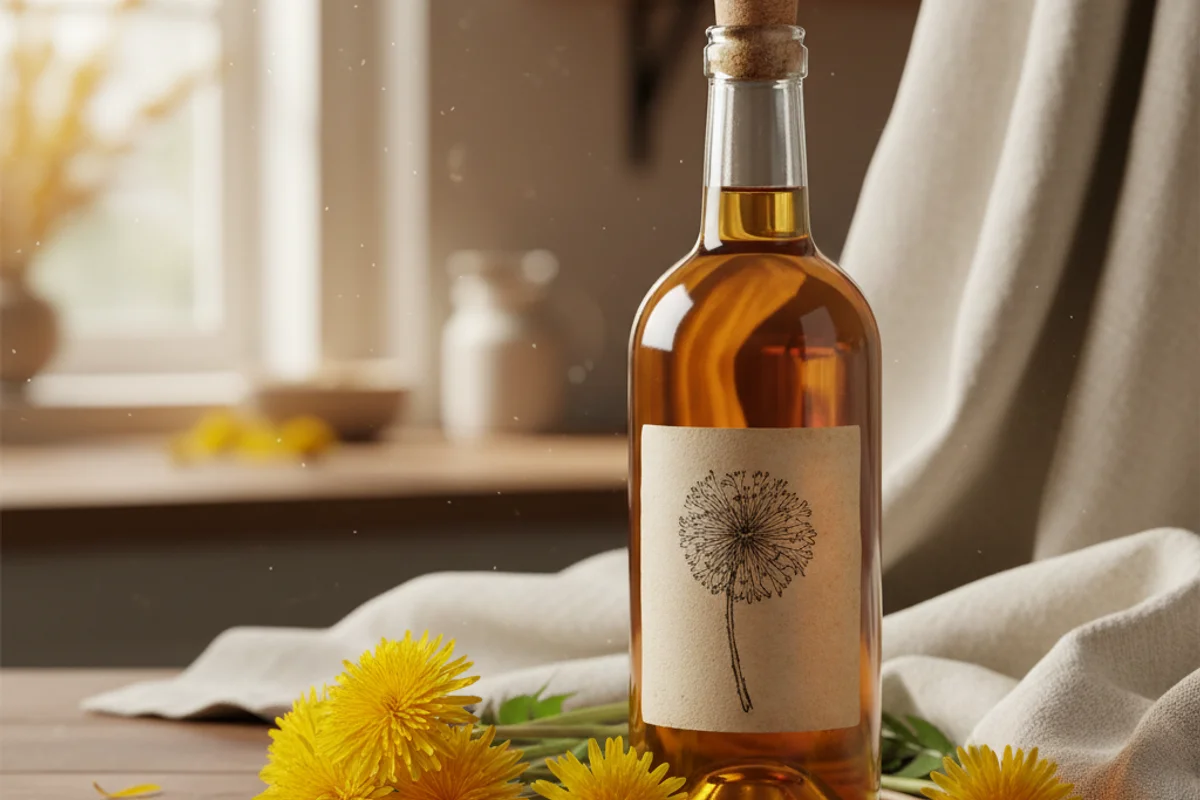
Every spring, lawns across the country wage a losing battle against a plant most people treat as a pest. But pick those yellow heads at peak bloom — before they go to seed, before the afternoon heat rolls in — and you have the raw material for one of the most surprisingly elegant country wines you can make. Dandelion wine is floral without being perfume-y, light-bodied, and dry enough to hold at the dinner table. The raisins bring body and a subtle fruitiness that keeps the whole thing from tasting like a meadow.
The beginner trap: Leaving any green sepals or stem tissue attached to the petals will drive a sharp, bitter flavor straight through the finished wine — petals only, no exceptions.
Ingredients
- 4 cups dandelion petals (green parts removed; fresh or frozen)
- ¾ lb white or golden raisins, chopped (about 2 cups; sultanas work fine)
- 5⅔ cups granulated sugar
- 3 tsp acid blend (find it at homebrew shops, or substitute 2 tsp citric acid + 1 tsp tartaric acid)
- 2 tsp yeast nutrient
- 1 Campden tablet, crushed
- Water to make 1 gallon total
- 1 packet Rhine wine yeast (or any dry white wine yeast such as Lalvin 71B)
Method
- Combine the dandelion petals, chopped raisins, sugar, acid blend, yeast nutrient, and crushed Campden tablet in your primary fermenter. Add enough water to reach 1 gallon and stir well until the sugar is fully dissolved.
- Cover the primary fermenter loosely and leave it undisturbed for 24 hours. This gives the Campden tablet time to neutralize wild microbes before your chosen yeast takes over.
- Sprinkle in the yeast, stir to distribute, then cover again. Stir the must twice daily until the specific gravity drops to 1.030, which typically takes about 7 days.
- Strain out all solids and transfer the liquid into a 1-gallon secondary fermenter (a glass jug works perfectly). Fit an airlock.
- Rack the wine into a clean vessel once it clears — usually a few weeks after moving to the secondary. Top up with a little water or neutral white wine to minimize headspace, then refit the airlock.
- Continue racking every 2 months until no new sediment appears at the bottom between rackings.
- Stabilize the wine (add 1 crushed Campden tablet and ½ tsp potassium sorbate per gallon), wait 2 weeks, then rack into bottles.
- Age at least 6 months before opening — 12 months is better. Dandelion wine rewards patience.
Why this works
Dandelion petals are nearly all aroma and color with very little sugar, acid, or body on their own. That’s why this recipe leans on sugar for fermentable material and raisins as a body-builder. Raisins carry unfermentable polysaccharides that add mouthfeel, plus a small amount of natural tannin that gives the wine structure. The acid blend drops the must pH into the range where your wine yeast thrives (roughly 3.2–3.5) while harmful bacteria struggle. The 24-hour Campden rest before pitching yeast is a controlled head start — it knocks out competing wild organisms without cooking off the delicate floral aromatics the way heat processing would.
Notes
Frozen dandelion petals work well here; freeze them in a single layer on a sheet tray first, then transfer to a bag. If you can’t find acid blend at a local homebrew store, look online or substitute 2 tsp citric acid (sold in the canning aisle) plus 1 tsp cream of tartar. Rhine or Mosel-style yeast is ideal for preserving floral character, but Lalvin 71B — widely available and inexpensive — is an excellent everyday substitute.