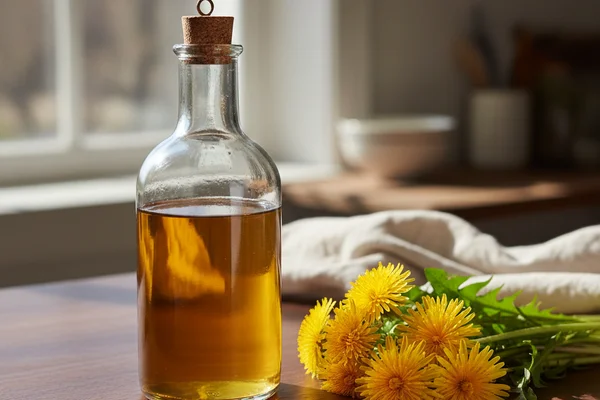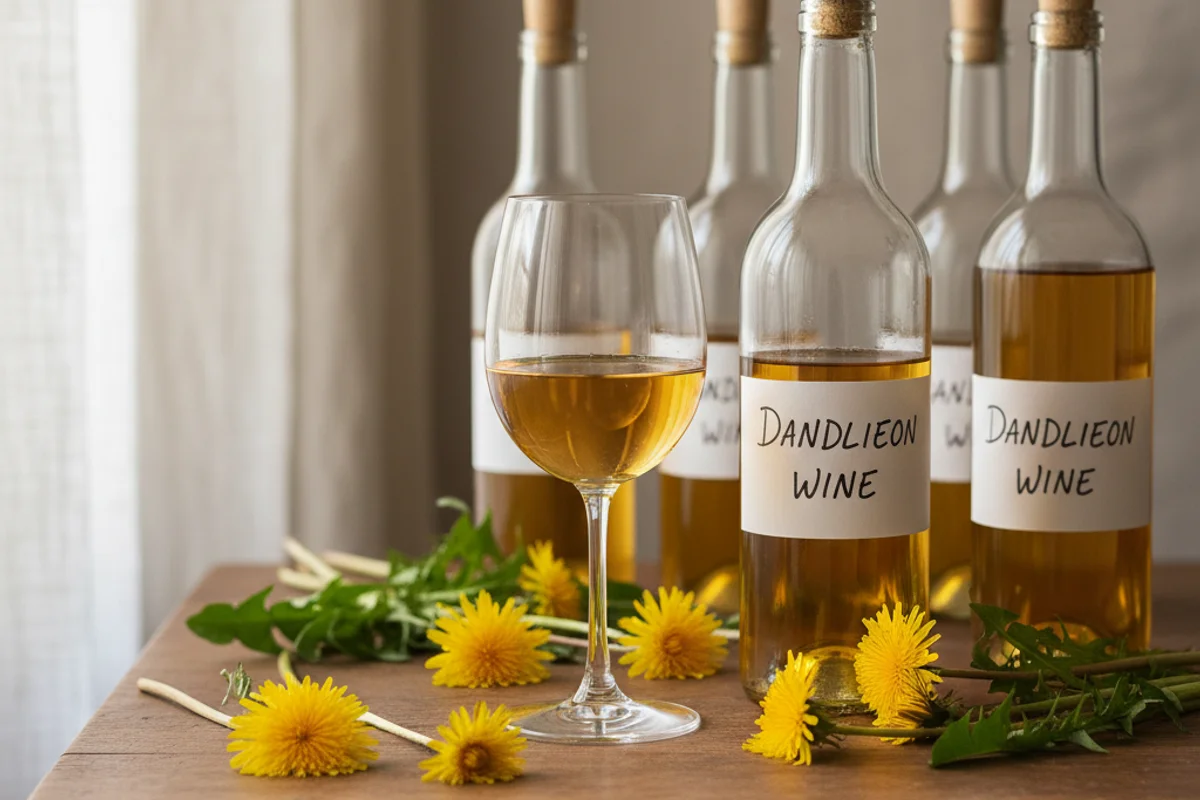
Dandelion Wine (11)
Dandelion wine sits in a strange, wonderful category: a wine made from something most people spray with herbicide. Pick them at peak bloom on a sunny morning and those bright yellow heads deliver a honey-like floral note that no grape can replicate. The raisins here aren’t an afterthought — they’re doing heavy lifting in the body and mouthfeel department, rounding out what would otherwise be a thin, watery pour. Done right, this wine turns a weedy lawn into something worth uncorking a year from now.
The beginner trap: Leaving green parts (the calyx or any stem) in with the petals will drive in a bitter, chlorophyll-heavy flavor that no amount of aging can fix — petals only, every time.
Ingredients
- 7 cups dandelion petals (fresh or frozen; green parts removed)
- 1 lb white raisins, chopped (golden raisins from the grocery store work perfectly)
- 2 lbs granulated sugar
- 3 tsp acid blend (found at homebrew shops; substitute 2 tsp lemon juice per tsp in a pinch)
- ½ tsp yeast energizer (yeast nutrient is the same thing at most stores)
- ¼ tsp wine tannin (or 1 cup strong-brewed unsweetened black tea)
- 1 Campden tablet, crushed (potassium metabisulfite; 1/4 tsp powder is equivalent)
- 1 gallon hot water (not boiling)
- 1 packet wine yeast (Lalvin 71B or EC-1118 are solid choices)
Method
- Wash the dandelion petals thoroughly and confirm no green material remains; place the petals and chopped raisins together in a nylon straining bag and tie it shut.
- Set the bag in your primary fermenter and pour the hot water over it.
- Stir in the sugar until it dissolves completely, then add the acid blend, yeast energizer, tannin, and crushed Campden tablet — everything except the yeast.
- Cover the fermenter and leave it alone for 24 hours; this rest period lets the sulfite do its sanitizing work before yeast goes in.
- After 24 hours, pitch the yeast and stir the must twice a day until the specific gravity drops to 1.040, which typically takes 5–6 days.
- Pull out the straining bag and press it gently to recover liquid, then siphon the wine off any settled sediment into a clean secondary fermenter and attach an airlock.
- Once the wine clears, rack it again into a clean vessel, top it up to minimize headspace, and refit the airlock.
- Continue racking every two months until no new sediment appears at the bottom.
- Stabilize the wine (potassium sorbate plus a fresh Campden tablet), wait two weeks, then rack into bottles.
- Age at least 6–12 months before your first taste — this wine is famously slow to show its best self.
Why this works
Dandelion petals contribute aroma compounds but almost nothing in the way of fermentable sugar, body, or acid — which is why this recipe leans on outside help. The sugar feeds the yeast and sets your final alcohol level. The raisins add natural grape sugars, amino acids, and body-building compounds that keep the finished wine from tasting hollow. Acid blend corrects the pH so fermentation stays healthy and the wine tastes balanced rather than flat. The Campden tablet at the start knocks out wild yeast and bacteria that hitched a ride on the petals, giving your chosen wine yeast a clean runway. The long aging period matters because the delicate floral esters need time to settle and integrate into something coherent.
Notes
Frozen dandelion petals (collected during bloom and frozen in zip-top bags) work just as well as fresh — this is actually a great strategy if your bloom window is short. If you can’t find acid blend, a mix of citric and tartaric acid (50/50) from a homebrew shop is a direct substitute. If specific gravity readings aren’t part of your setup yet, 5–6 days of active twice-daily stirring is a reasonable practical guide before moving to secondary.