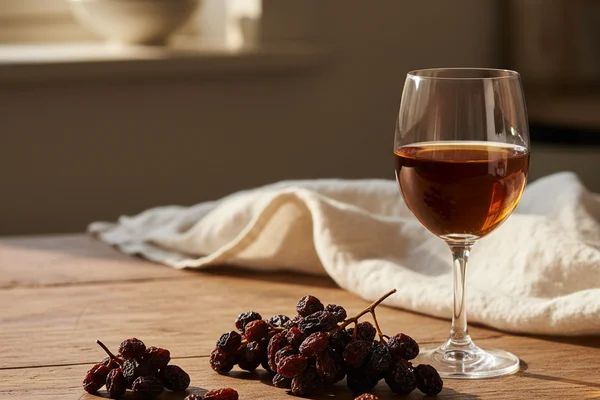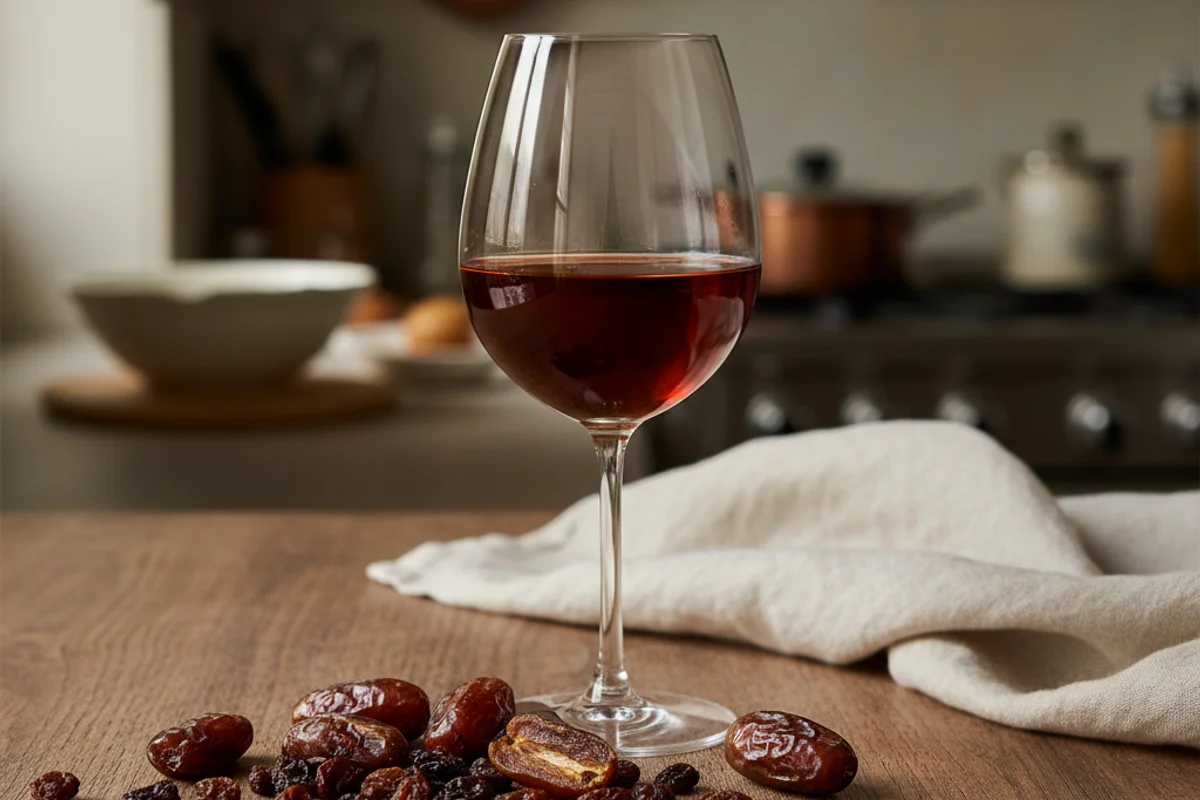
DATE AND RAISIN WINE
Dates are one of the oldest cultivated fruits on earth, and they bring a deep, honeyed sweetness to the fermenting bucket. On their own, though, they lose most of their personality during fermentation — the sugars convert, and you’re left with something flat. Golden raisins fix that. They add body, complexity, and a wine-like backbone that dates simply can’t build alone. Finish the blend with citrus zest and a little tannin, give it two years in the bottle, and what comes out tastes like something that belongs on a cheese board, not a beginner’s shelf.
The beginner trap: Skipping the 36-hour pre-fermentation soak and adding yeast too early — the pectic enzyme needs time without yeast present to break down the fruit pectin, or your wine will stay permanently cloudy.
Ingredients
- 4 lbs Medjool or deglet noor dates (whole, unpitted)
- ½ lb golden raisins or sultanas, chopped or minced
- 1 lb 2 oz light brown sugar (demerara works great; regular light brown sugar is fine)
- 2 medium oranges
- 2 small lemons
- 7½ pts (about 15 cups) water, divided
- 1 tsp yeast nutrient
- ¼ tsp pectic enzyme
- ⅛ tsp wine tannin (or 1 tsp strong black tea as a substitute)
- 1 Campden tablet, crushed
- 1 packet wine yeast (EC-1118 or a general-purpose wine yeast)
Method
- Bring 2 quarts of the water to a full boil. While it heats, slice the dates lengthwise and remove the pits — keep both the pulp and the pits, and place everything into your primary fermenter.
- Mince or finely chop the raisins and add them to the fermenter. Zest all four citrus fruits and add the zest to the fermenter, then pour the boiling water over everything and cover loosely.
- Let the mixture sit for 12 hours. Meanwhile, combine the remaining water with the sugar and stir until the sugar fully dissolves.
- Pour the sugar water into the fermenter. Squeeze the juice from all four citrus fruits and add it along with the crushed Campden tablet, tannin, and yeast nutrient. Re-cover and wait another 12 hours.
- Stir in the pectic enzyme, cover again, and leave for a final 12 hours. You have now completed a 36-hour pre-fermentation rest.
- Prepare your yeast according to the packet instructions (rehydrate in warm water for 10–15 minutes), then add it to the fermenter. Cover with a cloth or loose lid.
- Stir the must twice a day for one week.
- Strain the must through a fine mesh bag or cheesecloth into your secondary fermenter, squeezing the pulp firmly to pull out as much liquid as possible. Discard the solids, fit an airlock.
- After one month, rack the wine off the sediment into a clean vessel, top up with water or a similar wine to minimize headspace, and refit the airlock.
- Two months later, rack again, top up, and refit the airlock.
- Wait another 2–4 months until the wine is fully clear and has stopped dropping new sediment. Rack one final time, stabilize with a crushed Campden tablet and ½ tsp potassium sorbate, sweeten to taste, top up, and refit the airlock.
- After 2 weeks, bottle the wine. Age at least 2 years before opening — patience makes a real difference here.
Why this works
Dates are sugar bombs — up to 80% of their dry weight is simple sugars — but they are low in the acids, tannins, and flavor compounds that make a wine interesting. Most of that caramel-like date flavor is carried by volatile aromatic compounds that yeast will happily metabolize right out of existence. The date pits contribute small amounts of bitter phenolic compounds that add structure. Raisins bring concentrated grape solids: natural acids, amino acids that feed the yeast, and Maillard reaction products from the drying process that give the finished wine a nutty, complex edge. The citrus zest loads the must with aromatic oils and natural pectin-bound flavors. Pectic enzyme breaks down that pectin so it doesn’t trap flavor compounds in a haze — and it needs at least 12 hours of yeast-free time to do its job properly.
Notes
Deglet noor dates from the grocery store baking aisle work well and cost less than Medjool — either variety is fine. If you can’t find wine tannin at a homebrew shop, steep 1 tea bag in a small amount of hot water for 5 minutes and add the tea to the must instead. This wine improves dramatically with age; if you can hold off 4–5 years, it takes on a character closer to a dry sherry or aged Madeira.