Elderberry Wine (2)
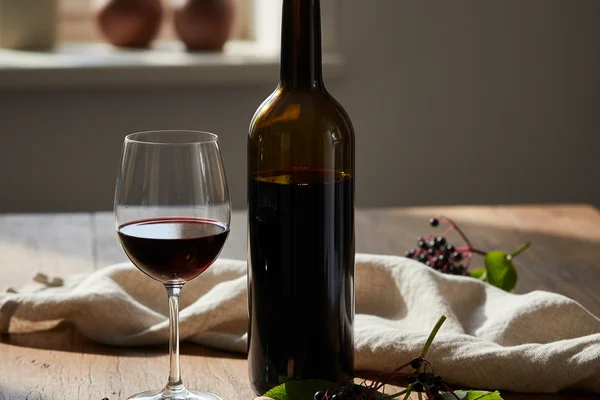
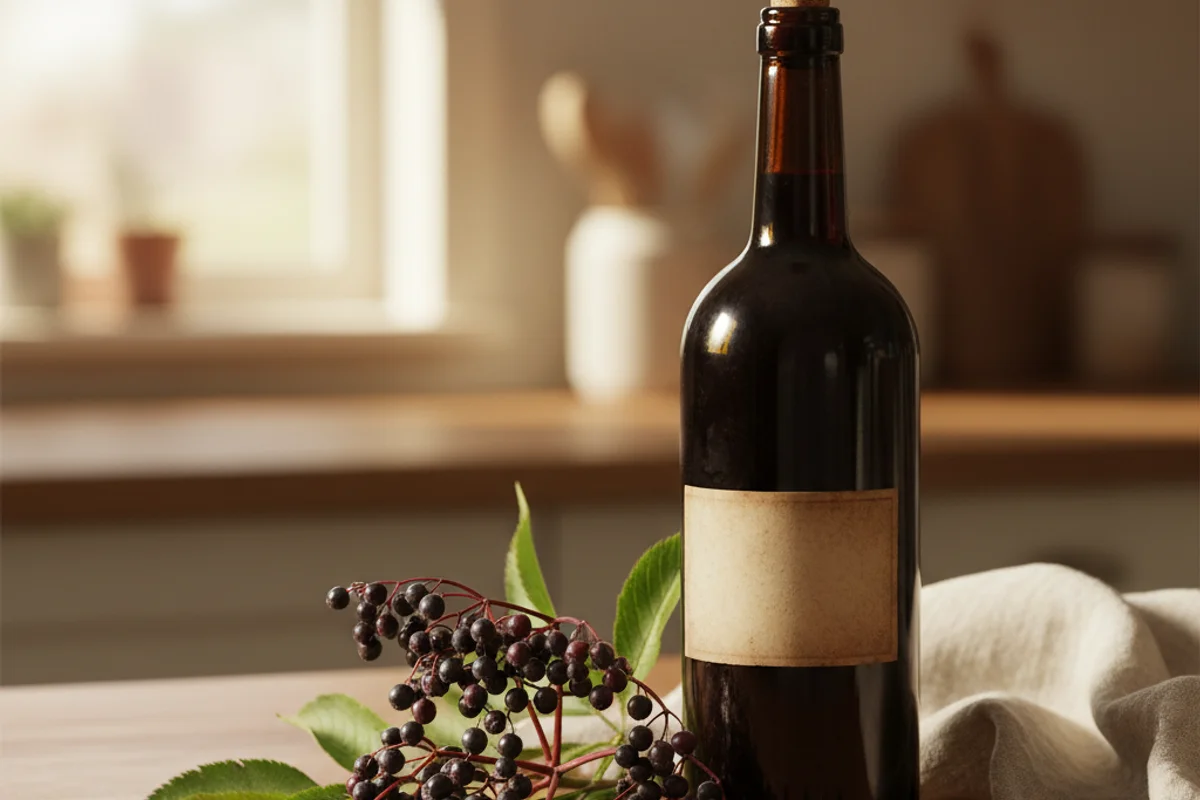
Elderberry wine is the dark horse of the home winery — inky purple, loaded with tannin, and built for the long haul. Fresh elderberries carry an almost medicinal intensity that softens over time into something closer to a bold Cabernet: dried fruit, earth, and a subtle savory backbone. This recipe uses a brief cook on the fruit to unlock color and juice before fermentation, giving you a head start on extraction without over-working the pulp. Patience is the real ingredient here — this wine is drinkable at one year but genuinely good at three or four.
The beginner trap: Squeezing the pulp too hard during straining forces harsh, bitter compounds into the must that no amount of aging will fully fix — drip-drain and press gently, then walk away.
Ingredients
- 10 lbs fresh or frozen elderberries (destemmed weight)
- 2 lbs granulated white sugar, divided
- 4–5 pints water, divided (plus more to reach 1 gallon)
- 1 tsp acid blend (or 1½ tsp lemon juice as a grocery-store stand-in)
- 1 tsp yeast nutrient (available at homebrew shops or online)
- ½ tsp pectic enzyme (helps clear the wine; omit if unavailable)
- 1 packet Montrachet wine yeast (or any dry red wine yeast)
Method
- Wash and destem the berries, discarding any that are shriveled, green, or moldy.
- Combine the berries, ¾ lb of the sugar, and half the water in a stainless steel or enameled pot.
- Heat slowly over medium, stirring occasionally, just until the mixture reaches a boil, then immediately remove from heat.
- Cover the pot and let it cool completely to room temperature — rushing this step risks killing your yeast later.
- Set a nylon straining bag over your primary fermenter and pour the cooled berry mixture through it.
- Tie off the bag and hang it above the fermenter to drip-drain for two hours; finish with a very gentle squeeze — stop before it takes real effort.
- Stir in the remaining 1¼ lbs sugar, acid blend, yeast nutrient, and pectic enzyme until fully dissolved.
- Add enough water to bring the total volume to 1 gallon, then pitch the yeast.
- Cover the primary fermenter loosely and let it ferment for 2 weeks, then rack (siphon) off the sediment into a 1-gallon glass secondary with an airlock.
- Rack again after 2 months, top up to minimize headspace, and refit the airlock.
- Repeat the racking one more time after another 2 months.
- Stabilize the wine (potassium sorbate + campden tablet), wait 10 days, rack once more, sweeten to taste if desired, and bottle.
- Age at least 1 year before opening; expect peak flavor somewhere between 3 and 5 years.
Why this works
Briefly cooking the elderberries does two things at once. First, heat ruptures the berry cells and releases anthocyanins — the pigments responsible for that deep purple color and much of the antioxidant character. Second, it deactivates naturally occurring enzymes in the raw fruit that would otherwise break down color compounds during fermentation. The pectic enzyme added later works in the opposite direction: it breaks down pectin (a structural carbohydrate in the fruit) that would otherwise leave the finished wine hazy. Splitting the sugar addition — some into the cook, the rest into the must — keeps fermentation from stalling by preventing an immediate high-sugar shock to the yeast.
Notes
Frozen elderberries work just as well as fresh and are often easier to find; thaw them completely before cooking and drain off any excess liquid into the pot. If you can’t find acid blend, a measured amount of lemon juice (about 1½ tsp per gallon) is a reasonable grocery-store substitute — it raises acidity without dramatically changing flavor. If your finished wine tastes bitter after a year, give it another six months before worrying; elderberry tannins are slow to soften but they do get there.