ELDERBERRY WINE
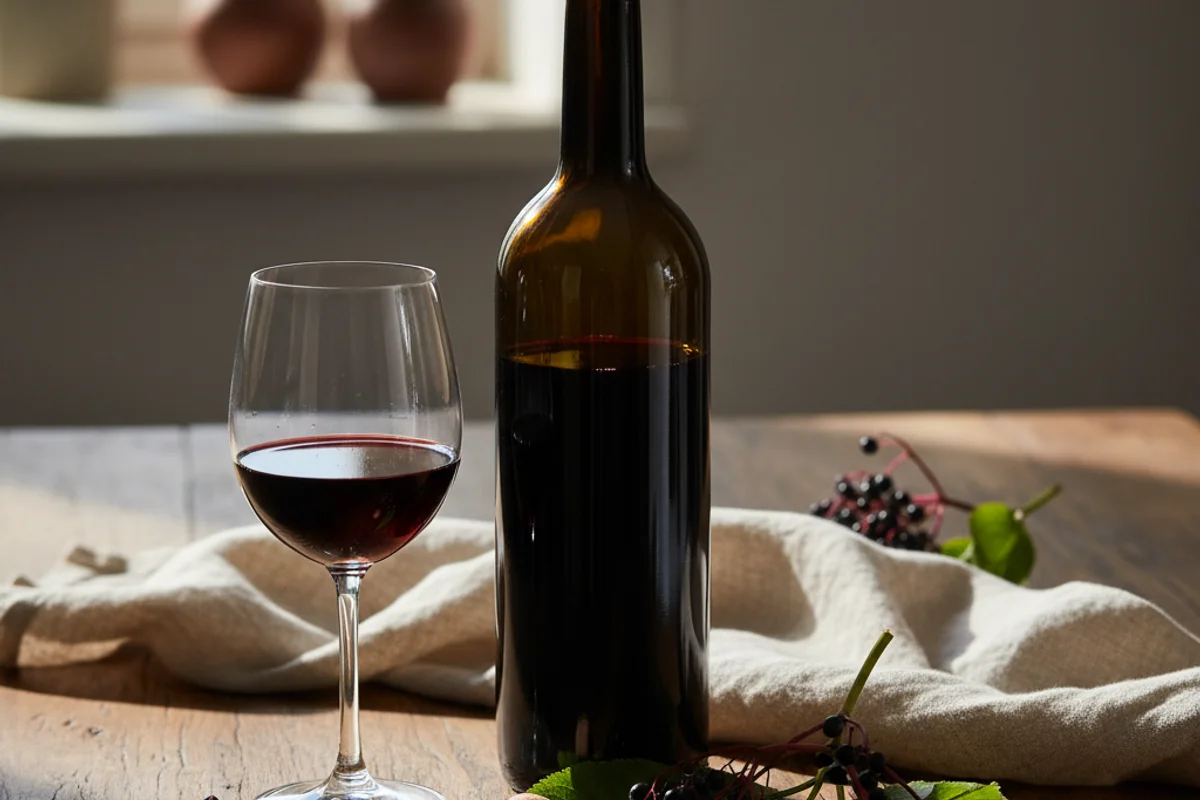
Elderberry wine is one of the most dramatic things you can make in a fermentation bucket. The berries are small, dark, and loaded with pigment — we’re talking a purple so deep it looks almost black in the glass. The flavor follows suit: earthy, jammy, with a tannic backbone that softens beautifully after a year in the bottle. This is a wine that rewards patience. Give it time, keep it away from light, and it will pay you back in full.
The beginner trap: Squeezing the berry bag too hard during or after fermentation pulls harsh, bitter tannins into your wine that no amount of aging will fully fix.
Ingredients
- 3 lbs fresh or frozen ripe elderberries
- 2 lbs granulated white sugar
- 3½ quarts water
- 2 tsp acid blend (or 2 tsp lemon juice as a rough substitute)
- 1 tsp yeast nutrient
- ½ tsp pectic enzyme
- 1 Campden tablet, crushed
- 1 packet Montrachet wine yeast (or any dry wine yeast)
Method
-
Wash, destem, and inspect the elderberries, discarding any that look underripe or damaged. Place them inside a nylon straining bag, tie it shut, and set it in your primary fermenter.
-
Bring the water to a boil and stir in the sugar until fully dissolved. Pour the hot sugar-water over the bagged berries.
-
Put on rubber gloves and mash the berries through the bag — elderberry juice stains skin for days, so don’t skip the gloves. Cover the fermenter and let it cool to lukewarm.
-
Once lukewarm, stir in the acid blend, yeast nutrient, and crushed Campden tablet. Cover and wait 12 hours.
-
After 12 hours, stir in the pectic enzyme. Cover again and wait another 12 hours.
-
Pitch the yeast. Cover the fermenter and stir once daily for 14 days, gently squeezing the bag each time — gently is the key word here.
-
After 14 days, lift the bag and let it drip drain on its own; do not squeeze it at this stage. Combine all the liquid and let it settle overnight.
-
Rack into a secondary fermenter (a glass carboy works great), fit an airlock, and move it somewhere dark — a closet, a cabinet, anywhere it won’t see light.
-
Ferment for two months, then rack into a clean vessel, top up with water or a similar wine to minimize headspace, and refit the airlock. Repeat this process twice more at two-month intervals.
-
Stabilize with potassium sorbate and potassium metabisulfite (follow package directions), wait 10 days, then rack one final time. Sweeten to taste if desired, then bottle in dark glass.
-
Store the bottles somewhere dark and cool for at least one year before opening.
Why this works
Elderberries are packed with anthocyanins — the pigment molecules that give the wine its inky color. Those same molecules are sensitive to UV and visible light, which is why darkness matters at every stage. Expose the wine to light during a long fermentation and those pigments break down, leaving you with a dull, brownish result instead of that stunning deep purple.
The pectic enzyme targets pectin in the berry skins and breaks it down, which does two things: it helps the juice run clear, and it frees up more flavor compounds locked inside the cell walls. Adding it after the Campden tablet has dissipated (about 12 hours) keeps the sulfite from deactivating the enzyme before it can do its job.
Notes
Frozen elderberries work just as well as fresh — freezing actually ruptures the cell walls and can improve juice yield. If you can’t find elderberries locally, check Latin or Eastern European grocery stores, or look for them online. Acid blend is available at homebrew shops; if you substitute lemon juice, use about 3 tablespoons and expect a slightly different flavor profile.