GREEN TEA & GINGER WINE
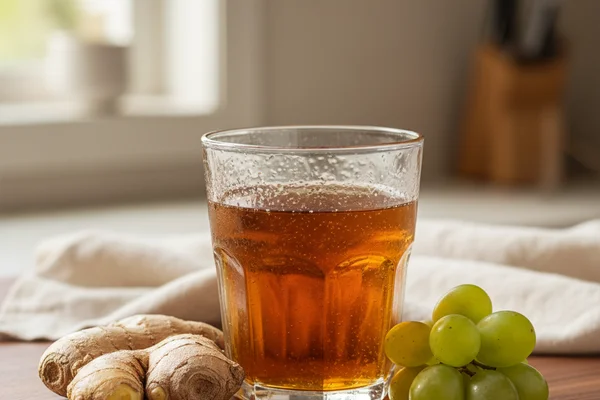
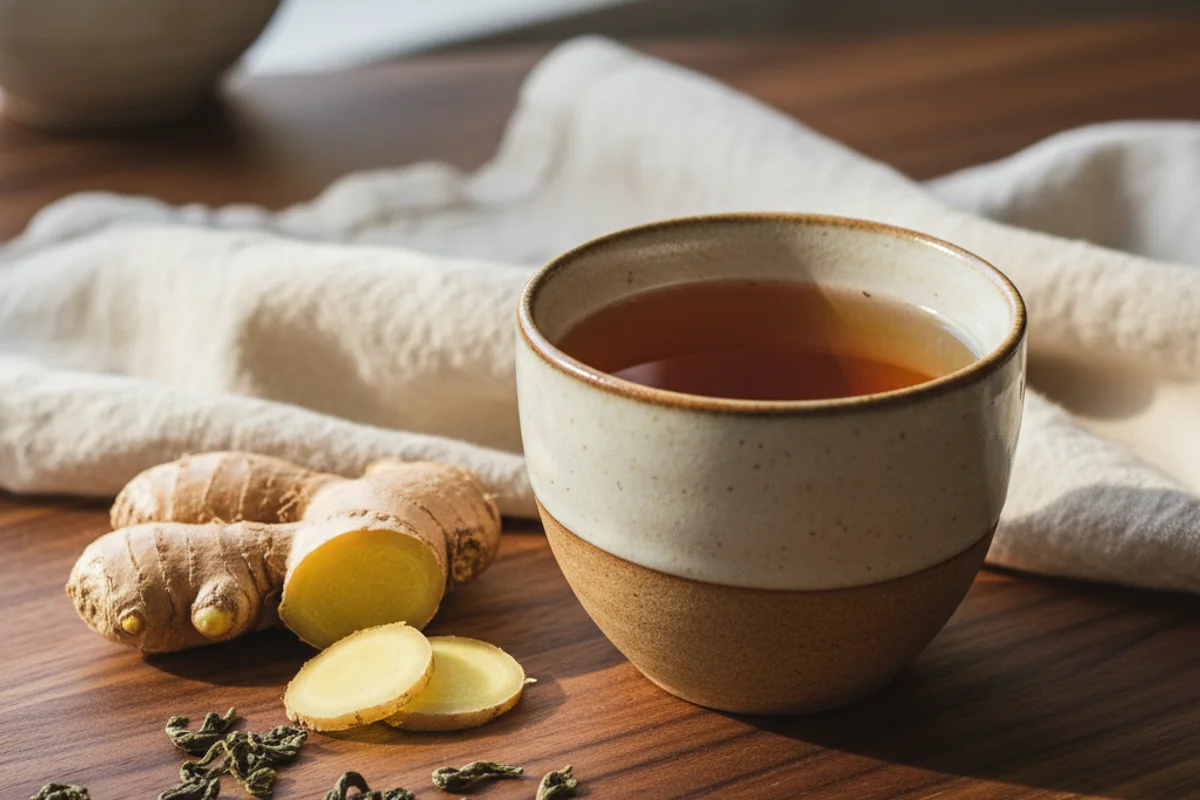
Picture a chilled glass on a sweltering August afternoon — pale gold, faintly hazy, carrying that grassy, vegetal brightness that only green tea delivers, chased by a warm snap of fresh ginger. This is not your grandmother’s tea wine. Green tea brings a completely different flavor profile than black: lighter, more delicate, almost herbaceous. Paired with citrus zest and ginger, you get something that drinks more like a crisp botanical white wine than anything steeped in a mug. It rewards patience, but it pays off.
The beginner trap: Leaving the tea and ginger in the must too long will drive the wine bitter and sharp — strain them out the moment your specific gravity hits 1.010–1.015, no later.
Ingredients
- 2 lbs granulated white sugar
- 16 teaspoons loose-leaf green tea, or 16 green tea bags
- 1 oz fresh ginger root, peeled and thinly sliced
- 1 cup golden or white raisins, chopped
- Zest and juice of 2 small lemons
- Zest and juice of 1 lime
- 1 tsp yeast nutrient
- 1 packet wine yeast (Lalvin 71B or EC-1118 work well)
- Water to make 1 gallon
Method
- Bring most of your water to a boil, then pour it over all ingredients except the yeast in your primary fermenter.
- Stir to dissolve the sugar completely, then let the must cool to below 100°F (38°C).
- Rehydrate your yeast according to the packet instructions, then pitch it into the cooled must.
- Cover loosely and stir daily, keeping the solids submerged as best you can.
- Check the specific gravity each day; when it reads between 1.010 and 1.015, strain out the tea, ginger, and zest immediately.
- Transfer the liquid to a clean secondary fermenter (a 1-gallon glass jug works perfectly) and fit an airlock.
- Let it ferment to dryness — your hydrometer will read around 0.998–1.000 when it’s done.
- Rack the wine off the sediment into a clean vessel, top up with water or a similar wine to minimize headspace, and refit the airlock.
- Once the wine clears, stabilize with potassium sorbate and potassium metabisulfite per package directions.
- Wait 30 days, then taste and sweeten if you like, rack into bottles, and store for 3–6 months before drinking.
Why this works
Green tea contains polyphenols called catechins — natural antioxidants that also add a gentle astringency and structure to the wine. Unlike black tea tannins, which are bold and drying, catechins are lighter and fade gracefully during aging. The raisins pull double duty: they add body through unfermentable compounds and supply trace minerals that keep the yeast healthy. Fresh ginger contributes gingerols, which are peppery and bright when raw but mellow into a warmer, spicier note as the wine ages. The citrus zest loads the must with aromatic oils that blow off partially during fermentation, leaving behind just enough to keep the finished wine lively and complex.
Notes
If fresh ginger root is unavailable, you can use about 1 teaspoon of dried ground ginger, but fresh gives a much cleaner result — most grocery stores carry it near the produce. For a slightly sweeter style, back-sweeten with a simple syrup or honey after stabilizing. This wine is very light in body; if you want more structure, add ¼ tsp of wine tannin powder (available online or at homebrew shops) at the same time as the other ingredients.