GINGER WINE
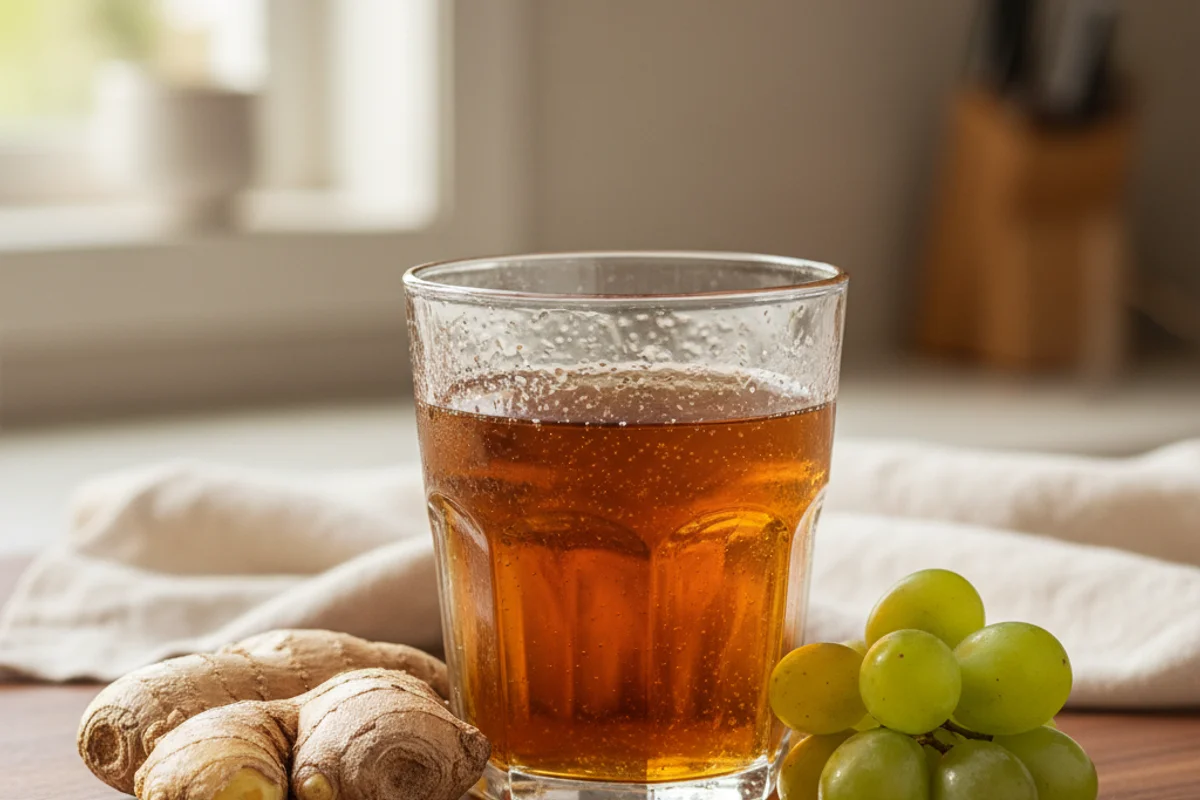
Ginger root is a shape-shifter. Dry it and it becomes a warm, woody spice. Pickle it and it turns sharp and bright. But steep it fresh in a fermenting must of white grape juice and golden raisins, and something else entirely happens — a wine that lands somewhere between spiced white and botanical spirit, with a slow burn that starts at the back of your throat and radiates outward. It is genuinely warming in winter and, served cold, surprisingly refreshing in summer. Few country wines pull double duty this well.
The beginner trap: Skipping the final back-sweetening step — this wine is harsh and one-dimensional when finished bone dry, so stabilize it and sweeten it to at least a faint residual sweetness before bottling.
Ingredients
- 7½ pints (about 3.75 liters) unsweetened white grape juice from concentrate
- 2 lbs (900 g) granulated sugar
- 8 oz (225 g) golden raisins, chopped or minced
- 2 oz (56 g) fresh ginger root, shredded
- ½ tsp acid blend (or 1 tsp lemon juice as a grocery-store stand-in)
- ¼ tsp grape tannin (or 1 cooled, strong-brewed black tea bag steeped 5 minutes)
- 1 tsp yeast nutrient
- 1 packet Champagne wine yeast (Lalvin EC-1118 or any dry wine yeast works)
Method
- Pour the white grape juice into your primary fermenter and dissolve the sugar completely into it, stirring until no granules remain.
- Shred the fresh ginger root and add it to the must along with the chopped golden raisins.
- Add the acid blend, grape tannin, and yeast nutrient, then stir the must thoroughly to combine everything.
- Sprinkle the dry yeast packet over the surface of the must — do not stir it in — then cover the fermenter loosely with a sanitized cloth.
- After two days, begin stirring the must twice daily and continue until the specific gravity reads 1.020 on your hydrometer.
- Pour the must through a nylon straining bag into your secondary fermenter, squeezing the bag firmly to extract all the liquid, then discard the solids.
- Fit an airlock to the secondary and let it ferment undisturbed for 30 days.
- Rack the wine off its sediment into a clean vessel, top it up to minimize headspace, and reattach the airlock.
- Continue fermenting until the wine is completely dry — expect roughly two more months — then stabilize with potassium sorbate and potassium metabisulfite per package directions.
- Sweeten the stabilized wine to a specific gravity of about 1.008 (roughly 2% residual sugar), wait 10 days to confirm fermentation does not restart, then rack into bottles.
- You can drink it right away, but six months of aging smooths out the sharper ginger edges considerably.
Why this works
Fresh ginger gets its heat from compounds called gingerols — the same molecules responsible for the warming sensation in your chest when you eat it raw. During fermentation, some of those gingerols convert to shogaols, which are actually more pungent. That is why ginger wine finished dry can taste aggressively sharp. Back-sweetening to 1.008 does not make the wine sweet exactly — it softens the perception of that heat and brings the fruit from the grape juice and raisins forward to balance things out. The raisins themselves are doing real work here: they add body, a hint of dried-fruit complexity, and natural nutrients that help the yeast stay healthy through a long fermentation.
Notes
If fresh ginger root is unavailable, use 1 tablespoon of jarred minced ginger from the grocery store produce section as a substitute, though fresh will give you noticeably brighter heat. This wine also works well blended in small amounts into a bland vegetable or grain wine to add spine and interest. Frozen grape juice concentrate works perfectly here — just reconstitute it without the additional water the package calls for.