Hackberry
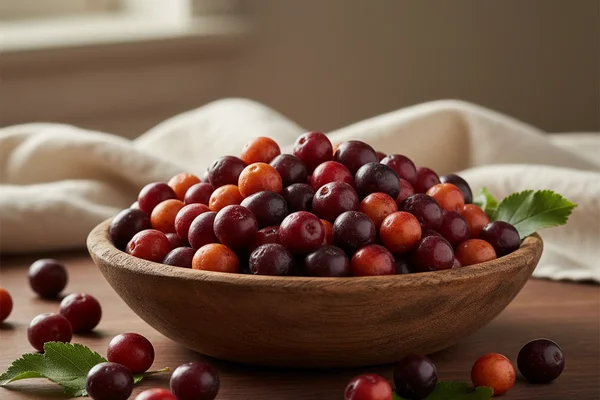
Hackberries are one of North America’s most overlooked wild fruits. The small, reddish-orange berries grow on trees you’ve probably walked past a hundred times without noticing. When the season is good — meaning wet — they turn sweet, almost date-like, with a thin skin and a rich, honeyed flavor that translates beautifully into wine. A dry year gives you hard, tasteless pellets not worth your time. A wet year gives you something worth the effort of a gallon batch.
The beginner trap: Using underripe or drought-stressed berries will give you a flat, thin wine with nothing to work with — always taste the berries before you pick.
Ingredients
- 3–4 lbs ripe hackberries, fresh or frozen
- 2 lbs granulated white sugar, divided
- 1 gallon water
- 1½ tsp acid blend (find it at any homebrew shop, or use 1 tsp lemon juice per tsp as a rough stand-in)
- ½ tsp pectic enzyme
- ¼ tsp grape tannin (or 1 cooled cup of strong black tea)
- 1 Campden tablet, crushed
- 1 tsp yeast nutrient
- 1 packet Champagne yeast (or any dry white wine yeast)
Method
- Bring the water to a boil and dissolve 1 lb of the sugar in it. Set aside.
- Rinse the berries thoroughly and discard any that are shriveled, unripe, or damaged.
- Place the berries in your primary fermenter and crush them well — a sanitized potato masher or the flat end of a thick wooden spoon works fine.
- Pour the hot sugar water over the crushed berries and stir every 10–15 minutes as the mixture cools to 70°F.
- Once cooled, stir in the acid blend, grape tannin, crushed Campden tablet, and yeast nutrient. Cover the fermenter loosely and wait 12 hours.
- Add the pectic enzyme, stir, and wait another 12 hours.
- Sprinkle in the yeast, cover the fermenter with a cloth secured at the rim, and stir the must once daily for 5–7 days.
- Strain out the solids, dissolve the remaining 1 lb of sugar into the liquid, and siphon into a clean secondary fermenter (carboy or jug).
- Leave some headspace — do not top up yet. Fit an airlock and set the vessel aside.
- After 30 days, rack the wine off its sediment into a clean vessel, top it up to minimize headspace, and refit the airlock.
- Rack again every 30 days until the wine runs clear, then let it rest an additional two months in the secondary.
- Rack one final time, stabilize with a crushed Campden tablet, sweeten to taste if desired, and bottle. Age at least 6 months before opening; a full year is better.
Why this works
Hackberries are low in natural acid and tannin, which is why this recipe adds both. Acid keeps the pH in a range where yeast thrives and spoilage bacteria struggle. Tannin adds structure and a slight astringency that keeps the wine from tasting flat or one-dimensional. The pectic enzyme is doing quiet but important work: hackberry skins contain pectin, and without an enzyme to break it down, your finished wine may stay permanently hazy no matter how long you wait. Adding it after the Campden tablet has off-gassed for 12 hours ensures the sulfite doesn’t knock the enzyme out before it can do its job.
Notes
Frozen hackberries work well here — freezing breaks down cell walls and actually helps juice release during crushing. If you can’t find acid blend at a local homebrew store, it’s widely available online. A very light back-sweetening before bottling — just enough to round the edges — tends to bring out the berry character without making the wine taste sweet.