HONEYDEW MELON WINE
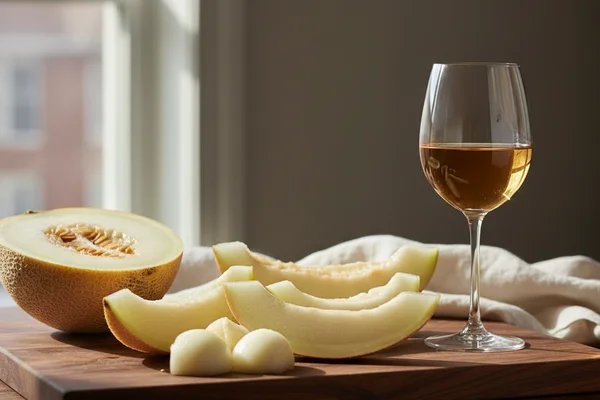
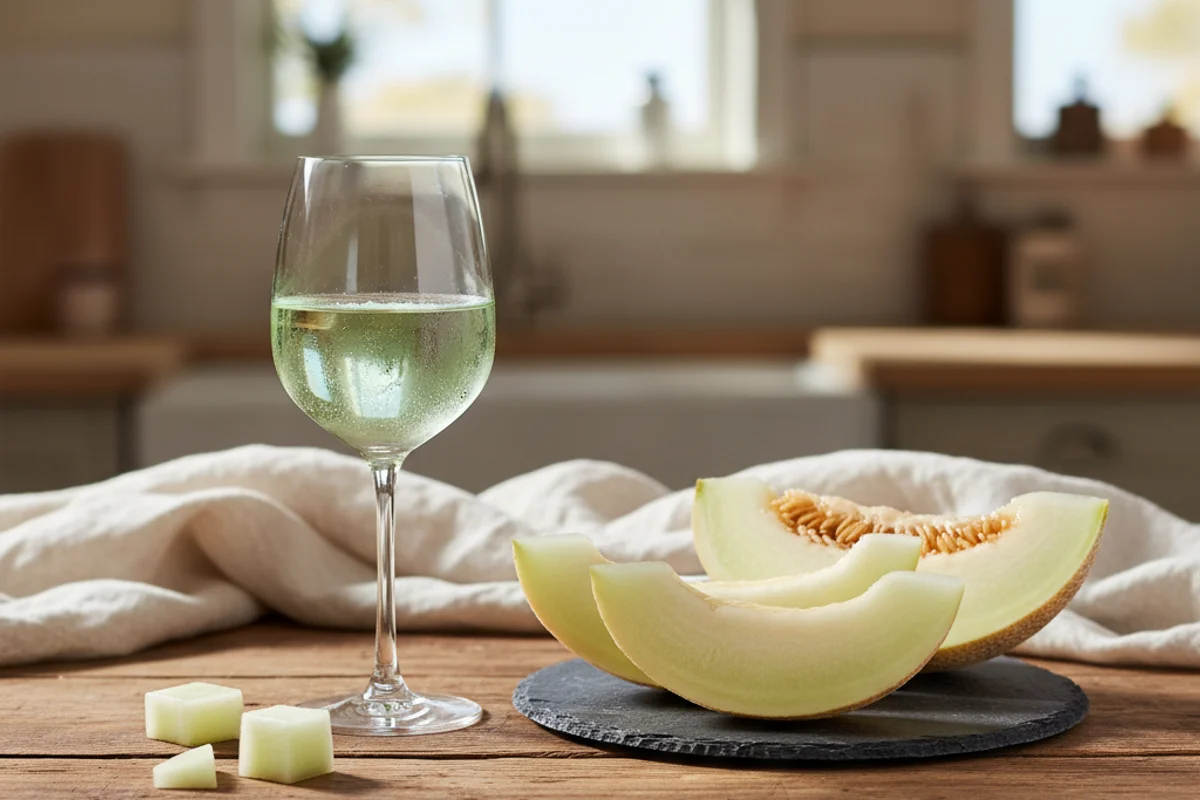
Honeydew is the quiet kid in the melon family — sweeter than you expect, floral in a way that’s hard to pin down, and almost impossibly pale. That subtlety is exactly what makes it interesting in a wine glass. When fermented right, honeydew produces a light, off-dry white with a soft honey-melon aroma and a clean finish. A frozen white grape juice concentrate adds the backbone that melon juice alone can’t provide, and a touch of honey at the end pulls everything together. This is a warm-weather sipper that rewards patience.
The beginner trap: Honeydew flavor is delicate and easy to ferment away — rushing the process or skipping the back-sweetening step leaves you with a thin, nearly flavorless wine.
Ingredients
- 4 lbs honeydew melon flesh, very ripe and sweet (fresh or frozen)
- 1¼ lbs granulated white sugar
- 1 can (11 oz) frozen 100% white grape juice concentrate, thawed
- 6½ pints water
- 2 tsp acid blend (found at homebrew shops; or use 1½ tsp lemon juice powder as a substitute)
- ⅛ tsp grape tannin (or 1 oz strong-brewed plain black tea, cooled)
- 1 Campden tablet, crushed
- 1 tsp yeast nutrient
- 1 packet Champagne yeast (Red Star Côte des Blancs or similar dry white wine yeast works well)
- ½ tsp potassium sorbate (for stabilizing before bottling)
- 1 Campden tablet, crushed (second one, for stabilizing)
- Honey, Grade A (light/mild variety), to taste for back-sweetening
Method
- Cut the honeydew into wedges, remove seeds and rind, then slice the flesh thin. Place all the fruit into a fine-mesh nylon straining bag, tie it shut, and set it in the bottom of your primary fermenter. Crush the fruit inside the bag with clean hands.
- Bring the water to a boil, stir in the sugar until fully dissolved, then pour the hot liquid over the bagged melon. Cover the fermenter and let it cool to room temperature — this takes a few hours.
- Once cool, add the white grape juice concentrate, acid blend, grape tannin, yeast nutrient, and one crushed Campden tablet. Stir well.
- Check the specific gravity with a hydrometer. Add small amounts of sugar dissolved in a little warm water until your reading falls between 1.085 and 1.095. Cover and wait 10–12 hours.
- Hydrate or activate your yeast according to the packet instructions, then add it to the must. Cover the fermenter again.
- Gently squeeze the fruit bag once a day to help extract juice. Do not wring it — gentle pressure only.
- When the specific gravity drops to 1.020, lift out the bag and let it drip-drain over the fermenter without squeezing. Return all the drained juice to the must, then let the must settle overnight.
- Rack the clearing wine into a clean secondary fermenter (glass carboy or food-grade jug), fit an airlock, and set aside in a cool, dark spot.
- After two weeks, rack again into a clean vessel, top up to minimize headspace, and refit the airlock.
- Once the wine has cleared completely, dissolve ½ tsp potassium sorbate and one crushed Campden tablet in a small amount of wine, then stir that mixture gently into the batch. This stops any remaining yeast from re-fermenting your sweetener.
- Sweeten slowly with mild honey — add a little, stir, taste, repeat — until the flavor is where you want it. Wait 30 days, then rack into bottles.
- Age at least 6 months before opening. Serve well chilled.
Why this works
Honeydew is roughly 90% water with a relatively low sugar and acid content, which means it can’t carry a wine by itself. The frozen white grape juice concentrate fixes this in two ways: it adds fermentable sugar with a neutral flavor, and it brings natural grape acids and tannins that give the wine structure. Champagne yeast is chosen here because it ferments cleanly and completely at cooler temperatures without producing off-flavors that would overwhelm delicate melon aromatics. Back-sweetening with honey instead of plain sugar is a smart move — honey shares floral, fruity notes with honeydew that reinforce the wine’s character rather than just adding sweetness.
Notes
Frozen honeydew melon chunks work well here and are often easier to find off-season — thaw completely and use all the collected juice. If acid blend is hard to find, a homebrew shop or online retailer carries it; in a pinch, cream of tartar plus citric acid (half and half) approximates it reasonably well. If your finished wine smells faintly of cooked vegetables, that’s a sulfur issue from the yeast — rack it to a fresh vessel and let it breathe briefly before bottling.